
Osama Abdel Majid Writes: Riyadh Summit – Eight Observations
First: President Al-Burhan’s participation in the Arab-Islamic summit in Riyadh, chaired by Saudi Crown Prince Mohammed bin Salman, was highly significant. The summit saw the attendance of more than 50 leaders, officials, ministers, and representatives from Arab and Islamic nations. It was crucial for Sudan to be present at this major event, which not only strengthens its position in the region but also reaffirms its foreign policy, rooted in communication for regional stability, and highlights its firm stance on current developments in the Middle East.
Second: It is naive to suggest that the summit did not address the Sudanese crisis or the horrific crimes being committed by the rogue militias led by Hamidti. The summit focused on the situations in Palestine and Lebanon, but Sudan’s participation confirms that the country remains connected to its regional surroundings despite its wounds. President Al-Burhan emphasized in his speech that, despite Sudan’s challenges, he was committed to attending, reflecting Sudan’s dedication to engaging in international forums.
Third: Sudan gained numerous advantages from participating, particularly in the closed-door meeting between Al-Burhan and the Saudi Crown Prince. This allowed Al-Burhan to kill two birds with one stone: attending the summit and conducting discussions that would have otherwise required a special visit to Saudi Arabia. After spending a few hours in Riyadh, Al-Burhan headed to the Climate Summit in Baku, Azerbaijan. His participation also facilitated meetings with other leaders to discuss bilateral relations and regional and international issues of mutual interest. Meanwhile, Sudan’s Foreign Minister Dr. Ali Youssef held several fruitful bilateral talks.
Fourth: The participation underscored the strong ties between Sudan and Saudi Arabia. It would be unimaginable for the Saudi leadership to host such an important summit without the presence of the Sudanese president, especially as the summit addressed topics high on Sudan’s foreign policy agenda. Sudan has a key role in addressing important international and regional issues, and missing such events would be detrimental, especially in a world that is increasingly interconnected.
Fifth: One of the key outcomes of Sudan’s participation was Al-Burhan’s successful effort to bring the Sudanese war back to the global stage. He seized the opportunity of the summit’s broad audience to stress that Hamidti’s militia crimes are more brutal than those committed by the Israeli occupation. He also highlighted the growing negative effects of the war in Sudan and warned the Arab and Islamic world of the conflict’s potential to escalate into a regional war, threatening regional and international peace and security. The Riyadh summit was a golden opportunity, especially after Al-Burhan’s successful address at the UN General Assembly in September. Moreover, the Organization of Islamic Cooperation, the world’s second-largest organization after the UN, provided an essential platform.
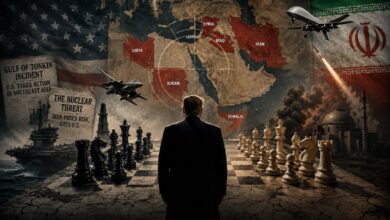
Sixth: The summit confirmed Saudi Arabia’s prominent role in the region and its commitment to addressing key regional issues. Crown Prince Mohammed bin Salman reaffirmed Saudi Arabia’s strong stance against Israeli aggression in Gaza, the undermining of Palestinian authority, and the obstruction of humanitarian work in Gaza. Regarding Lebanon, he expressed unwavering support for the country and its territorial integrity, while also condemning attacks on Iranian territory.
Seventh: Saudi Arabia, through this summit, reinforced the principle of joint Islamic action and its role in achieving unity, solidarity, and coordinated stances. This was evident in Crown Prince Mohammed bin Salman’s speech at the opening of the summit, where he called on the international community to assume its responsibility to halt the ongoing Israeli aggression, facilitate humanitarian aid to Gaza, and hold the Israeli occupation accountable.
Eighth: By hosting the summit, Riyadh demonstrated that Saudi Arabia, with its considerable political, diplomatic, and economic weight, is capable of de-escalating tensions in the Middle East. This is particularly beneficial for Sudan, given the regional conflict’s negative ramifications on both the region and globally. The implications for the security of the Red Sea region, which remains Sudan’s vital lifeline, are particularly concerning, especially with the disruption of Sudan’s airspace due to the ongoing war.