From Tonkin to Hormuz: The Anatomy of an American War Pretext
Part Two: Wesley Clark’s List, Iran, and the Illusion of the Short War
By: Sabah Al-Makki

From Manufactured Fear to Strategic Escalation
Part One argued that the comparison between the Gulf of Tonkin and the Strait of Hormuz is not geographic, but methodological.
In Vietnam, Washington used the Gulf of Tonkin incident to transform a distant conflict into a matter of American urgency. The deeper fear was not the naval encounter itself, but communism: the belief that Vietnam might fall into the Soviet-Chinese orbit and weaken America’s standing in the Cold War order.
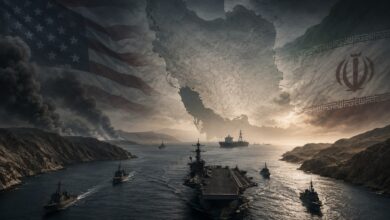
The same logic now shadows the confrontation with Iran. Hormuz is not the core of the conflict. It is the stage on which escalation can be dramatized. The deeper fear lies in Iran’s nuclear file. As communism once served as the mobilizing headline for Vietnam, the nuclear threat now serves as the organizing language for Iran: a way to magnify risk, turn possibility into certainty, and present escalation as a defense of the world rather than a political choice open to debate.
The argument is not that danger does not exist. It is that danger can be enlarged beyond evidence and given the force of necessity. The nuclear file gives war the language of security. Hormuz gives it the language of economics. Israel gives it the language of regional order and strategic necessity. Together, they form the architecture of fear around Iran, recasting it as a comprehensive threat that can only be answered through force.
The question now is what happens after the pretext is built. Is war truly launched to confront a specific threat, or does the alleged threat become the entrance to a larger project?
Wesley Clark and the Map of Fragmentation
The testimony of retired U.S. General Wesley Clark carries particular weight in this context. Clark was not an outside critic, a fringe voice, or a passing television commentator. He was a four-star general who served as NATO’s Supreme Allied Commander in Europe during the 1999 Kosovo War, placing him in the highest circles of Western military planning. After retirement, he entered politics and sought the Democratic nomination for president in 2004. His testimony, therefore, was more than a personal opinion. It came from a military and political figure who had seen, from within, how the American establishment thinks about war, power, and the remaking of maps.
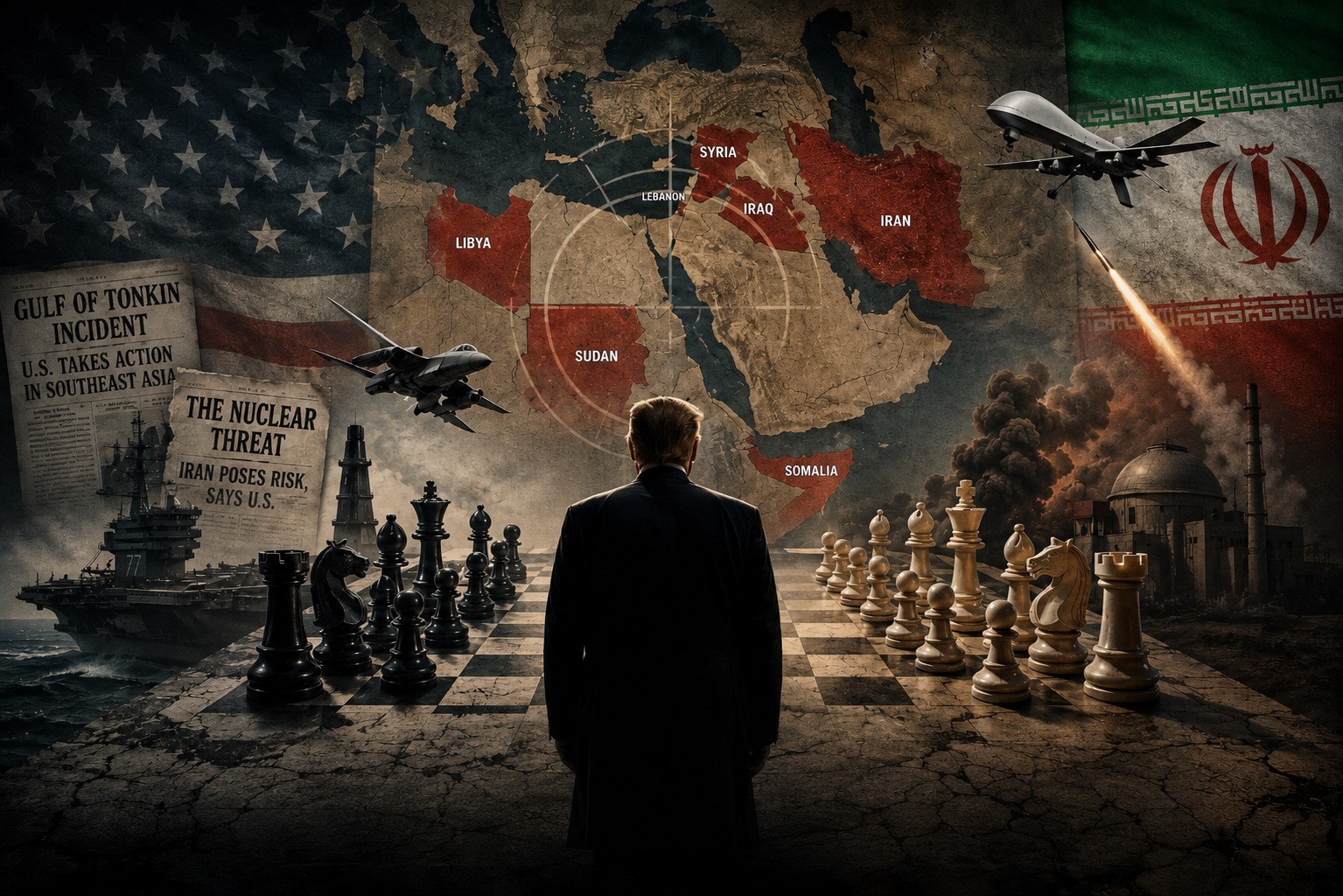
That is why Clark’s remarks still resonate. In 2007, Clark recalled that shortly after September 11, 2001, he visited the Pentagon, where a senior military officer told him that the United States was going to war with Iraq. When he returned weeks later, the same officer said the plan had expanded into a five-year campaign involving seven countries: Iraq, Syria, Lebanon, Libya, Somalia, Sudan, and finally Iran. The significance of this testimony lies not only in the list itself, but in the logic it revealed: war was not being treated as a reluctant response to danger, but as a premeditated project awaiting the right justification.
The list can no longer be dismissed as a stray anecdote. All of those states later passed through some form of invasion, war, collapse, foreign tutelage, militia rule, institutional breakdown, chronic instability, or sustained external pressure. The pattern does not prove a single mechanical script, but it raises a serious question: why did every state named in that strategic vision later end up weakened, fragmented, drawn into war, politically constrained, or subjected to sustained external pressure?
Iran must be read against that wider map. The confrontation with Iran is not an isolated dispute over a single file. It belongs to a broader regional history in which certain states across the Middle East and Africa have been targeted, contained, shattered, or rendered politically dependent.
Seven States Do Not Collapse by Accident
Coincidence may explain one crisis. It cannot explain a recurring pattern across the same geography, involving similar kinds of states and producing broadly similar outcomes.
Iraq was devastated after the invasion. Libya was dismantled after the intervention. Syria was exhausted by a regional and international war. Somalia was left in chronic fragility. Sudan has been pushed into a war that targets its state, army, and national fabric. Lebanon remains trapped in a state of political suspension, permanently vulnerable to external balances. Iran now appears as the delayed link in the chain, the state that resisted sanctions, containment, isolation, and siege longer than expected.
The common denominator is not chaos alone. It is the weakening of states that do not fit comfortably within the American-Israeli design for regional dominance: states with strategic geography, resources, armies, political memory, institutional depth, or the potential to become independent centers of power.
The objective is not always occupation. Often, it is something more efficient: to make the state ungovernable from within.
A fragmented state does not need to be colonized directly. It becomes trapped in its own internal wars, militias, sectarian fractures, sanctions, burning borders, and collapsing economy. It remains on the map but loses the substance of statehood: no unified decision, no sovereign center, no national army capable of holding the whole, and no path toward independent regional influence.
This is systematic fragmentation. Strong states negotiate. Fragmented states are managed. States with institutions can refuse. States torn between militias, sects, foreign patrons, and economic dependency can only request mediation, financing, and protection.
From this angle, Iran is not merely another state on the map. It has strategic depth, resources, civilizational memory, security institutions, regional networks, and the capacity to obstruct the arrangements Washington and Tel Aviv seek to impose. The issue is larger than the nuclear file. It is the existence of a state that cannot easily be folded into a regional order of obedience.
Iran, the Unbroken Link
If Iraq, Libya, Syria, Lebanon, Somalia, and Sudan entered different paths of exhaustion and fragmentation, Iran appears to be the link whose breaking was delayed.
It did not collapse under sanctions. It did not retreat under containment. After nearly five decades of American pressure, Iran expanded its military capacity and projected itself as an undeniable regional power, an outcome neither Washington nor Tel Aviv had anticipated. Most importantly, it refused the marginal place assigned to it in the regional order they seek to impose.
This is why the nuclear file becomes more than a security issue. It becomes the instrument through which a broader campaign can be justified. The question is not only whether Iran might one day acquire nuclear capability. The deeper issue is Iran’s ability to build independent deterrence, protect its political decision-making, and sustain regional networks that complicate American-Israeli dominance.
In this reading, the war against Iran is not merely about a bomb that has not been established as an operational reality. It is about Iran’s place in the balance of power itself. The goal is not simply to prevent a weapon. It is to prevent a state from possessing the foundations of strength.
Iran, then, must not merely be denied a bomb. It must be denied the conditions of power.
From Pretext to Quagmire
The greatest danger in such wars is not only that they begin on false or inflated premises, but that those who launch them believe they can control what follows.
War begins as a calculated political choice. Then it becomes a trap. Eventually, it becomes a test of the decision-maker who set it in motion.
In Vietnam, the United States assumed that military, technological, and economic superiority would settle the conflict. Washington believed that bombing, air power, logistics, and sustained pressure would break North Vietnam and the Viet Cong. It treated war as a question of force, when it was also a question of history, land, identity, and will.
The lesson was brutal: destruction is not submission.
America was not weak in Vietnam. It had aircraft, bombs, bases, armies, technology, and vast resources. But it could not force Vietnam to accept the political outcome Washington wanted. It could destroy, but it could not subdue. It could bomb, but it could not win the war’s political meaning.
That is the dilemma of imperial wars. A great power enters, asking how to achieve its objective. Years later, it asks how to leave without admitting defeat.
In Vietnam, the first question was how to stop communism. Later, it became how to withdraw without appearing defeated. With Iran, the initial American question may be how to prevent Tehran from acquiring independent deterrence. Over time, it may become far harsher: how does Washington exit a war that failed to break Iran without appearing to have failed before it?
At that point, war stops being an instrument and becomes the problem. Every additional day raises the cost. Every strike that fails to produce submission exposes the limits of power. Every negotiation after failed coercion looks like an admission that the adversary endured.
The campaign sold as pressure becomes a test of prestige. The operation presented as limited becomes a quagmire.
Trump and the Fantasy of a Short War
The same illusion now hangs over the confrontation with Iran. In Donald Trump’s rhetoric, war has often appeared as an exercise in compressed force: concentrated strikes, economic pressure, naval threats, air superiority, and then either Iranian submission or negotiations from a position of humiliation.
The imagined conflict is short, sharp, and marketable at home, a display of decisiveness without the burden of a prolonged war. It is the fantasy of force delivering political reward without strategic consequence.
But wars do not obey campaign language. Iran is not a small target, a shallow state, or a regime detached from institutions, geography, regional networks, and historical memory. It is a large state with long experience under sanctions, pressure, and siege, and with the capacity to absorb blows and turn them into a narrative of endurance.
Iran can be struck. It can be damaged. But striking a state is not the same as breaking its will.
This is where the fantasy of a short war becomes dangerous. Washington found itself facing an adversary that does not collapse on schedule, maritime routes under pressure, energy markets on edge, anxious allies, a divided domestic audience, and a legal fight over war powers.
At that stage, war ceases to be a display of strength and becomes a burden. If Trump escalates, he sinks deeper. If he retreats, he risks looking defeated. If he negotiates, he implicitly concedes that Iran was not broken.
That is the nightmare of the leader who enters war believing it will be brief.
A Strike Is Not a Strategy
The comparison with Vietnam is clearest here.
In Vietnam, Washington believed its adversary would collapse under pressure. It did not. With Iran, the same miscalculation may return if Washington assumes that strikes, sanctions, and threats can produce a rapid surrender.
Adversaries who experience war as existential do not behave like actors merely trying to minimize losses. They turn suffering into resistance, external pressure into internal mobilization, and endurance into part of the battlefield itself.
The decisive question is not how much America can strike. It is whether America can impose the political result it seeks.
History shows that the answer does not always favor the stronger power.
A strike may destroy a building, but it does not necessarily destroy an idea. It may disable a facility, but it does not erase the will of a state. It may raise the cost of confrontation, but it does not guarantee submission.
This is what Washington failed to understand in Vietnam. It appears poised to repeat the same mistake with Iran.
Iran Is Not Vietnam, but the Logic Is Familiar
Iran is not Vietnam in literal terms. Vietnam was a long ground war shaped by the Cold War. Iran presents a more complex regional confrontation involving energy, navigation, the nuclear file, Israel, the Gulf, sanctions, global markets, and proxy networks.
The resemblance lies elsewhere: in the mind that manufactures war. It is the belief that fear can produce legitimacy, that military superiority can produce victory, and that an adversary weaker by conventional measures will eventually surrender.
In Vietnam, fear of communism opened the gate. In Iraq, fear of weapons of mass destruction did the same. In Iran, fear of the nuclear file, reinforced by anxieties over Hormuz, energy, and navigation, now performs a similar function. Possibility becomes threat. Threat becomes pretext. Pretext becomes a war presented as defensive rather than aggressive.
But history offers a harder lesson. Relative military weakness does not guarantee political defeat. War is not a calculation of firepower alone. It is a calculation of will, time, legitimacy, endurance, and pain.
The comparison is not that history repeats itself exactly. It is that Washington repeats its patterns because it refuses to learn from them. Blinded by arrogance and the illusion of controllable power, it manufactures fear, gives it moral urgency, frames it as a global threat, and enters a war it believes it can manage. Then it discovers, too late, that once war begins, it no longer belongs entirely to those who started it.
The War That Becomes the Danger
In confronting Iran, Trump may not be entering a calculated war so much as a strategic gamble. What may be imagined as weeks of pressure, or even a brief demonstration of power, could become a political nightmare without an easy exit. That risk is already visible at home: declining approval ratings, public fatigue with confrontation, and growing unease over the cost of another open-ended crisis. A war sold as a display of strength can quickly become evidence of political weakness.
If he escalates, the conflict may widen. If he retreats, he may appear to have failed. If he negotiates, he effectively admits that Iran was not broken.
Here, Iran becomes, as Vietnam once was, a harsh mirror of American arrogance. Not every war begun by a great power ends in victory. Not every state that is bombed is defeated. Not every pretext creates legitimacy.
Seven states do not collapse by the same accident. The pattern points not to coincidence, but to a premeditated logic of fragmentation: weaken the state, exhaust its institutions, fracture its sovereignty, and leave it too dependent to resist. War does not always begin with danger itself. Often, it begins with the manufacture of fear around danger. And sometimes, the war ignited in the name of preventing danger becomes the danger it claimed to prevent.
Read Part One here➡️: From the Communist Threat to the Nuclear Specter
About the Author
Sabah Al-Makki is a Sudanese researcher, writer, and journalist who writes in Arabic and English for Sudanese and regional platforms. She is Deputy Editor-in-Chief at Brown Land News. Her work examines geopolitics, political violence, international law, statehood, sovereignty, war, and the role of media in shaping public discourse, with particular attention to Sudan within its regional and global contexts. She is especially interested in hate speech, dehumanization, social fragmentation, and the rebuilding of national legitimacy. Her writing challenges dominant narratives, foregrounds voices often excluded from global discourse, and approaches journalism as a form of cultural and intellectual resistance. In this sense, she writes from within the storm.
𝑬𝒙𝒄𝒍𝒖𝒔𝒊𝒗𝒆𝒍𝒚 𝒑𝒖𝒃𝒍𝒊𝒔𝒉𝒆𝒅 𝒃𝒚 𝑩𝒓𝒐𝒘𝒏 𝑳𝒂𝒏𝒅 𝑵𝒆𝒘𝒔.
Where sovereignty is not negotiable, and truth defies revision.
Our Land. Our Voice. Our News.