
Columns
-
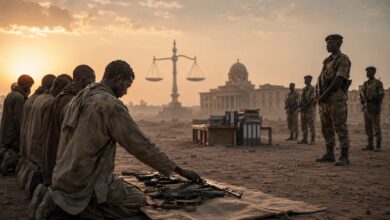
When the Guns Fall Silent
Part 1: Reintegration Is Not Exoneration A legal-political analysis of why states may absorb former adversaries after war, and how reintegration can shift from a tool of conflict termination into a risk if detached from legal vetting, accountability, and victims’ rights.
-
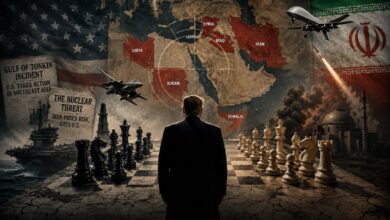
From Tonkin to Hormuz: The Anatomy of an American War Pretext
Part Two: Wesley Clark’s List, Iran, and the Illusion of the Short War
-
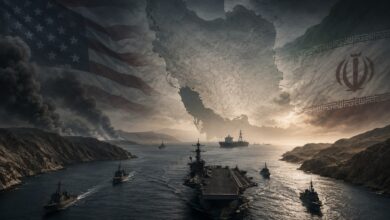
From Tonkin to Hormuz: The Anatomy of an American War Pretext
Part One: From the Communist Threat to the Nuclear Specter
-
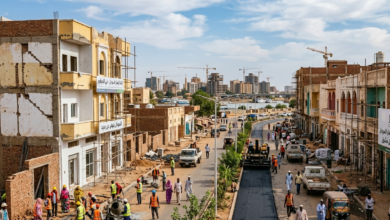
Between Reconstruction and Disruption: Sudan’s Struggle Against Coordinated Attacks
The recent wave of coordinated attacks targeting civilian sites in the national capital and other Sudanese cities must be viewed within its broader strategic context. These operations appear deliberately designed to undermine the accelerating restoration of normal life across Sudan—a recovery that had begun to gather tangible momentum in recent months. This trajectory is reflected in reports by the International Organization for Migration (IOM), which indicate that nearly four million displaced persons and refugees have…
-
Between Reconstruction and Disruption: Sudan’s Struggle Against Coordinated Attacks
Mubarak Mahgoub Musa The recent wave of coordinated attacks targeting civilian sites in the national capital and other Sudanese cities must be viewed within its broader strategic context. These operations appear deliberately designed to undermine the accelerating restoration of normal life across Sudan—a recovery that had begun to gather tangible momentum in recent months. This trajectory is reflected in reports by the International Organization for Migration (IOM), which indicate that nearly four million displaced persons…
-

Reshaping Sudan’s War Equation: Internal Dynamism and External Hesitancy
Sudan’s war is increasingly being discussed through an external lens: What will the “Quartet” do? Can international institutions impose a ceasefire? Will the UN Security Council act?
-

Sudan’s Ports… The Decision-Making Knot
Last week, I wrote in this column an article titled “The Sudanese Coast… The Limits of Power and Hesitation”. It was like a stone cast into still waters, revealing circles of concern beneath the surface of public debate through the reactions I received.
-
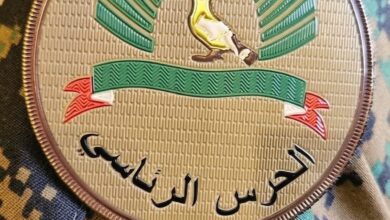
The Battle of the Presidential Guard: The Nuances of Absolute Sacrifice
The morning of April 15, 2023, corresponding to the 24th of the holy month of Ramadan, was not merely the beginning of a war; it was an attempt to erase the existence of the Sudanese state from the geopolitical map forever. In that hour, the gamble was not on control, but on "uprooting," as the "One-Hour Plan" was designed to be a crushing blow that would decapitate the military and political leadership in their quarters…
-

Sudan: Between the Hammer of the Berlin Conference Consequences and the Anvil of Rebel Militia Defections
The "Berlin Conference" is considered one of the arms of foreign intervention in Sudanese political affairs, aimed at imposing a specific governance agenda. This agenda has faced, and continues to face, widespread rejection from all sectors of the Sudanese people, who remain committed to safeguarding national sovereignty. They support the premise that who governs Sudan and how it is governed is a purely internal matter, to be determined by national entities through a purely "Sudanese-Sudanese"…
-

The Chinese Five-Point Initiative
Amidst the unprecedented escalation witnessed in the Gulf and Middle East regions over the past two years, and the subsequent global economic crises and fears of their persistence, China emerges as an international actor seeking to redirect the course of crises toward political solutions by proposing initiatives based on de-escalation and the promotion of stability. Within this framework, the "Five-Point Initiative"—proposed by Beijing in cooperation with Pakistan—presents an integrated vision to contain conflicts and prevent…