History and Future of the RSF
Brwon land
The RSF was created by the army in 2013, originally a military force that is part of the national army . It was created and designed for rapid movement and intervention for protection of the state. This is a normal norm in many armies that have specialised units for specific missions.
The RSF grew and expanded due to and during the turbulent times the state of Sudan passed through after overthrowing of Albashir regime.
The Sudanese government committed two grave blunders in the formation of the RSF that ultimately led to the rebelling of these forces against the national army and the nation
The first blunder was that the leadership and formation of the RSF were left in the hands of a single person, Mr. Mohammad Hamdan Daglo (Hemedtti) this made him feel complete control and ownership of a
national entity
The second mistake was that they allowed the formation and recruitment of fighters to be from basically a single tribe, this made the RSF a tribal entity and gave the leadership full authority and control over the forces.
Despite the two saccable mistakes, the RSF would have remained committed and loyal to the national army if it was maintained as a small unit with controlled armament and limited fighters.
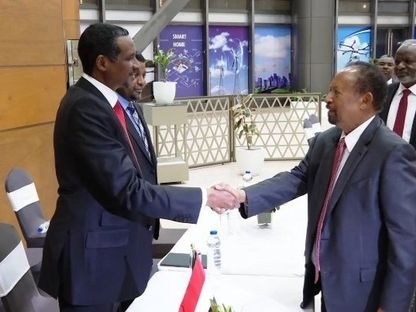
Unfortunately, the Sudan passed through a period of political instability, regime change, and political divide. This created an excellent condition for the RSF to grow and expand without control, especially since the leader Hemedtti became the second man in the state..
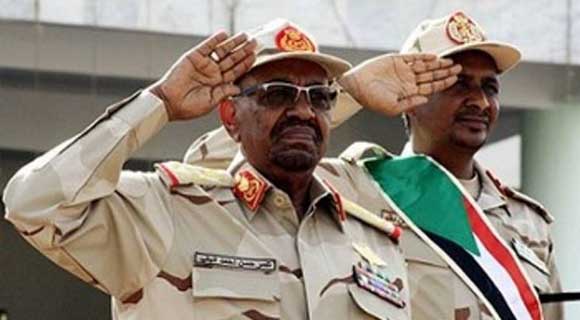
The elevation of Hemedtti from a leader of a unit in the army to the second man in the country overturned leadership structure in the army, making him superior to army generals responsible for control over the RSF
Hemedtti quickly utilised this advantage and was able within two years to expand the RSF from a 20.000 man force to an over 150 000 man army properly trained armed and finaced, a force tending to be bigger and more modetn than the National army in many aspects.

With this power behind him and considering the political divide in the country, Hemetti dreamt of becoming the ultimate leader of Sudan and transforming his loyal forces to the national army.
The dreams of Hemetti were supported and solidified by some political entities in the country that were at logger head with the army politically and some regional governments that wanted to weaken the Sudan to exploit all resources.

The much expected clash occurred, and the RSF supported by some local politicians and financed by the United Arab Emirates tried to overthrow the existing regime and take over power in a replica to the Niger Scenario.
The coup failed and placed the RSF in a no-go-back situation . The conflict resulted in RSF being designated as a rebel group by the Sudanese Armed Forces, a move that equated the RSF with other armed rebel groups in the country.
Still with the hope of a possible victory over the army or at least forcing the army to a compromise of accepting them back in former status, the RSF continued and intensified the war.
Now, after almost two years of war and destruction, the RSF and supporters are convinced they can never achieve victory over the army, especially after waging the war against the civil society of Sudan.
The war is not yet over but fast shifting to the advantage of the national army.
Ultimately, it is expected that the RSF will be defeated and driven away from most parts of Sudan. They will retreat and seek protection in parts of Darfur where their tribes constitute a majority. With the protection of the local population, it will be difficult to eradicate them.
When this happens, all those who were deceived by the RSF or financially attracted will abandon the institution either by disarming voluntarily or by returning to the national army.
The RSF can never return as a national entity , it will then remain an armed tribal military resistant group headed by Daglo family and comprising loyalists and tribal members.
A final peace agreement will be reached when negotiations are held between the nation and all armed opposition forces, including the RSF.