1. Context of the Visit: Temporal and Spatial Significance
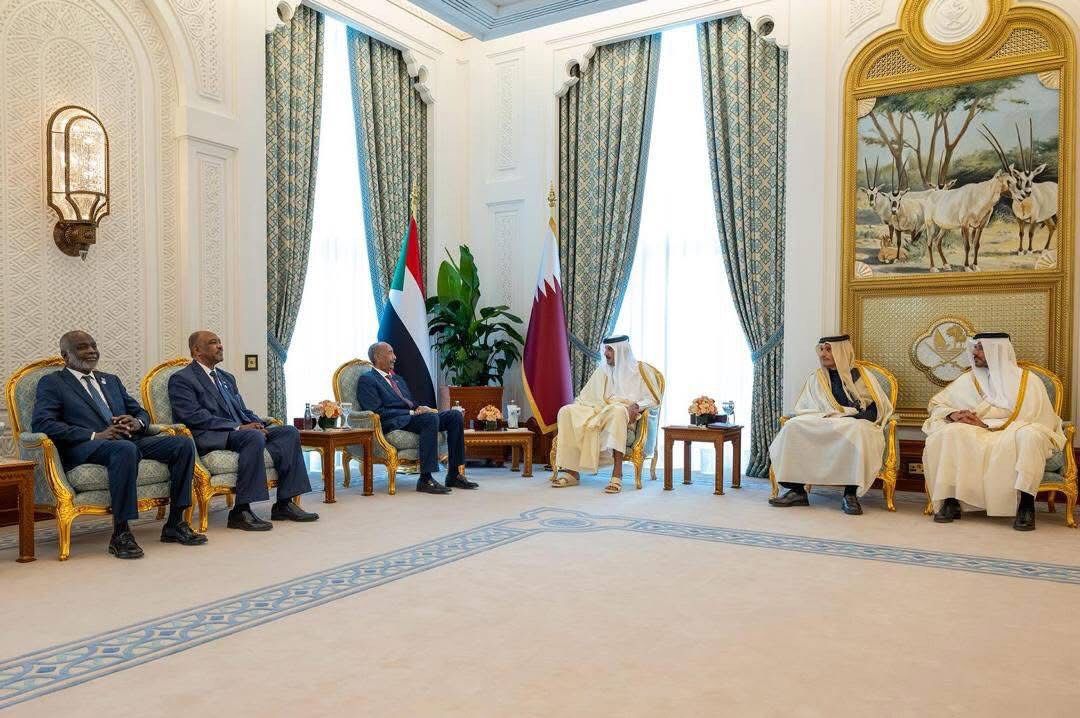
The official talks held at the Amiri Diwan in Doha underscore the vitality of the Sudanese-Qatari axis. This visit is not merely a bilateral meeting but a strategic move at a critical juncture. Sudan seeks to solidify its foreign front and secure regional depth to bolster its stability and national unity.
2. Geopolitical Dimensions of Sudan-Qatar Relations
The relationship is built on geopolitical pillars that render their cooperation a regional necessity:
• Security of the Red Sea and the Horn of Africa: Sudan serves as a strategic gateway to Africa and a vital littoral state on the Red Sea for Qatar. Conversely, Qatar represents a political and economic partner for Sudan with significant international leverage.
• Mediation and Regional Stability: Doha has historically played pivotal roles in complex Sudanese files, such as the Darfur Peace Agreement. This visit reaffirms Qatar’s role as a “guarantor” and trusted “mediator” supporting Sudan’s full sovereignty, echoed in HH Emir Tamim bin Hamad’s commitment to preserving Sudan’s unity.
• Balancing International Initiatives: Coordination with Doha enhances Sudan’s ability to navigate international peace initiatives, leveraging Qatar’s diplomatic weight in global forums.
3. The Amiri Diwan Summit: High-Level Delegations
The composition of the participating delegations reflects the comprehensive nature of the agenda:
• Diplomatic and Security Tracks: In the presence of foreign ministers and intelligence chiefs (Gen. Ahmed Ibrahim Mufaddal and HE Khalfan bin Ali Al-Kaabi), sensitive security files and international stabilization efforts were discussed, with an emphasis on protecting national institutions.
• Economic and Financial Tracks: The participation of Dr. Gibril Ibrahim and Central Bank Governor Dr. Amna Mirghani, alongside Qatari Finance Minister HE Ali bin Ahmed Al Kuwari, signals understandings on mechanisms to support the Sudanese economy, revitalize Qatari investments, and strengthen banking cooperation to address current challenges.
4. Qatari Commitment and Sudanese Appreciation
General Abdel Fattah al-Burhan expressed his gratitude to Doha, describing its positions as “honorable.” Meanwhile, HH Emir Tamim bin Hamad reaffirmed Qatar’s commitment to pushing cooperation toward “broader horizons.” This harmony reflects a shared realization that Sudan’s stability is a cornerstone for the stability of the Arab and East African regions.
5. The Presidential Post: A Message at Home and Abroad
Al-Burhan concluded his visit with a message on the “X” platform, praising Qatari hospitality and emphasizing that Doha’s commitment to supporting the Sudanese people and their institutions is a consistent principle. This message serves as a strong indicator of the visit’s success in securing clear, supportive stances at a turning point.
Conclusion
Al-Burhan’s visit to Doha in January 2027 is far more than a state visit; it is a geopolitical repositioning that strengthens the Sudanese state’s resilience. It opens new pathways for economic and security cooperation with a regional ally whose historical track record demonstrates steadfast support for Sudan.