Ukraine, Davos, and the Peace Council: Navigating a Shifting Global Order
The rapid succession of global events in recent days offers much to unpack. From the fading centrality of Ukraine to the strategic theatrics of Davos and Trump’s nascent “Peace Council,” the geopolitical landscape is undergoing a profound reconfiguration.
I. Ukraine: The Waning Center of Gravity
It is worth noting that COVID-19—not merely as a biological pandemic, but as a socio-political phenomenon—effectively ended with the launch of the Special Military Operation. While restrictions had been easing globally prior to 2022, the international agenda’s center of gravity shifted entirely to Ukraine, attracting massive political and economic investment.
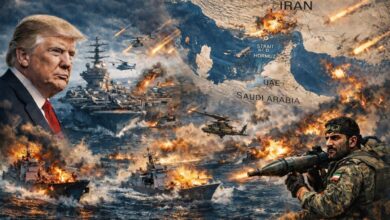
Today, we are witnessing a similar trajectory for Ukraine itself. The “political architecture” of the conflict began to fracture nearly a year ago. Now, the international fallout of Donald Trump’s maneuvers—spanning Venezuela, Greenland, Iran, and beyond—is diverting attention and resources. Suddenly, Greenland has become a more pressing European concern. For those who gambled on this conflict and lost, or for those who have already extracted all possible gains, this shift provides a convenient exit.
For Russia, however, positive news remains thin. Ukraine persists as the primary security challenge and a major drain on resources. Military dynamics remain largely insulated from shifting political winds: soldiers and civilians continue to fall, and territories remain under fire. Compounding this is the unpredictability of Trump’s political appetite and the inherent risks his behavior poses.
II. Davos: The Globalist “Funeral” that Wasn’t
Many viewed Trump’s victory as the final nail in the coffin for globalization and left-liberal ideology. Issues like ESG, gender politics, and climate change seemed destined for the scrapheap, while China stood as the lone pillar of the old globalized order at Davos.
Yet, a year later, Trump has inadvertently (or perhaps intentionally) thrust Davos back into the spotlight. His ambitious “Peace Council”—a project whose scope extends far beyond Gaza—is slated for finalization there. While this could be interpreted as a mockery of globalists or an attempt to build a new structure atop the ruins of the old, the “funeral” of the old order looks remarkably grand.
Davos is proving more resilient than many anticipated. Just as Biden revitalized NATO through opposition to Russia, globalists are now re-energizing their institutions by coalescing against Trump’s momentum. Davos is once again being branded as the camp of the “Good Guys.”
Trump, meanwhile, is masterfully weaponizing his opponents’ rhetoric. Not long ago, European leaders sat in the White House trying to convince him of the “Russian threat” to Ukraine, pleading for support. Today, Trump is using that same Russian threat to spook them regarding Greenland, effectively telling Europe: “Since you admitted you cannot manage without me, step aside and let me handle it.” In this elaborate production, Russia remains a convenient cudgel—at times, a mere scarecrow.
III. The Peace Council: Hegemony in Disguise
The United States has long been dissatisfied with the United Nations and has sought an alternative. Every U.S. president since the Cold War has proposed a version of this—most recently Biden’s “League of Democracies.” While that initiative was overtly anti-Russian, the current “Peace Council” has extended an invitation to Moscow.
However, we should not mistake an invitation for a seat at the table of equals. This is not our “celebration.” It follows a familiar colonial pattern: “The white master offering beads to the locals.” Trump has made it clear: everyone pays. Those who refuse will be forced to pay later, with interest.
There is a dangerous tendency to frame this invitation as a diplomatic achievement—a “we are important because we were invited” narrative. If Russia engages with this Council, it must reconcile this move with its standing position that the UN remains the “center for coordinating the actions of nations” and that its Charter is the legal bedrock of a multipolar world.
While the UN is rightfully criticized, American-led “multilateral” initiatives rarely aim for genuine global dialogue. Instead, they serve to legitimize unilateral U.S. actions. Furthermore, Washington rarely invites a nation into an organization except to retain the power to expel them. The mechanism is simple: your participation legitimizes the initiative, which the U.S. then uses to legitimize your “cancellation” or exclusion whenever it suits their interests—a reality we have seen play out vividly since 2022.
Channel “Post America” in Telegram