
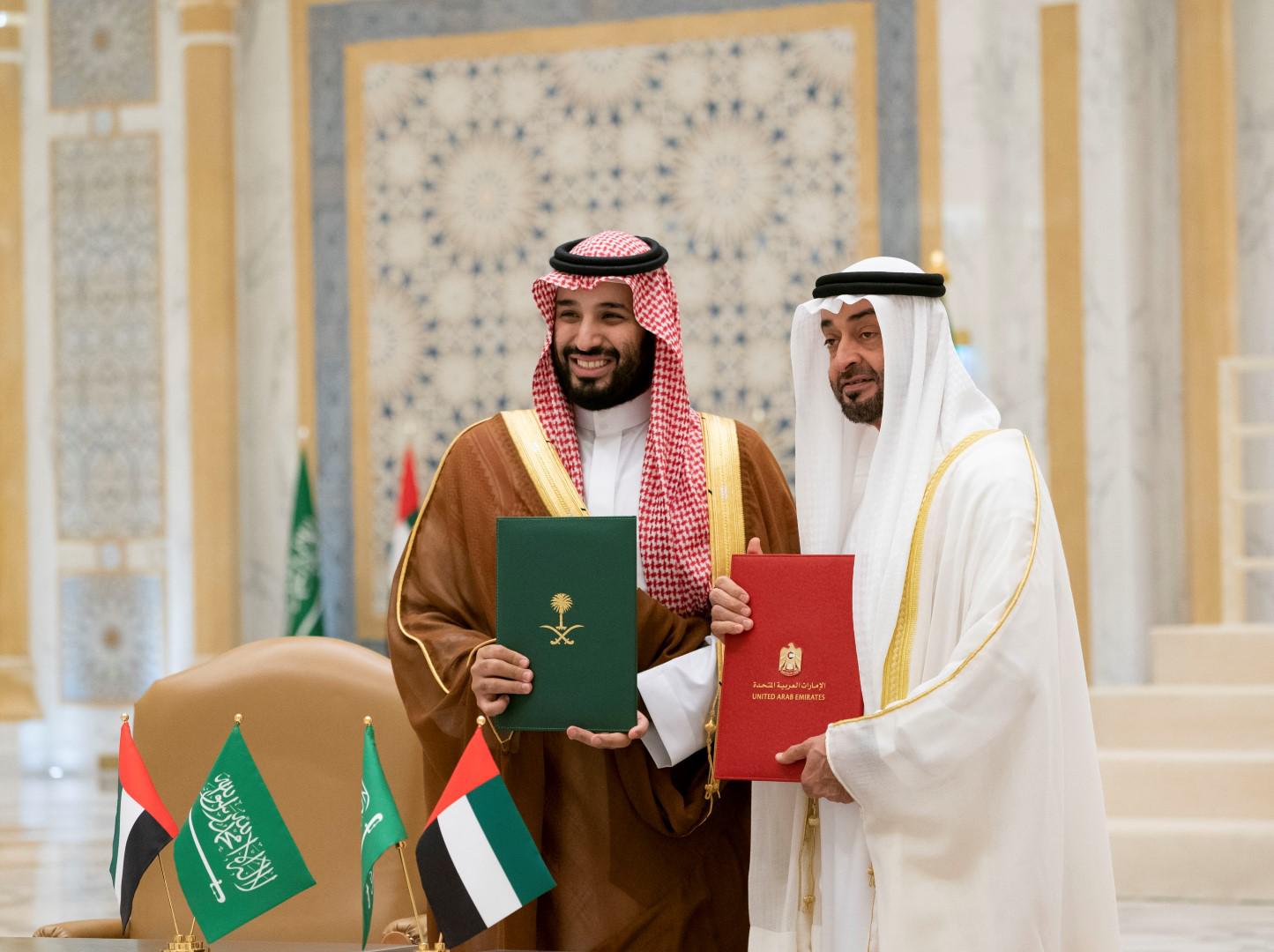
The Untold Story of Rising Tensions Between Riyadh and Abu Dhabi: Order vs. Chaos
Author: Salman Al-Ansari (Saudi International Relations Scholar)
The widening rift between Riyadh and Abu Dhabi cannot be dismissed as a fleeting disagreement or a tactical misunderstanding. Instead, it is the culmination of a long-standing trajectory marked by a steady erosion of trust. This path is best understood through the framework of “Order vs. Chaos”—echoing Thomas Friedman’s assertion that the global divide is no longer East vs. West, but rather a clash between the logic of establishing order and the production of chaos.
Historical Foundations and the Saudi Role
The narrative begins with a historical perspective, positioning Saudi Arabia as a Gulf state that never succumbed to occupation, resisted British influence, and championed the independence of its neighbors. Riyadh played a pivotal role in supporting the establishment of the United Arab Emirates, providing early political recognition and financial backing. Conversely, the rise of the UAE’s economic model—particularly Dubai in the 1990s and early 2000s—was viewed with pride by many Saudis as a modern Arab success story. Historically, the GCC consensus viewed Saudi Arabia as the strategic depth and security anchor of the region, exemplified by Riyadh’s foundational support for the UAE regarding the issue of the three occupied islands.
2008: The Seeds of Divergence
The author identifies an early turning point in 2008. While Saudi Arabia maintained a firm stance against Iran, Abu Dhabi reportedly moved swiftly toward Tehran with a cooperation agreement. This sent a conflicting message and formed the nucleus of a Saudi perception that Abu Dhabi was pursuing a unilateral path with Iran. This perception was reinforced by expanding trade ties and recurring U.S. allegations regarding UAE-based financial networks used for money laundering and illicit financing—culminating in recent U.S. measures in January 2026.
Yemen: The Breaking Point
Yemen stands as the epicenter of this decisive shift. Although the UAE joined the Saudi-led coalition in 2015 to support legitimacy and counter the Houthis, Riyadh gradually discovered that Abu Dhabi’s objectives were less about “Yemeni unity” and more about carving out a separate sphere of influence. This was achieved by backing separatist forces and securing a foothold in strategic ports and maritime corridors near the Bab al-Mandab Strait.
According to the author, Abu Dhabi deepened divisions within the anti-Houthi camp by establishing the Southern Transitional Council (STC), exploiting legitimate southern grievances for geopolitical gain. This led Riyadh to conclude that the UAE was no longer a reliable political or security partner. Despite this, Saudi Arabia exercised significant self-restraint, shielding Abu Dhabi from the Yemeni government’s criticisms for a period.
Normalization and Regional Engineering
The 2020 normalization (The Abraham Accords) is highlighted as a move Riyadh did not publicly oppose, yet the author criticizes how Abu Dhabi framed it as a tool for “regional competitiveness.” The author argues that Abu Dhabi erred in believing that alignment with Israel would grant it immunity while it continued to engineer regional influence via proxies. In Yemen, this extended to empowering STC leaders, granting them citizenship, and utilizing them as regional tools. Fears intensified regarding the intersection of separatist projects with Iranian approaches, recalling a 2018 U.S. investigative report alleging that “counter-terrorism” efforts in Yemen were marred by field arrangements that inadvertently benefited Al-Qaeda elements.
The Sudan Crisis and Internal Pressures
Sudan represents Abu Dhabi’s most significant “reputational crisis,” due to allegations linking its proxy, the Rapid Support Forces (RSF), to widespread atrocities. The author interprets subsequent internal UAE measures—such as federal drills, filming bans, and debt waivers—as a “Scepter and Gold” strategy to maintain internal discipline. This comes amid growing concern within other emirates, notably Dubai, regarding the impact of regional adventures on the UAE’s economic reputation.
The Climax: From Paranoia to Military Deterrence
The author describes a state of political “paranoia” in Abu Dhabi, fueled by the false belief that the Saudi Crown Prince pressured President Trump to sanction the UAE. This escalated during a recent GCC summit when Abu Dhabi’s proxy attempted to expand control in Hadramout, accompanied by documented violations. Riyadh responded with an ultimatum to withdraw, followed by military action to intercept new arms shipments. Within days, Saudi-backed efforts helped the Yemeni government dismantle STC forces, effectively ending a decade-long project.
Conclusion: A Final Reckoning
While Riyadh has not declared an official rupture, it has effectively ended the “adventure” in Yemen and partially withdrawn its political and media cover. Abu Dhabi, the author contends, has realized too late that its actual regional umbrella was always Riyadh. The core of the dispute remains a fundamental conflict of visions: one that prioritizes stability and the dismantling of militias, versus a model—represented by Abu Dhabi—accused of managing the region through proxies and state fragmentation, leading to a “chaos” that resonates far beyond the Gulf.