By Deborah Akur Chol
Brown Land Newspaper Correspondent – Juba
The Government of South Sudan has announced sweeping spending cuts, a freeze on public sector hiring, and plans to introduce new taxes as part of what it described as an Economic Stabilization and Structural Reform Program aimed at addressing inflation, currency weakness, and chronic revenue shortfalls.
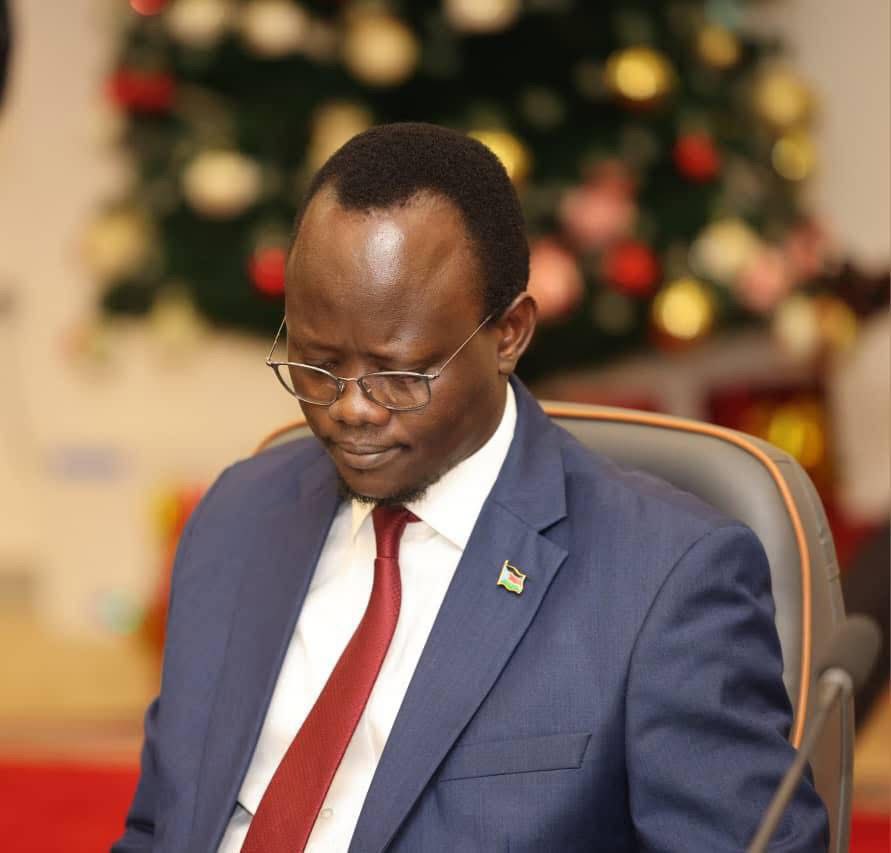
Finance Minister Bak Barnaba Chol said the Council of Ministers approved the Economic Stabilization and Structural Reform Policy last week, which will serve as the government’s official framework for restoring confidence in public finances.
Speaking at a press conference in Juba, Chol said: “It has been three months since my appointment, and many people have been wondering why the ministry has been quiet.” He added that approval of the policy marks the beginning of “economic stabilization and structural reforms.”
Chol said the reforms will be guided by an implementation matrix outlining ministerial directives, policies, and timelines, describing the program as “cabinet-owned,” reflecting consultations within the government’s economic cluster and contributions from the central bank, the revenue authority, and other institutions.
He noted that the measures were driven by worsening economic conditions, including high inflation, currency instability, and structural imbalances resulting from heavy dependence on oil revenues and weak domestic production.
“Our people are suffering,” Chol said, adding that the government recognized the need for “major decisions.” He said the cabinet had instructed authorities to abandon “fragmented interventions” in favor of a coordinated and realistic reform framework.
At the core of the plan is tighter fiscal discipline and what the minister described as restoring “budget credibility.” The government will prioritize paying salaries for civil servants and organized forces, as well as funding security institutions, peace implementation, and elections.
Spending on non-essential claims, contracts, and expenditures will be restricted, while hiring in public institutions will be temporarily suspended, except for critical needs, in coordination with the Ministry of Public Service.
“Budget discipline means you stick to the budget as approved by law,” Chol said.
To boost revenues, the government plans reforms in the oil sector, an expansion of non-oil revenue collection, and the introduction of value-added tax (VAT). Authorities will also review exploration and production-sharing agreements and status-of-forces agreements, and cancel illegal tax exemptions which Chol said had significantly reduced customs and domestic revenues.
Exemptions on imports of fuel, foodstuffs, construction materials, and luxury vehicles will be scrapped, while exemptions granted under international agreements—including those for embassies, UN agencies, and other international organizations—will remain in place for now.
“These illegal exemptions have spread widely and are affecting our revenues,” Chol said, pointing to low collections at the Nimule border crossing.
He added that the government will work closely with the central bank to align fiscal and monetary policy, address liquidity shortages, manage the foreign exchange market, and implement financial sector reforms, including the establishment of a single treasury account.
The policy also aims to stimulate private sector growth by supporting small and medium-sized enterprises and public-private partnerships. Priority sectors include agriculture, livestock, fisheries, tourism, wildlife, agro-processing, mining, and extractive industries, while export promotion will focus on key commodities such as sesame and gum arabic.
In response to questions, Chol acknowledged salary arrears for civil servants, organized forces, and diplomatic staff, blaming prolonged oil sector shutdowns and weak non-oil revenue collection.
He said oil disruptions had led to a sharp drop in state income, limiting the government’s ability to pay salaries and meet other obligations. “There was simply not much to spend because there was no money,” he said.
Chol added that emergency spending powers granted to the president were mainly used to pay salaries and basic services during periods of extremely low revenues.
He also addressed concerns about spending without a full appropriation law, saying any expenditure outside the approved budget framework would be illegal.
“Any money spent outside the budget is a crime,” he said, stressing that accountability and transparency are central to the reform program.
The government’s economic cluster will oversee the reforms, providing regular reports to the cabinet and guidance through an internal implementation matrix.
“This is a well-considered program of adjustment and rationalization designed to stabilize the economy, protect livelihoods, and lay the foundation for sustainable and inclusive growth,” Chol said.
South Sudan, one of the world’s most oil-dependent economies, has long struggled with revenue volatility, limited domestic production, and weak tax collection, leaving public finances highly vulnerable to shocks. The government has not specified a timeline for the full implementation of the measures.