Russia and Myanmar: A Military Alliance Amid Isolation and Mutual Pressures
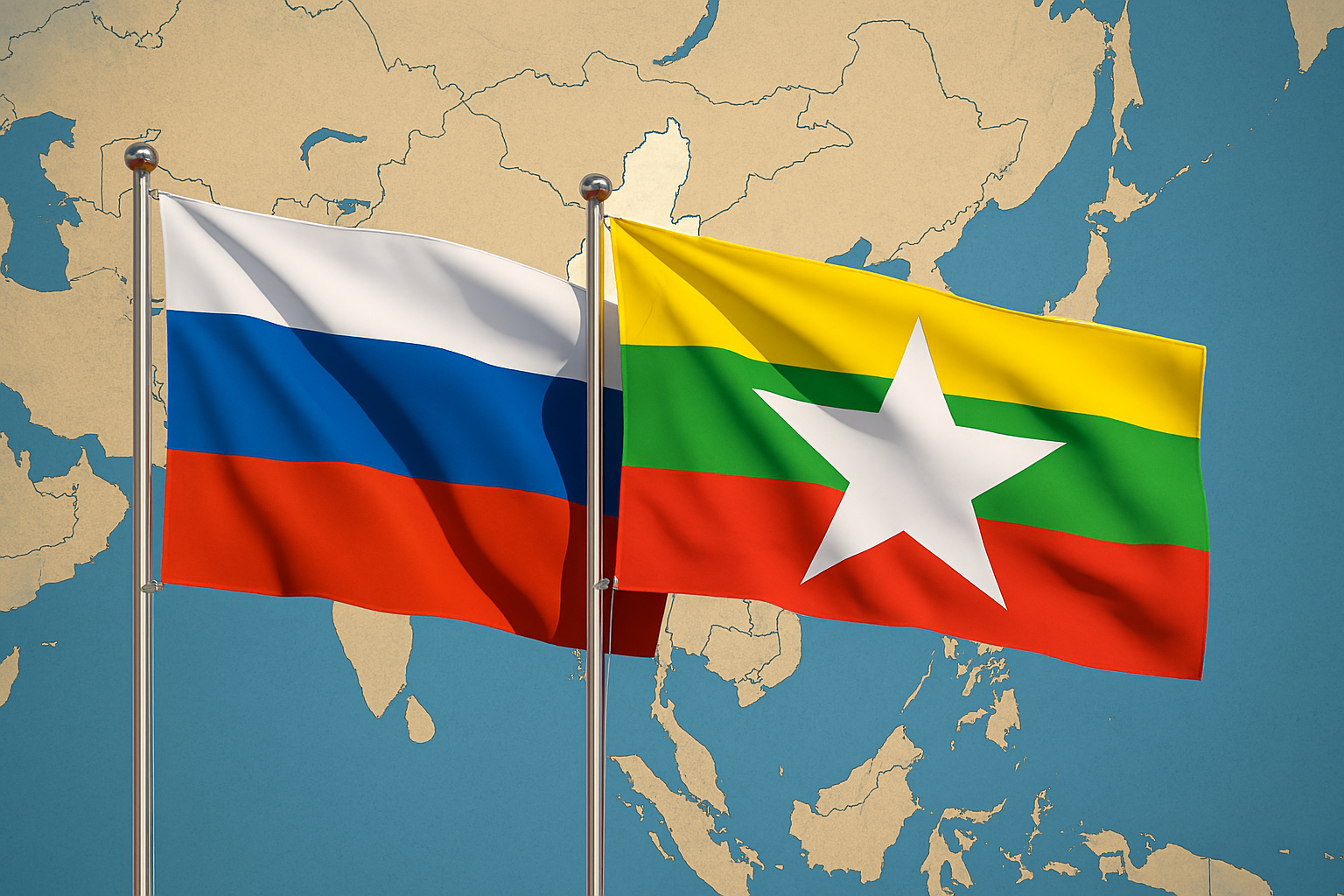
On February 3, the Russian government officially announced the signing of a five‑year military cooperation agreement with Myanmar.
According to TASS, Russia’s Ministry of Defense stated that the new agreement, valid until 2030, was concluded following the visit of Russian Security Council Secretary Sergey Shoigu to Myanmar on February 2.
Myanmar’s state media also highlighted the military pact with Russia, which aims to strengthen defense cooperation. A Vietnamese news outlet noted that “both sides disclosed very few details about the terms of the agreement.”
During his meeting with Myanmar’s defense officials, Shoigu declared: “Russia fully supports Myanmar’s leadership in safeguarding its territorial integrity, strengthening its sovereignty, and ensuring national security.”
For years, Russian fighter jets have played a pivotal role in helping Myanmar’s military repel insurgent groups. According to vietnam.vn, many Western nations now view Myanmar as an isolated state following the 2021 coup—similar to Russia’s position after launching its large‑scale military campaign in Ukraine in 2022.
Despite sanctions and external pressure, Shoigu remarked: “Western pressure on Russia and Myanmar will not cease.” He assured the military government: “You can be fully confident in Moscow’s unwavering support, including on the international stage.”
The signing of this agreement came shortly after Myanmar concluded month‑long elections, which the government hailed as a step toward democracy and peace following five years of military rule and civil war.
Analysts believe this alliance plays a crucial role in helping Myanmar’s military government maintain control amid the significant challenges that followed the country’s political upheaval in 2021.
Russia–Myanmar Relations
Relations between Russia and Myanmar are characterized by strategic and friendly ties, built on shared perspectives regarding international issues, expanded economic cooperation (including in the defense industry and information technology), and cultural exchange. Russia supports Myanmar in resisting Western pressure by supplying military equipment. Recently, a visa‑free regime for Russian citizens was introduced, underscoring Myanmar’s trust in Russia. Cooperation has grown markedly, encompassing defense, energy, and infrastructure, reinforced by visits of senior officials and intergovernmental committees.
Myanmar supports Russia on the Ukraine issue, while Moscow backs Naypyidaw (Myanmar’s capital) internationally, including at the United Nations, in opposing sanctions. Russia is interested in Myanmar’s accession to the Eurasian Economic Union and the Shanghai Cooperation Organization. Since January 27, 2026, the visa‑free regime for Russian citizens has been in effect in Myanmar, boosting tourism and business travel.
Diplomatic relations were established in 1948. In the 1950s and 1960s, the Soviet Union provided significant assistance to Burma (renamed the Republic of the Union of Myanmar in 1989), building institutes and hospitals across the country.
International Implications of the Agreement
This development reflects the growing similarity in the international standing of both countries. Since the 2021 coup, Myanmar has been classified as a Western‑isolated state, in a way comparable to Russia’s situation after escalating its military campaign in Ukraine in 2022.
With sanctions and pressures continuing, Shoigu emphasized that such policies will not alter Russia’s course of support for Myanmar, including at the global level.
The agreement coincided with the conclusion of Myanmar’s month‑long elections, which the government presented as a step toward stability after years of military rule and internal conflict. Observers argue that the alliance with Russia provides Myanmar’s authorities with a strategic lifeline during a period marked by complex political and security challenges.
In this sense, the military pact is not an isolated event but part of a broader trajectory of strategic convergence—uniting two nations facing similar Western pressures and seeking to cement a long‑term partnership outside the traditional Western framework.