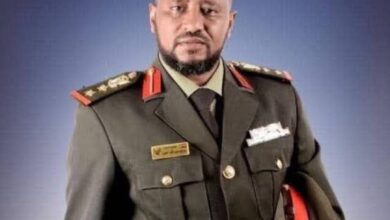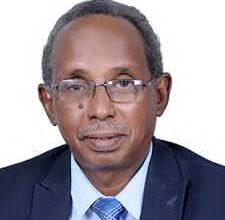

Retired Brigadier General Jamal Al-Shahid: The presence of the Sudanese Army leadership and their actual, direct appearance in the field has bolstered confidence and raised morale
Exclusive: Brown Land
The Sudanese Armed Forces and their supporters have written a history that will remain immortalized in memory, achieving crushing victories over the rebel Rapid Support Forces (RSF) militia. This comes despite the militia receiving massive financial, military, and logistical support from the UAE according to documented reports and information, and despite neighboring countries such as Chad, Ethiopia, and the Central African Republic—followed by Kenya and Uganda—opening their territories, seaports, and airports to serve as supply routes for all types of advanced and sophisticated military weaponry.
“Brown Land” conducted an interview with Retired Brigadier General Dr. Jamal Al-Shahid, an expert and analyst in military and security affairs, covering the military, intelligence, and political strategy of the Sudanese Army during its fierce war against the rebel RSF militia.
Interview by: Badreldin Abdelrahman
= The current war is considered one of the most difficult conflicts the Sudanese Armed Forces have faced. What were the main strategies adopted to confront this assault?.
- This war is not a conventional confrontation between two regular armies. It is a hybrid, asymmetric conflict fought largely within densely populated urban environments.
The Sudanese Armed Forces structured their response in phased strategic terms:
First, absorbing the initial shock to ensure the continuity of command and control and prevent institutional collapse.
Second, operational repositioning to preserve combat effectiveness rather than clinging to tactically costly positions.
Third, transitioning gradually toward organized attrition by targeting supply lines, field leadership structures, and logistical centers of gravity.
This is not a war of rapid decisive blows. It is a war of endurance, timing, and calculated exhaustion.
=The army has received remarkable popular support. What explains this level of backing?.
- The public support was not merely emotional solidarity; it was rooted in a collective realization that the conflict had evolved into a battle over the survival of the state itself. Three key factors contributed to this support:
- Widespread violations that shocked public opinion.
- The institutional cohesion demonstrated by the armed forces during the critical early days of the conflict.
- A growing awareness among citizens that the collapse of the national army would likely mean the collapse of the state.
In military sociology, when the army is perceived as the guarantor of national existence, it becomes a unifying institution rather than a political actor.
=Rebel forces relied heavily on mass human-wave assaults and intense firepower. How did the army counter such tactics?.
- Human-wave tactics are typically employed when the attacking leadership is willing to absorb significant casualties.
The army countered these methods through:
• The creation of calculated kill zones.
• The use of precise, controlled firepower rather than indiscriminate engagement.
• Targeting field commanders to disrupt operational cohesion.
• Employing mobile defense rather than static defensive postures.
Over time, numerical density becomes a liability if the conflict turns into a prolonged engagement.
= Did the Sudanese Armed Forces apply principles of urban warfare such as bypassing, encirclement, and maneuver warfare?.
- Yes, but in a manner adapted to Sudan’s urban terrain.
Urban warfare requires flexibility:
• Bypassing certain strongholds to avoid unnecessary attrition.
• Encirclement to isolate hostile pockets before direct engagement.
• Maneuvering to strike logistical depth rather than focusing solely on symbolic territorial control.
The objective in urban warfare is not symbolic occupation, but the systematic dismantling of combat capability.
=The army withdrew from several areas early in the conflict, which caused public concern. Was that the correct military decision?.
- In military doctrine, withdrawal is not synonymous with defeat. It is a tool used to preserve combat power when the cost-benefit equation becomes unfavorable.
The withdrawals aimed to:
• Avoid excessive attrition in densely populated civilian environments.
• Regroup and reorganize.
• Restore initiative under more favorable conditions.
History shows that tactical withdrawals often precede strategic advances.
=The army leadership has remained publicly visible, while rebel leadership appears largely absent from the battlefield. What does this indicate?.
- Visible leadership during crisis enhances cohesion and morale.
Conversely, the absence of leadership may suggest:
• A shift toward decentralized or fragmented command structures.
• Or weakened hierarchical control.
In prolonged conflicts, leadership presence plays a decisive role in maintaining discipline and morale.
=What could be the consequences of the recent developments in Mustariha?.
- Escalations in such areas can lead to:
• Operational reprioritization.
• Accelerated military responses.
• Or attempts to leverage events for psychological or negotiating advantage.
Such developments are often as psychological as they are tactical.
= Some observers fear de facto partition due to rebel presence in Darfur and parts of Kordofan. Others believe the army will ultimately prevail. Where do you stand?.
- Partition requires political legitimacy, international recognition, defined borders, functioning institutions, and economic viability.
Control over territory by force does not automatically translate into sustainable statehood.
While the conflict may be prolonged, Sudan’s historical resilience suggests that the state structure is capable of reconstituting itself—particularly when the armed forces retain broad societal backing.
= The rebels reportedly received unprecedented external support. Why is Sudan witnessing this level of foreign involvement?.
- Sudan occupies a highly strategic geographical position:
• Along the Red Sea corridor.
• At the crossroads of the Horn of Africa.
• Within overlapping Arab and African geopolitical spheres.
Instability in such a location inevitably attracts competing regional and international interests.
Modern internal conflicts rarely remain purely domestic; they often evolve into arenas of proxy competition.
= There is increasing international pressure for a humanitarian ceasefire. How do you assess this?.
- The humanitarian dimension cannot be dismissed. Civilian protection is essential.
However, any ceasefire must be structured in a way that:
• Prevents military exploitation.
• Ensures credible monitoring mechanisms.
• Maintains the strategic balance on the ground.
The challenge lies in balancing humanitarian imperatives with the prevention of operational manipulation.
=Conclusion:
- According to Brigadier General (Ret.) Dr. Gamal Al-Shaheed, what is unfolding in Sudan is not merely an armed confrontation but a defining test of state resilience.
In asymmetric wars, victory does not necessarily belong to the side that advances fastest, but to the one that possesses institutional depth, societal support, and strategic patience.
The critical question is not simply when the war will end, but how Sudan will redefine its state structure once it does.