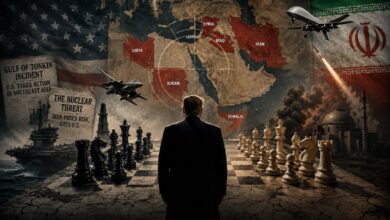
The U.S.-Israeli War on Iran: Strategic Trap or Shot in the Dark?
By Dr. Omar A. Mannan
Introduction: The Lion’s Dilemma
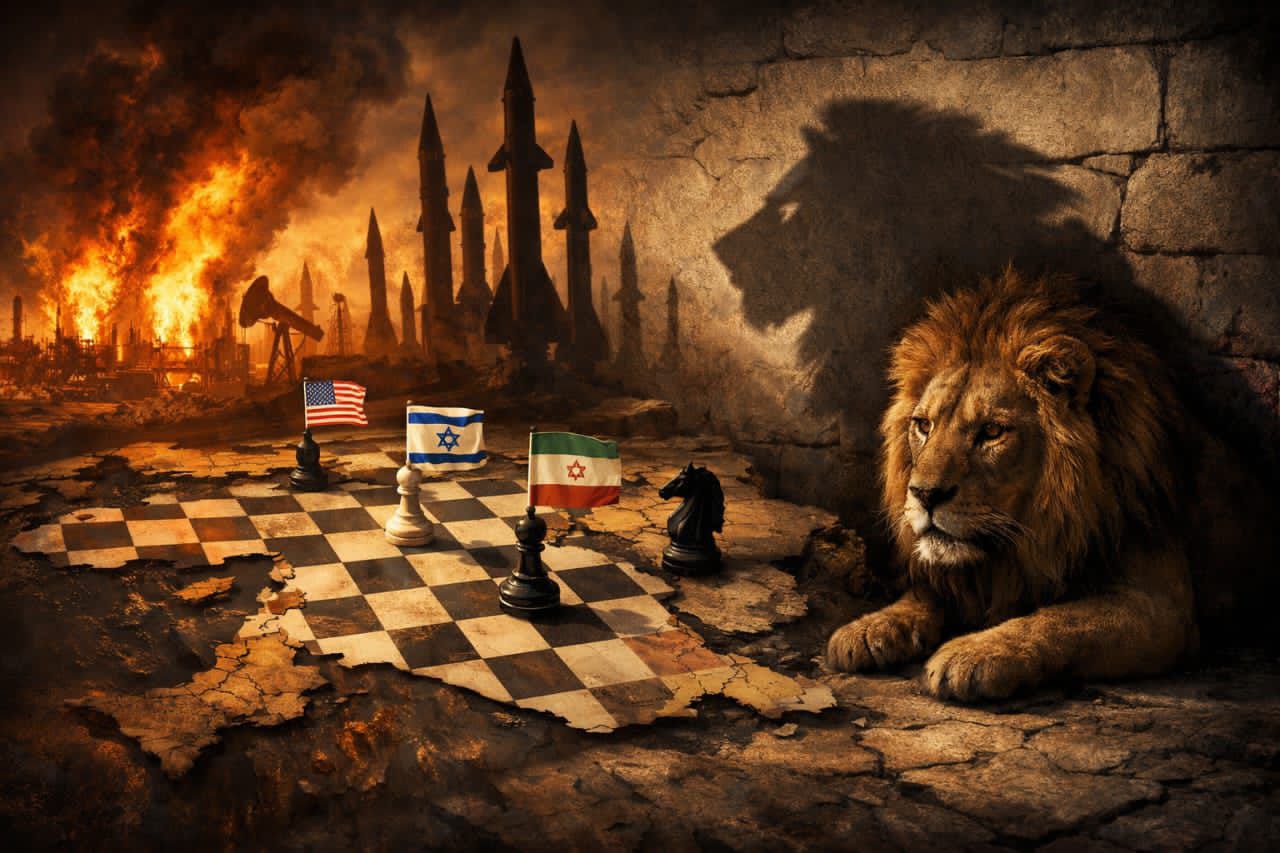
The United States often projects the image of a “global lion”—an apex predator that prefers to roar, using sanctions and limited strikes to command the room. Historically, Washington avoids the quagmire of ground wars; when it does engage, the results are frequently catastrophic.
However, following the U.S. strikes on Iranian nuclear sites in June 2025, the regional calculus has shifted from deterrence to a looming existential crisis. For the U.S.-Israeli alliance, the path forward is no longer a matter of “if,” but “at what cost?”
The Divergent Math of Allies
For Israel, the timeline is compressed and urgent. Israeli intelligence suggests that Tehran has responded to recent strikes by accelerating “breakout” capabilities within hardened, clandestine facilities. For Prime Minister Netanyahu’s government, this is viewed as a “now or never” window. In their estimation, anything short of a comprehensive campaign against the Islamic Revolutionary Guard Corps (IRGC) and Iran’s sprawling missile network is merely a stay of execution.
For the United States, the math is more punishing. While a limited strike might rattle markets, a full-scale regional war would carry three primary risks:
Economic Destabilization: With oil prices already hitting seven-month highs, a prolonged conflict threatens the domestic growth central to the current administration’s mandate.
Military Depletion: U.S. leaders warn that a sustained campaign would exhaust interceptor stockpiles (Patriot and THAAD systems), dangerously weakening American posture in the Pacific.
Political Fallout: With 30,000 to 40,000 troops stationed across the Middle East, casualties from Iranian retaliation represent a “political third rail” that few in Washington are prepared to touch.
The Missing Pillars of Modern Warfare
Unlike the 1991 Gulf War or the 2003 invasion of Iraq, a potential conflict with Iran lacks the foundational components required for a sustainable international campaign.
1. The Absence of International Legitimacy
There is currently no UN Security Council authorization for an offensive against Iran. With Russia and China holding veto power, securing a mandate is a diplomatic impossibility. This leaves any U.S. involvement legally contested—framed as “preemption” rather than collective security—fueling global skepticism and isolating Washington.
2. The Financial Void
In 1991, Gulf donors covered a significant portion of the “Desert Storm” price tag. Today, that support has vanished. Saudi Arabia, the UAE, and Qatar are maintaining a “strategic distance,” fearing their own vulnerability to Iranian drone and missile counter-attacks. With Europe financially strained and politically fractured, the U.S. Treasury would be forced to absorb the astronomical costs alone, bloating the national debt and squeezing domestic programs.
3. A Fractured Global Coalition
A “free ride” does not exist in this theater. Beyond the lack of financial backers, there is no broad moral or military consensus.
Regional Neutrality: Major Gulf states are refusing to act as launchpads for Western strikes.
Adversarial Support: While Russia and China may avoid a direct fight, they are positioned to provide Tehran with electronic warfare (EW) and intelligence support, ensuring any Western strike is technologically “messy.”
Conclusion: A Lion in a Corner
This tension arrives at a nadir for American diplomacy. Relations with China are frayed by trade duties; ties with Europe are strained over defense spending and the direction of the Ukraine conflict; and the proxy war with Russia has reached its most volatile point in decades.
Without the diplomatic cover, financial sharing, and regional cooperation that defined previous American successes, an escalation with Iran may not be the “calculated trap” planners envision.
Instead, it risks becoming a “shot in the dark” that could leave the lion not just exhausted, but permanently weakened on the global stage.