From Queens to Frontlines: The Unbreakable Resilience of Sudanese Women
Mubarak Mahgoub Musa
For thousands of years, Sudanese women have shaped history—from warrior queens of ancient kingdoms to today’s frontline heroes—proving that resilience is woven into their very identity.
On International Women’s Day, while much of the world celebrates symbolic achievements, the story of Sudanese women reminds us that courage and leadership are not merely historical footnotes—they are lived, daily, in a nation tested by conflict and hardship.
Kandakas: Queens Who Made History
Sudan is not just a land where women participated in society—it is a land where women led and shaped history. In the ancient Kingdom of Kush, Kandakas—powerful queen mothers—ruled, commanded armies, and negotiated with empires.
Among them, Queen Amanirenas stands out. She led her people in resistance against the Roman Empire, defending the independence of her kingdom and leaving an enduring legacy of leadership, courage, and strategy.
Other queens, such as Amanishakheto and Amanitore, left remarkable architectural and cultural legacies, many preserved today in the ancient city of Meroë.
These women were not anomalies; they embodied a culture in which female leadership, responsibility, and resilience were central to the survival and flourishing of a nation.
Modern Awakening: Education, National Consciousness, and Organized Women’s Activism:
With the expansion of education and rising national consciousness in the early twentieth century, Sudanese women increasingly entered public life. Nurses, teachers, and other professionals organized through unions and associations, transforming individual efforts into collective action.
This momentum culminated in the establishment of the Sudanese Women’s Union in 1952, marking a historic turning point. For the first time, women’s work evolved from charitable social service to organized political advocacy, demanding rights, representation, and equality.
Early Political Empowerment
Sudanese women gained political rights relatively early compared to many Arab and African nations. They obtained the right to vote in 1953 and the right to stand for election in 1963.
Their political participation reached a historic milestone after the October Revolution 1964, when women entered the Sudanese parliament for the first time.
These advances forged a precedent for civic engagement, laying the foundation for resilience in both public and private spheres.
The Battle for Dignity:
Women on the Frontlines Today
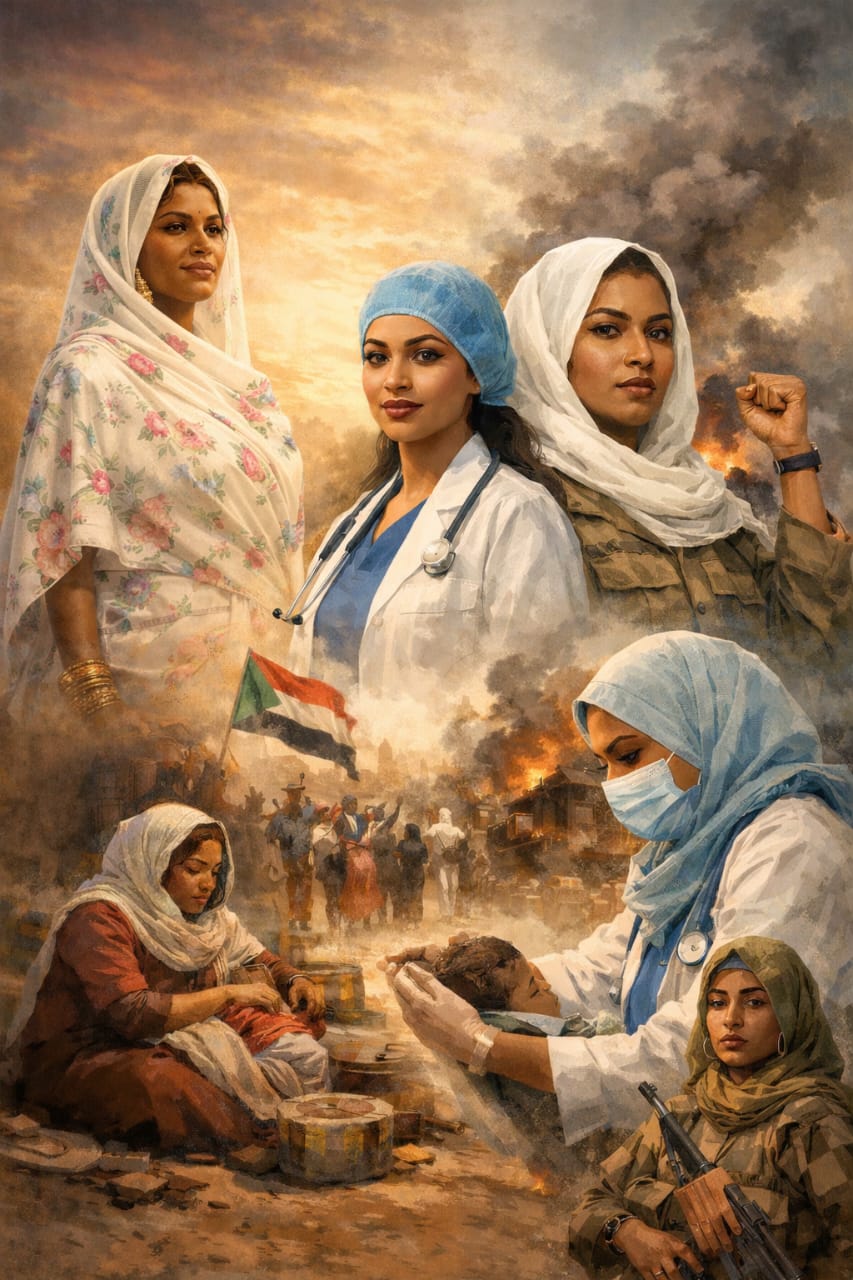
Fast forward to the present. Amid ongoing war of aggression in Sudan, women once again embody the leadership and resilience of their ancestors.
In what has become nationally recognized as the Battle for Dignity, Sudanese women have emerged as indispensable pillars of society.
They have stepped far beyond traditional roles—organizing humanitarian relief, supporting displaced families, safeguarding neighborhoods, and sustaining the morale of communities under siege.
In hospitals and field clinics, female doctors and nurses have treated the wounded and managed shelters under constant threat. Others have taken to documenting human rights abuses and exposing violations to the world, ensuring that truth and justice remain alive.
Modern Heroes: Dr. Safaa Ali Mohammed Yusuf and Dr. Hanadi Al-Nour:
Among the most compelling examples is Safaa Ali Mohammed Yusuf, an obstetrician in Omdurman, whose unwavering commitment to pregnant women during wartime earned her international recognition.
Dr. Safaa was named one of the world’s most inspiring women in 2024 by BBC in their BBC 100 Women.
She continued performing deliveries and even established a new maternity ward at Al-Nau Hospital despite deliberate shelling, shortages, and extreme danger—ensuring life persisted even when war threatened to silence it.
[3/8/2026 11:46 PM] Valennnnn Tinooooo: Equally heroic is the late Dr. Hanadi Al-Nour, known as “Bint Al-Fasher”, who chose to remain in El Fasher to treat the wounded and serve civilians standing firm against one of the worst cases of starvation being used as a weapon in modern times.
Standing on the frontlines, Dr. Hanadi ultimately gave her life, becoming a national symbol of sacrifice and resilience.
These stories are not anomalies—they reflect the lived reality of thousands of Sudanese women who, like their ancestors, endure, protect, and lead in times of crisis.
Continuity Across Centuries:
From the Kandakas of ancient history to the women’s movements of the twentieth century, to the heroines on the frontlines today, one thread is unmistakable: resilience, courage, and leadership run through Sudanese women like a lifeblood.
They are mothers, professionals, volunteers, and activists who sustain life, defend dignity, and shape the future of their nation.They are the living link between Sudan’s illustrious past and the potential of its future.
Despite immense hardship, Sudanese women have proven time and again that they are the backbone of the nation, capable not only of surviving adversity but of rebuilding society and inspiring hope for generations to come.
Between the glories of the past and the trials of the present, one truth stands clear:
The land that gave birth to the Kandakas continues to give rise to women who embody resilience, safeguard dignity, and write history anew.