Ali Larijani: What Changes If He’s Assassinated?
Brownland
The Israeli leadership announced today the assassination of Ali Larijani, Secretary of Iran’s Supreme National Security Council. As of this writing, the assassination has not been officially confirmed.
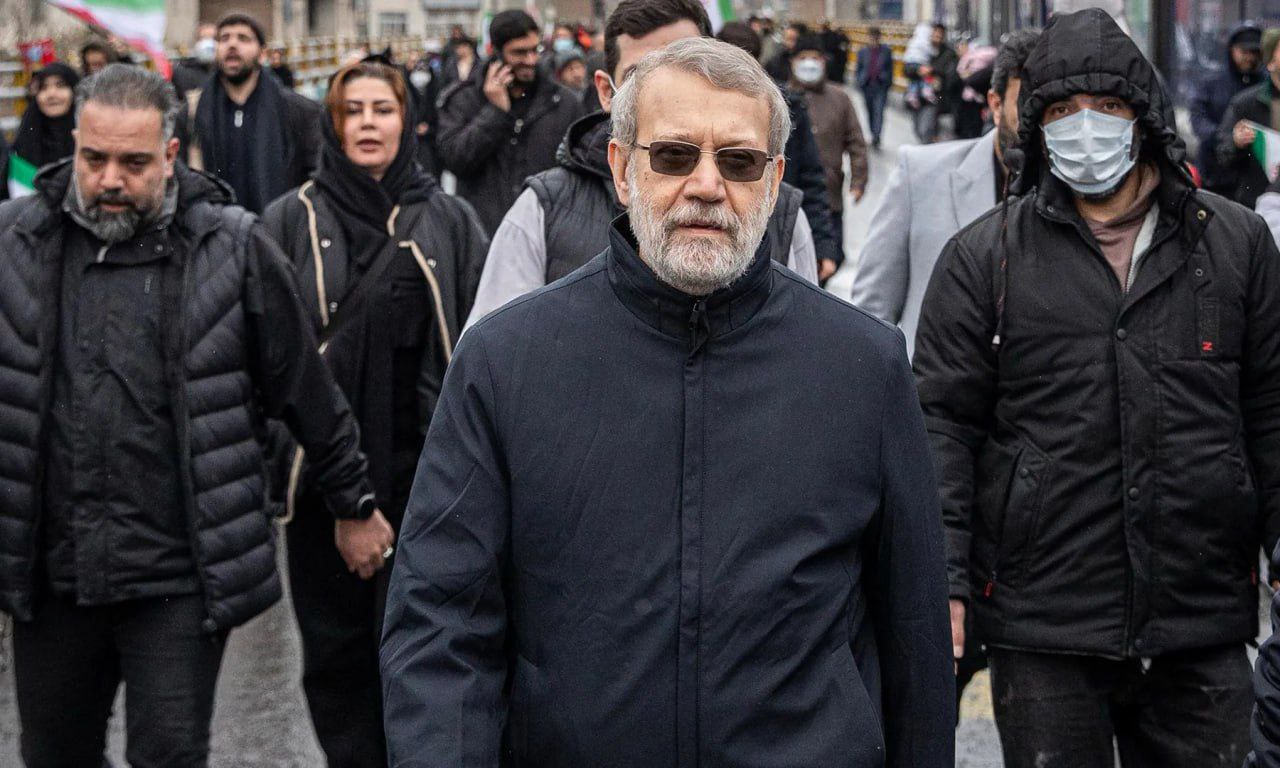
Larijani was a prime target for US and Israeli intelligence agencies. Just days ago, he appeared in Tehran amidst a massive public gathering of thousands of citizens, defying surveillance and threats of attack, to participate in Quds Day, held annually on the last Friday of Ramadan.
He was among people without special protection, in the front rows, as if deliberately placing himself at the center of the event.
Eliminating the leadership does not dismantle this model. The Iranian regime is designed to function even without its top leadership.
The army, the intelligence services, the Revolutionary Guard, and the Basij forces: these are the four pillars of power, each with operational autonomy and the ability to make decisions on the ground.
The Islamic Revolutionary Guard Corps (IRGC) is deployed across numerous formations covering the entire country and possesses significant missile and drone capabilities. The Basij forces, with their millions of active and reserve members, provide the regime with a stable human depth.
This structure is known as “mosaic defense.” This system enables the state to continue functioning even after the loss of its top leadership. Strikes continue, operations proceed uninterrupted, and the military tempo is maintained at all levels.
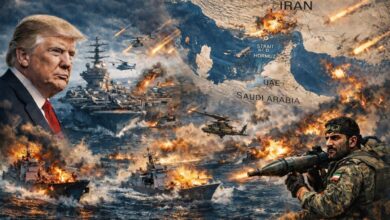
The situation on the ground confirms this. As the war enters its third week, missile and drone strikes continue relentlessly, increasing in intensity and variety. The situation has not stabilized; rather, it has intensified.
The assassination of Larijani—if it did indeed occur—has implications that extend beyond his personal life. It sends a message that the outcome of the conflict is not determined by the elimination of individuals.
In this context, a more complex picture emerges within the Islamic world, where external conflicts are intertwined with internal factors.
The model presented relies on the ability to persevere under pressure. The loss of leaders becomes a motivating factor, and the continuation of the conflict becomes an integral part of the regime’s structure. Yesterday, Ali Larijani published a message to all Islamic nations and governments on the occasion of the ongoing war, in which he stated the following:
1) Iran was subjected to a treacherous American-Zionist aggression during negotiations aimed at dismantling Iran. This aggression led to the martyrdom of the great leader of the Islamic Revolution and many civilian and military leaders. However, the aggressors faced strong national and Islamic resistance from the Iranian people.
2) You know that, except in rare cases and limited political stances, no Islamic country stood with the Iranian people. Nevertheless, the Iranian people, with their strong will, were able to suppress the aggressor to the point that he is now unable to find a way out of this strategic predicament.
3) Iran continues on the path of resistance against the “Great Satan” and the “Little Satan,” namely America and Israel. But doesn’t the position of some Islamic governments contradict the saying of the Prophet, peace and blessings be upon him: “Whoever hears a man calling out, ‘O Muslims!’ and does not respond is not a Muslim”? What kind of Islam is this?
4) Some countries have even gone further and declared Iran an enemy because it targeted American bases and American and Israeli interests on their soil. So, will Iran stand idly by while American bases in your countries are used to attack it? This is merely a flimsy pretext. The confrontation today is between America and Israel on one side, and Iran and the resistance forces on the other. So, which side do you stand on?
5) Consider the future of the Islamic world. You know that America is not on your side and that Israel is your enemy. Pause for a moment and think about yourselves and the future of the region. Iran is sincere with you and does not seek to dominate you.
6) The unity of the Islamic nation, if achieved in its full strength, is capable of guaranteeing security, progress, and independence for all its countries.