
War Developments: A Quick Analysis
Brownland
The new statements issued yesterday by US President Donald Trump regarding the existence of serious talks between the two sides of the conflict, in contrast to the Iranian denial, reflect an unbalanced but carefully calculated rhetoric.
What is actually happening is that Trump is trying to buy time for himself in order to prepare for a possible military operation. This operation could be an air operation, although this seems less likely, or it could be a ground operation, which is the most probable scenario according to this assessment. At the same time, this rhetoric is intended to confuse the Iranian side and create an atmosphere of ambiguity that would allow for a swift and surprise strike.
If any ground operation or landing succeeds, it will be heavily promoted to demonstrate a clear advantage and achieve significant political and media gains for Trump. From this perspective, talk of negotiations does not reflect the existence of a genuine negotiating track, but rather is used as a tactical cover within a broader plan.
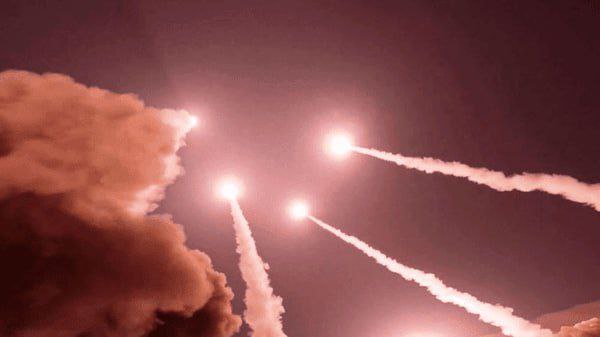
Therefore, what is being presented in the media about the existence of talks is nothing more than a tool within a deceptive strategy aimed at achieving the element of surprise and managing the timing of escalation. Just hours after Trump made these statements, they were effectively refuted when the Western coalition bombed two energy facilities inside Iranian territory, a new precedent since the beginning of the war. Iran responded with heavy shelling targeting Tel Aviv, Haifa, and Dimona, as well as American bases in the region, including Kuwait, which experienced power outages in several areas that night due to missile debris.
Numerous press reports also indicated that the US had already deployed amphibious combat groups to the conflict zone. The number of troops is estimated at several thousand, along with related military equipment, including ships, aircraft, helicopters, and amphibious landing craft. It is believed that the US military is preparing for an adventure involving an attempt to seize Iran’s Kharg Island and possibly other islands in the Persian Gulf, or even to conduct landing operations inside mainland Iran.
In this context, many analysts agree that ground operations would inflict heavy losses on the US due to the extreme difficulty of such operations in the Iranian terrain. The war is heading towards a new escalation, not negotiations.
Who was the first to promote Trump’s claims regarding negotiations with Iran? This is Barak Ravid. He previously worked in Israeli military intelligence. Ravid served for about six years in the Israeli army, including in Unit 8200, the main electronic and cyber intelligence unit.
After completing his military service, Ravid earned a bachelor’s degree in Middle Eastern history from Tel Aviv University and began his career in journalism. He later moved to American media outlets, working as a Middle East (West Asia) correspondent for Axios and then as a political analyst for several other networks.
The news circulating about negotiations between Mohammad Bagher Ghalibaf, the Speaker of the Iranian Parliament, and the United States is completely false. Informed Iranian sources confirmed that there is complete consensus within the regime’s leadership to continue the war until Iran’s objectives are achieved.
According to sources in Iran, the adversary seeks to achieve three goals by spreading this false news:
– To personally discredit the Speaker of Parliament
– To sow discord within the country
– To provoke him and pave the way for his assassination.