
Exclusive Conversations
”To succeed in the Sudanese political process, we must accept the “Other,” excluding only those facing criminal charges related to corruption, treason, or otherwise”
- Interview conducted by: Badr El-Deen Abdel-Rahman.
Multiple political, strategic, and security scenes have emerged on domestic, regional, and international levels, surfacing amidst the events of the recent period.
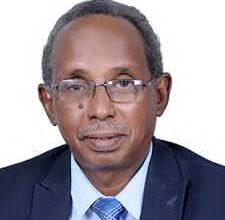
“Brown Land” discussed these burning realities with Dr. Fath Al-Rahman Al-Fadil, Head of the Builders of the Future Party, in an interview that carried within its folds many readings of the course of events, according to various complexities, interferences, and intersections.
= Dr. Fath Al-Rahman, how do you view the repercussions of the Berlin Conference, which was held recently amidst sharp and intense internal criticism?. - People were divided between supporters and opponents along the same lines of the political arena—before, during, and after the war. The supporters are a small minority that believes in the external “foreign project,” versus a majority that rejects all negative external interference.
= Given what is happening, what is your assessment of the current political situation in general? Is it achieving what is desired of it?. - The political situation in general is one of a “closed horizon” between an external project being rushed by its creators, and an internal political process that is “stalled.” The government has remained for seven years a prisoner of a Constitutional Document whose authors left the government five years ago!
= Regarding the recent defections within the Rapid Support Forces (RSF) militia, what is their impact on the course of military and political events?. - Defections within the ranks of the militia are a positive development; they weaken the militia and reflect its lack of cohesion. However, our reliance must always be on the victory of our Armed Forces through their mapped-out plans to eliminate the rebel militia.
= What are the immediate and future plans of the Builders of the Future Party that could contribute to solving the political crisis in the country?. - Our plan to end the political crisis in the country is based on spreading public and political awareness among colleagues and partners in the political process. In my view, the solution lies necessarily in accepting the “Other,” except for those facing criminal charges of corruption, treason, or otherwise. Our plan also focuses on working to ensure a democratic transition to civilian rule.
= What are the chances for the success of a purely national Sudanese-Sudanese dialogue? Can it bring together all political factions in the country?. - The opportunities for a “Sudanese-Sudanese” national dialogue are available, but they require the necessary will and determination, as well as the government’s desire for a democratic transition. As for the issue of gathering the various political factions, I believe that after the “War of Dignity,” the country has become prepared; everyone has met on the minimum threshold, which is the survival of Sudan as a single, unified entity and support for its army.
= External interventions seeking to impose foreign solutions—what are the causes of this, and how can they be confronted from within?. - These interventions are, of course, an old yet renewed matter, and these conspiracies will never stop. The reason is international ambitions regarding Sudan. Confronting them requires unifying the internal front, fighting corruption, and working to build Sudan strongly—especially since the world does not respect a weak state. Therefore, it is a duty to work on nation-building and unifying the ranks.
= The Iranian war and Middle East conflicts in general—to what extent do they affect Sudan?. - The American-Iranian war certainly casts various shadows on Sudan. Some are positive, such as the preoccupation of the countries supporting and sponsoring the war in Sudan with their own affairs, which relatively reduces their support for the militia. The negative impact, of course, is the economic effect; everyone has been affected by this, though we might be the least affected.
= The rebel militia has received significant and continuous support from the UAE, Ethiopia, Chad, and others. Why is this happening in your opinion, and how can the government repel all this unprecedented hostility?. - These countries are hostile to Sudan by proxy—that is, for the benefit of the primary enemy, “Israel.” Everyone wonders with astonishment at the justification for the UAE, Chad, and Ethiopia supporting the destruction of Sudan; the matter is indeed strange! However, the reason is that they are supporting by proxy, and I do not believe there is a possibility of neutralizing them, nor do they possess their own decision-making power. The solution lies in strengthening the internal front and enhancing military capabilities through strong partners.
= Can it be said that the RSF militia has failed to achieve what was required of it in Sudan?. - Definitely, the militia failed to implement the basic plan, which was to hijack Sudan’s decision-making and seize control through a swift coup. Within days, the “Sponsor” shifted to Plan (B), which is: destroying Sudan and working to secede Darfur.
= Sudan’s borders with Chad, Ethiopia, the Central African Republic, and South Sudan have been used in the current war and have witnessed continuous security tensions. What is the cause of this, and what are the possible remedies?. - Sudan is characterized by this geopolitical feature; from one perspective it is a blessing, and from another, it is a challenge. Sudan’s proximity to several countries, while being a strategic and economic advantage, is also a security challenge that requires double the effort to ensure it is not exploited by enemies. Now, I believe that in light of the current war, these countries must be notified to close their borders; those that do not must bear the consequences.