Nairobi Under the Microscope: Malicious Roles Despite Denial
Reports Department
Brown Land
April 25, 2026
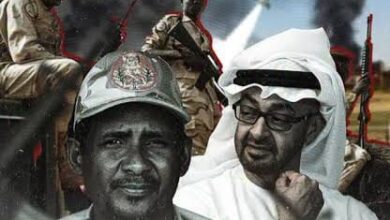
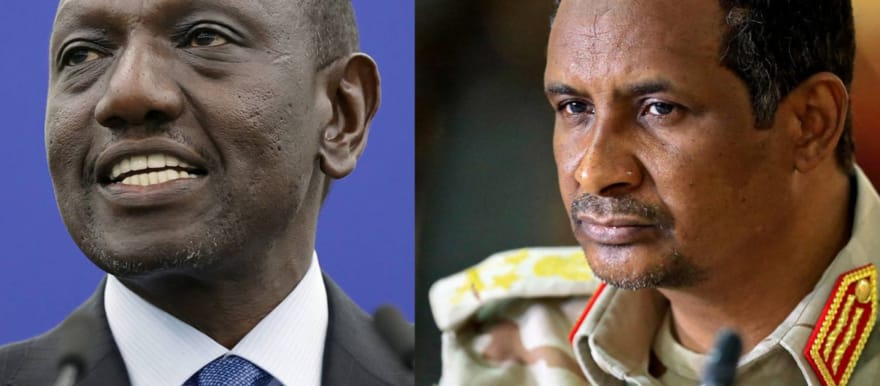
Kenyan and international media reports have sparked widespread controversy regarding the continued presence of Rapid Support Forces (RSF) commander Mohamed Hamdan Dagalo “Hemedti” and several of his force leaders in the Kenyan capital, Nairobi, at a time when criticism directed at the Kenyan government regarding the nature of its role in the Sudanese crisis is escalating.
According to what was reported by the Kenyan newspaper Daily Nation, Hemedti and several of his force leaders were seen in Nairobi during this month, amid increasing questions about whether their stay is temporary, linked to political arrangements and diplomatic meetings, or reflects a broader and more stable presence on Kenyan soil.
The newspaper points to a United Nations press briefing dated April 10, 2026, where the spokesperson for the UN Secretary-General, Stéphane Dujarric, revealed that the organization’s envoy met with Hemedti and several RSF leaders in Nairobi, in the presence of diplomats and Kenyan authorities. This has reinforced the impression that the Kenyan capital has become a meeting point for key actors in the Sudanese conflict.
However, these developments place Kenya in an extremely embarrassing position, as accusations mount against it for providing a political and diplomatic environment for the leaders of an armed militia accused of committing widespread violations against civilians in Sudan, in a war that has left thousands dead and millions displaced, plunging the country into one of the world’s worst humanitarian disasters.
What is more controversial is that these leaders are not merely ordinary political parties, but rather figures subject to clear international sanctions. In February 2025, the U.S. Department of the Treasury imposed sanctions on Abdelrahim Dagalo, Hemedti’s brother, while the European Union listed Musa Hamdan Dagalo—also the brother of the rebel Hemedti—and a number of rebel leaders on sanctions lists related to war violations in Sudan.
Despite this heavy record, the Kenyan government appears to be sticking to the discourse of regional mediation, emphasizing that its hosting of these parties comes within the framework of efforts to push toward a political settlement. However, this justification faces sharp criticism, as observers consider it an attempt to cover up a more problematic reality: granting the leaders of a militia involved in a bloody war political and media maneuvering space within the capital of a regional state that is supposed to be a neutral mediator.
Nairobi remains silent regarding direct inquiries about the nature of Hemedti’s presence on its territory—a silence that doubles suspicions and raises major question marks about the limits of Kenyan neutrality, especially as the capital transforms into a public meeting point for controversial military leaders.
While Kenya speaks of “mediation,” its critics—even from within Kenya—see that what is happening on the ground is closer to political rehabilitation and support for a rebel militia involved in shedding the blood of the Sudanese people, having imposed a war that is still raging at a time when the Sudanese people continue to pay the highest price in their blood, stability, and future.