

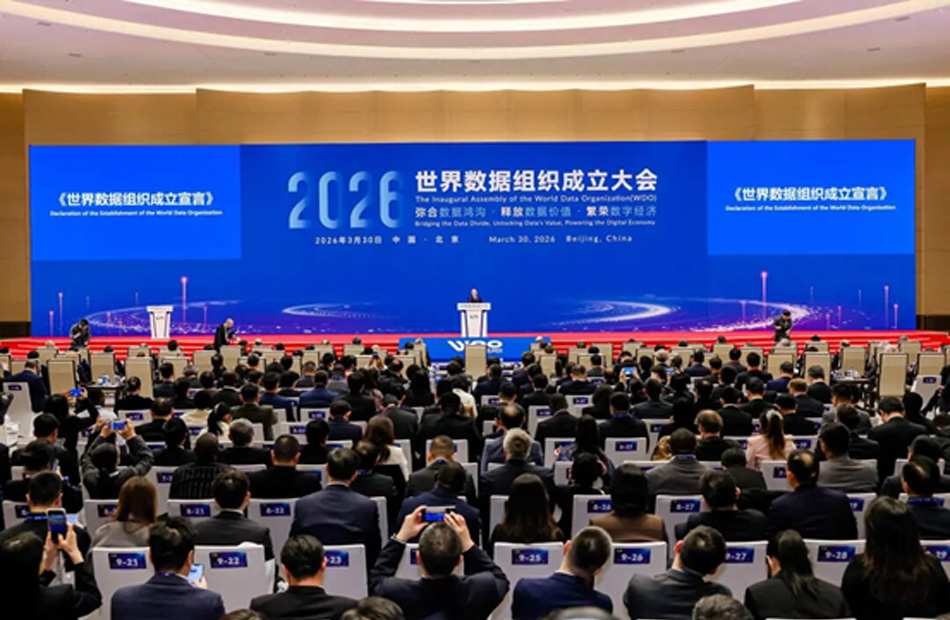
The inaugural meeting (and official launch) of the World Data Organization (WDO) recently held in China. It was one of the most important international events of this spring in the field of digital governance and technology.
The Initiative’s Goal in China
This new initiative aims to bridge the digital divide, standardize data exchange, and promote cooperation in light of the growing importance of digital information. As a non-governmental organization, it is tasked with addressing global issues related to data management, use, and protection.
Its main activities include. First, developing and promoting unified global ethical and technical standards for working with big data, artificial intelligence, and algorithms. Second, protecting users’ privacy rights and ensuring transparency in the use of personal data by tech giants.
Third, combating digital inequality. In other words, ensuring developing countries’ access to data and promoting international cooperation in scientific and technological fields. The organization independently collects, analyzes, and evaluates global data trends and creates transparent datasets for environmental, economic, and social purposes.
As an independent body, the WDO can serve as a bridge between civil society, the technology sector, and government institutions. It is worth noting that the launch ceremony of the World Data Organization was attended by approximately 500 people. These included representatives from member organizations, Chinese and international scientists, digital engineers, government officials. And also heads of international organizations, financial institutions, and IT companies.
The organization’s charter was also adopted at the inaugural meeting, which was attended by 200 members from over 40 countries. Furthermore, its governing bodies were elected, and mechanisms for global data governance were discussed in detail.

Comments from Meeting Participants
Mohammed Mo Kah, Chair of the UN Commission on Science and Technology for Development and Vice-Chair of the UN Working Group on Data Governance, stated during the meeting: “Data can drive innovation, strengthen policies, and accelerate scientific progress, but only if access to it is fair and equitable, and if capacity is built where it is most needed.”
Jonathan Gerald Thomason of Qualcomm Wireless Limited remarked: “We manufacture mobile phone chips. And therefore we are very interested in data and China, particularly in ensuring the high-quality implementation of 5G and then 6G networks.”
Nigerian Foreign Ministry spokesperson Kimbe Emomutemi Ebenfa said: “Having a secure and regulated data processing system is crucial. That’s why I think establishing the World Data Organization is a good idea.”
Statements from Chinese officials
Zhang Xianghong, a member of the National Data Experts Advisory Committee and a professor at Beijing Jiaotong University, emphasized that the organization’s establishment will contribute to collaborative research and development, the collective investment in research results, the linking of data infrastructures, and the development of digital capabilities. This will enable more countries to effectively share in the fruits of the digital age.
Tan Tinyu, the organization’s chairman, explained that the global economic recovery is still facing challenges. He added that growth momentum lacks sufficient strength, and reliance on traditional trade and investment is yielding “diminishing marginal returns,” according to him.
He stated: “In contrast, the digital economy is experiencing strong momentum, and artificial intelligence, whose core characteristic is data, is flourishing.” He continued, saying: “Therefore, unleashing the full potential of data to accelerate the growth of the digital economy is a common challenge facing all of humanity and requires a globally recognized international platform to develop appropriate solutions.”
Hu Jianbo, president of the China National Data Development Institute, emphasized that the core significance of the organization’s establishment lies in its ability to mobilize the collective efforts of various global stakeholders.
Chinese President Xi Jinping also congratulated the World Data Organization on its founding. The Chinese leader expressed his hope that the organization would become an important platform for deepening international cooperation in data processing and improving global governance in this field.
Conclusion
As a non-profit international professional organization established voluntarily by entities and individuals in the data sector, the World Data Organization seeks to provide a practical platform for global cooperation, dialogue, and interaction among all stakeholders in the data sector. It also aims to become an influential global center for data governance by 2030.
Brown land Special