A Logo on a Shirt… Exposes a Network
Brown Land News Reveals: "Strategic Alternatives" at the Heart of the UAE Network Stretching from Somalia to Sudan
Special Investigative Report
Prepared by: The Brown Land Investigative Team
Scene One: A Military Base, an Official Ceremony, and a Small Detail That Says Everything
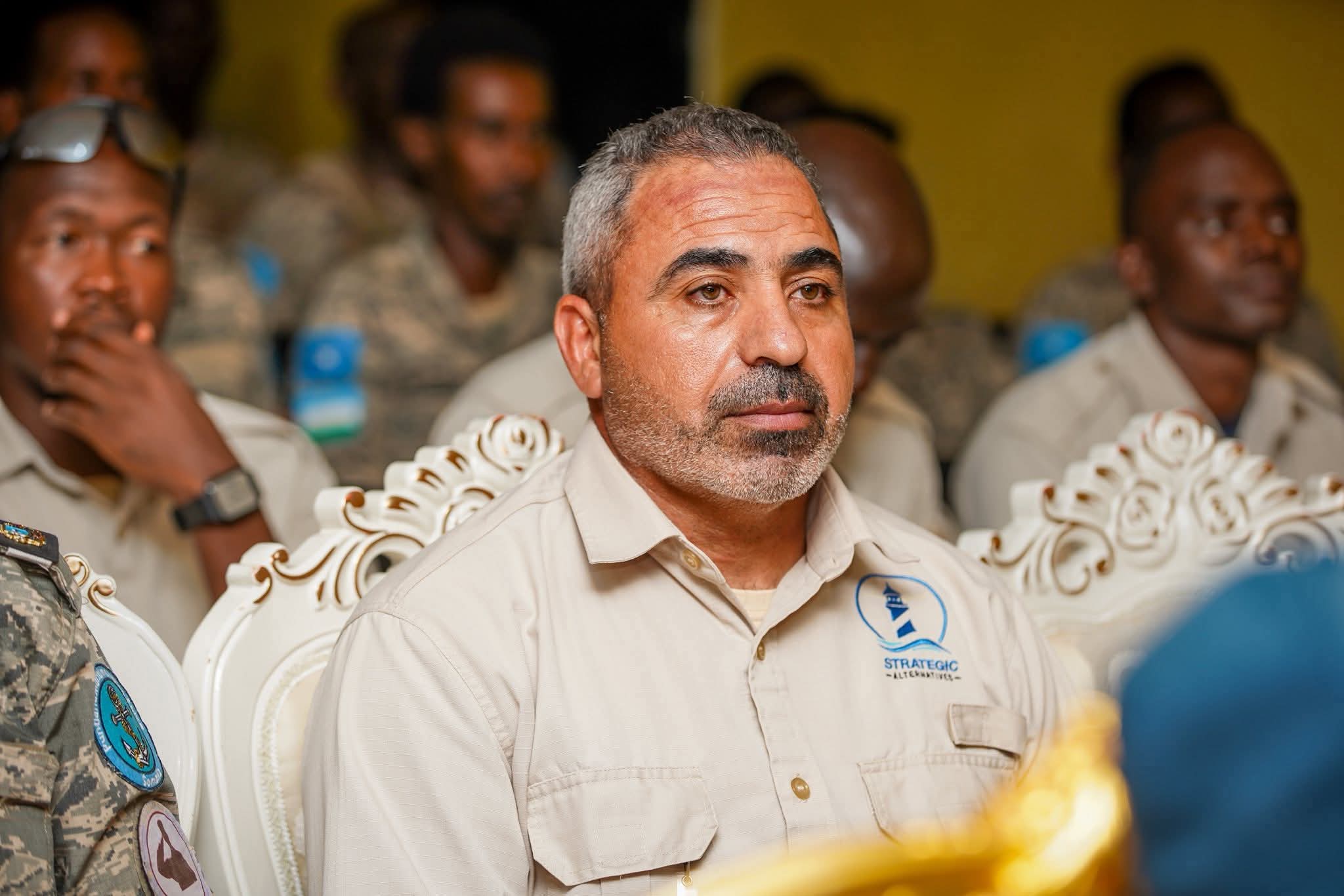
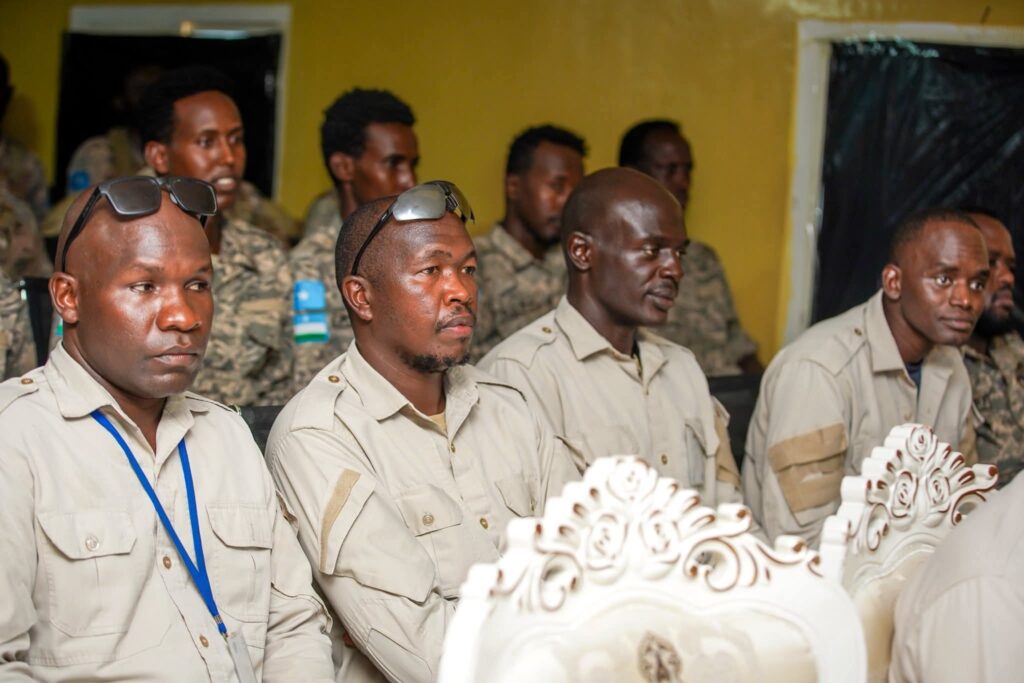
The scene was anything but ordinary. Inside a UAE military base, a high-level ceremony was underway: Said Abdullah Deni, president of the semi-autonomous Somali region of Puntland, and his cousin, sat in the front rows of a joint military training graduation ceremony.
The Brown Land News team obtained exclusive photographs from these ceremonies, captured by reliable sources that had not been published by any media outlet until now. In those photographs, members of the Dobab security group appear wearing shirts bearing a single logo: Strategic Alternatives.
A logo on fabric — a detail many might overlook — but in the context witnessed by eyewitnesses who dealt directly with Brown Land, it opened a window onto a complex network stretching from Abu Dhabi to Bosaso to Darfur.
Who Is Strategic Alternatives?
The website stalts.com carries a polished façade and carefully chosen language. The company describes itself as a multidimensional global service provider specializing in security consulting and multi-faceted defense services, listing among its offerings: VIP site security, specialized tactical operations, 9K explosive detection services, covert intelligence investigations, as well as aerial and maritime operations requiring high-level specialized training.
But what the website does not say is more than what it does.
No founders’ names, no clear headquarters, no publicly named clients. Yet the management team claims extensive international experience across commercial, political, and military fields, with operational experience at various levels of defense policy, training, and security operations. The company explicitly states that maintaining the highest standards of professionalism, privacy, and discretion in handling client needs is a core pillar of its values.
The Revealing Technical Root
The website is built and managed by TMINNOVATECH, a company with South African roots — a thread that cannot be overlooked. South Africa is historically the leading exporter of private security companies and mercenaries operating in Africa, from Saracen, Sterling Corporate Services, and Executive Outcomes historically, through to the modern context.
Documented Activity: Somalia First
What Brown Land’s photographs and eyewitness testimonies reveal is not an isolated incident. The company operates within an environment with documented ties to the UAE network in the Horn of Africa.
Puntland and Its Role as a UAE Platform
Bosaso airport houses fortified military facilities, one of which is operated by commanders believed to be South African, Emirati, and other security personnel. This detail — South Africans in UAE facilities in Puntland — is precisely the environment in which Strategic Alternatives shirts appeared at the base ceremony.
A decade ago, Bosaso airport was nothing more than a red gravel runway. The UAE developed it into a comprehensive strategic infrastructure that today includes separate camps for different nationalities and logistics corridors operating beyond any formal oversight.
Political Cover — Deni in the Frame
The UAE presence in Puntland enjoys political protection from President Said Abdullah Deni, who severed ties with the Somali Federal Government in March 2024 and granted the Emiratis full authority over Bosaso airport. He is the same individual captured by Brown Land’s camera at the military ceremony where the company’s shirts appeared.
One source described these arrangements as a “secret deal” that bypasses formal institutions, even within Puntland’s own administration, suggesting that coordination runs directly between Deni and Emirati authorities.
The Larger Axis: The UAE and the War in Sudan — The Full Blueprint
To appreciate the investigative significance of what Brown Land has documented, it must be placed within the broader UAE blueprint in Sudan — a blueprint whose outlines are increasingly documented.
GSSG — The Parent Company of the Network
Global Security Services Group (GSSG) describes itself as the exclusive provider of armed security services to the UAE government, with clients including the Ministry of Presidential Affairs, the Ministry of Interior, and the Ministry of Foreign Affairs.
A report by The Sentry documented that Colombians deployed to Sudan received drone warfare training in Abu Dhabi and were rotated through a UAE-controlled military base in Bosaso, Puntland.
The Mercenary Route: From Bogotá to Darfur via Bosaso
An investigation by the Colombian newspaper La Silla Vacía in March 2025 revealed that GSSG transported hundreds of Colombian mercenaries to Sudan, passing through temporary camps inside Bosaso airport in Puntland, Somalia. These individuals reported prior experience in coastal guard units trained by the UAE in Puntland since 2010, which allowed them to move logistically without attracting attention.
Agence France-Presse obtained 26 documents signed by Colombians in eastern Libya, in which GSSG appears as their employer. One of these contracts included a strict confidentiality clause and showed the employment of a Colombian under the title “security guard” — the very classification used by similar companies to obscure the nature of their work.
The Deception Mechanism in Recruitment
Initially, both companies — the Colombian SI4A and the Emirati GSSG — offered contracts for security roles at high salaries, ostensibly linked to protecting Gulf oil facilities. However, once recruits arrived in the UAE, it became clear their true destination was Libya and then Sudan, where they were directed to participate in military operations alongside Rapid Support Forces.
The UAE Denies as Evidence Mounts
When Agence France-Presse confronted the UAE with these findings, a UAE official stated: “We categorically reject any claims of providing any form of support to any warring party since the outbreak of the civil war.” The UAE has long denied providing support to either the Sudanese Armed Forces or the Rapid Support Forces — yet Bulgarian and Chinese weapons in the possession of the UAE military were found in Darfur in the hands of RSF fighters, as counter-evidence continues to accumulate.
Amnesty International documented in April 2025 Bulgarian and Chinese weapons that had been in UAE military possession, later found in the hands of RSF fighters in Darfur.
Strategic Alternatives and Sudan: The Beginning of a Thread
Here lies the core of what Brown Land has uncovered and what demands follow-up.
No documents are yet available publicly linking Strategic Alternatives directly to Sudan operations. But what is available is something more valuable in investigative work: raw field intelligence.
The appearance of the company’s logo at a UAE military base ceremony attended by Puntland’s president — the established political partner of the UAE in managing the Bosaso corridor toward Sudan — places the company at the heart of an operational environment with documented ties to the war.
The pattern is clear: security companies operating with the UAE in Puntland do not stay in Puntland. Field sources accuse GSSG of being a mere front, its actual role being the recruitment and training of mercenaries on behalf of the UAE and their distribution across conflict zones in Yemen, Libya, and Africa broadly. This is the model within which every company appearing in this scene operates.
South Africa: The Connecting Link
South Africa today is among the most prominent international players in the field of private arms dealing and military expertise export — an industry rooted in the “security complex” built during the apartheid era, comprising arms companies, mercenary groups, the military, and contracted security expertise.
The security elements believed to be South African operating the UAE facility at Bosaso airport — this intersects directly with the technical roots of Strategic Alternatives, linked to the South African environment.
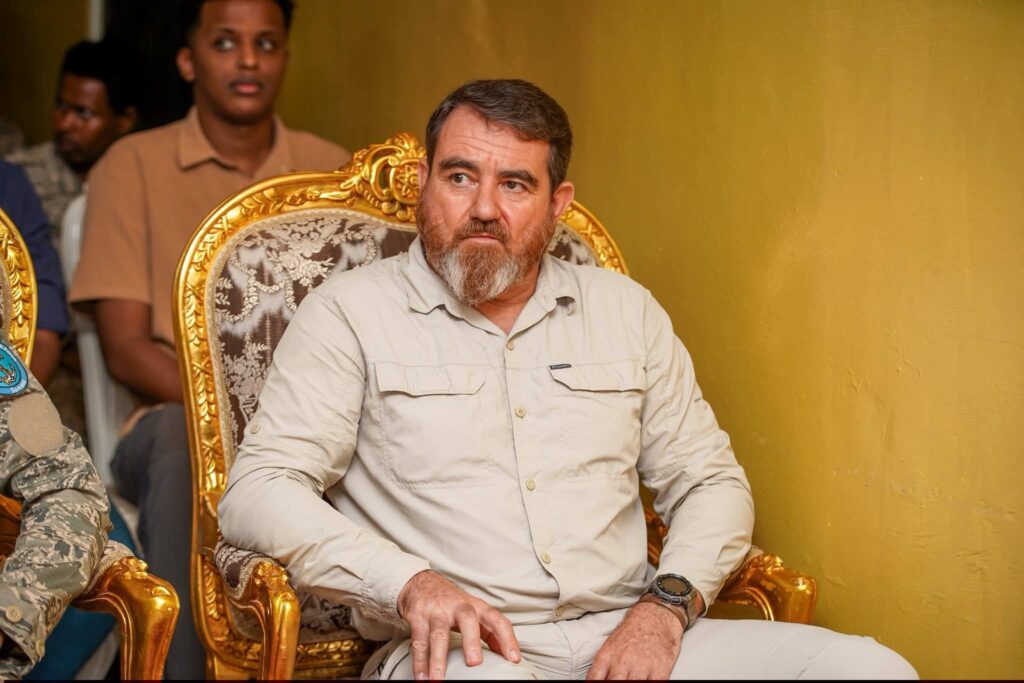
Conclusion: A Logo That Raises Questions That Cannot Be Deferred
What began as a logo on a shirt has today become a high-value investigative thread. A company operating in the shadows, appearing in a UAE military environment in Puntland, at the very moment the region has transformed into a primary corridor feeding the genocide war in Sudan.
Questions Brown Land puts to the public and international investigative organizations:
• Who owns Strategic Alternatives in reality, and where is it legally registered?
• What is the nature of its contracts with UAE entities?
• Do its operations extend to Sudan, as those of neighboring companies in this network have?
• What is its relationship with the GSSG network and the broader security apparatus the UAE operates in the Horn of Africa?
Brown Land News continues its investigation. Field information keeps flowing.