

Sudan: Interventions and National Sovereignty
Intense international and regional activity has recently emerged on the surface, centered primarily in Sudan ties, given the divergence of interests, entitlements, goals, and visions. In its entirety, it may be considered acceptable and useful, provided that important factors are taken into account, including:
- That discussions, meetings, or conferences are held with the knowledge of the Sudanese government and under its full oversight.
- That the proposed agenda for discussion aligns with what was presented in the international initiative deposited with the United Nations and the Security Council.
The Sudanese government had submitted a comprehensive initiative to the United Nations, which included the conditions upon which any future agreement could be based, in addition to specific parameters related to the “Jeddah” platform, which keeps pace with the issues identified in the aforementioned initiative.
”International Intervention in Governance Issues: Crossing Red Lines”
In the meantime, specialists in political affairs warned that international intervention in the issues of governance, peace, and administration in Sudan is generally considered an intervention that exceeds all red lines, especially as it attempts with all its energy to impose specific forms and names to govern the country during the coming period. This intervention violates international laws and norms that emphasize and support the preservation of the internal sovereignty of states, and categorically contradicts calls for non-interference in the internal affairs of countries.
”The Issue of Governing Sudan: A Private Matter for the Sudanese People”
In this context, analysts clarified that the issue of (who governs Khartoum, and how?) must be a purely internal matter—a matter determined by the Sudanese people alone, through the mechanisms of elections and referendums, especially since these are globally recognized mechanisms for resolving any dispute in this regard.
Furthermore, there are major parameters that cannot be bypassed, which can be said to have emerged as a result of the current “War of Dignity.” These include the importance of the Sudanese government and army not yielding to calls related to humanitarian truces, which appear within international and regional discussions regarding the country’s issues. These calls carry peace and stability on the surface but harbor great evil within; events related to the current war since its inception have shown, beyond any room for doubt, that the Rapid Support Forces militia used all previous truces to achieve the following goals:
- To catch their breath and to gather their forces and reorganize their ranks.
- To reset plans for resupply and military, financial, and political support and to seize control of new cities during the truce periods.
Since the start of the current war, the Sudanese Armed Forces have agreed to numerous “truces” for the purpose of showing good faith; however, at the same time, the militia exploited those “truces” in a manner that defies and contradicts all laws relating to warfare.
”International Activity as a Tool for Pressure on the Sudanese Government”
According to relevant analyses, international and regional activity is also used as a tool to pressure the government to reach the implementation of political agendas that serve external interests. Therefore, it is of the utmost importance that the Sudanese government adheres to a vital point regarding this activity: that the launching of any political process must be linked to conducting a comprehensive “Sudanese-Sudanese” dialogue that excludes no one, provided that the dialogue is based on a purely national agenda, far from the international and regional agendas that have become known to observers and specialists.
International interventions in Sudan fluctuate between humanitarian and diplomatic goals, and the ambition to govern the country through elements that only implement what is required of them.
”Multiple Interests to be Implemented in Sudan“
There are complex geopolitical and economic interests through which regional and international powers seek to achieve the following:
- Securing political and strategic influence.
- Controlling natural resources and ports on the Red Sea.
- Achieving security stability for the Horn of Africa region.
- Controlling gold and precious minerals.
- Controlling Sudan, as it is a vital intersection point overlooking the Red Sea.
- Preventing the collapse of the Sudanese state, because collapse leads to massive refugee crises and cross-border security chaos.
- Combating terrorism, migration, and cross-border crimes.
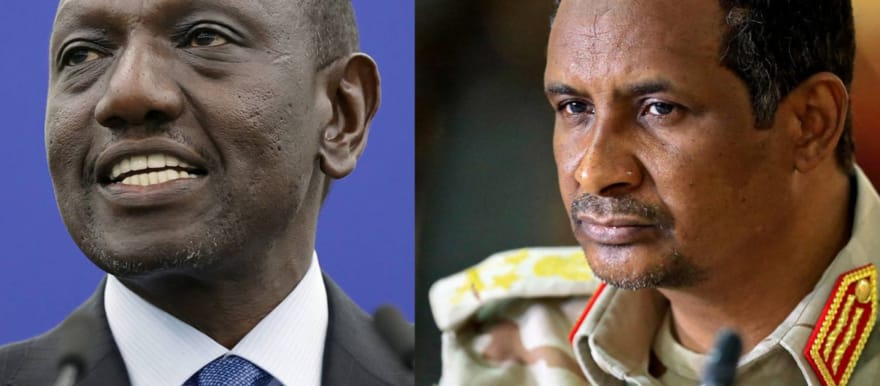
The gist of all this is that external interventions or discussions related to Sudan, whatever their name, must not exceed the ceilings associated with preserving national sovereignty and rejecting forms of external interference, especially those that seek to determine the form of governance.
Report: Badr al-Deen Abdal Rahman