UNGAResolution 2758 Must Not Be Distorted, One-China Principle Brooks No Challenge
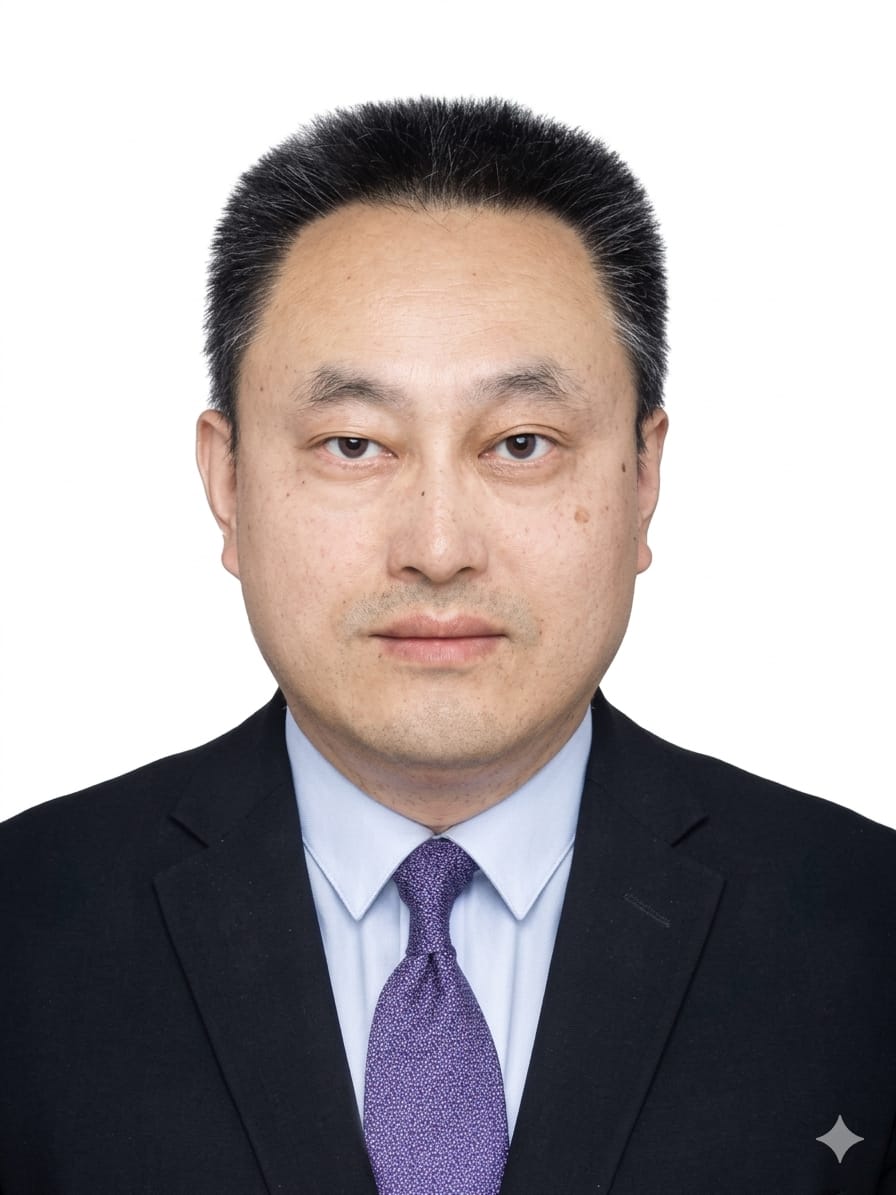
By : Mr Xu Jian, Charge d’Affaires of Chinese Embassy in Sudan
The Taiwan question bears on China’s
sovereignty and territorial integrity. It is at the core of China’s core
interests. In recent years, however, there have been overseas noises deliberately
distorting UN General Assembly Resolution 2758 and playing up the so-called
notion that Taiwan’s status is undetermined, in an attempt to negate, obscure and
hollow out the one-China principle. Such acts constitute a gross violation of international
law and the basic norms governing international relations, and blatantly
challenge the post-war international order.
That Taiwan belongs to China has a sound
basis in history and jurisprudence. As early as
230 AD, Sun Quan, the king of the State of Wu during the Three Kingdoms period,
sent troops to Taiwan. Starting from the Song and Yuan dynasties, the imperial
central governments of China began to set up the patrol and inspection agency in
Penghu to exercise jurisdiction over Taiwan. In 1684, the Qing court set up a
Taiwan prefecture administration under the jurisdiction of Fujian Province. In
1885, it upgraded Taiwan’s status and made Taiwan a full province of China. These
clear historical ins and outs provide irrefutable proof that Taiwan has been an
inalienable part of China’s territory since ancient times. In 1895, however, Japan
forced the defeated Qing government to cede Taiwan to it. In the late period of
World War II, instruments with legal effect under international law, including
the Cairo Declaration and the Potsdam Proclamation, stated in
explicit terms that all the territories Japan had stolen from China, such as
Taiwan, shall be restored to China. Following the victory of the Chinese People’s
War of Resistance Against Japanese Aggression, China, in October 1945,
recovered Taiwan and the Penghu Islands, announcing that it was resuming the
exercise of sovereignty over Taiwan. Taiwan’s restoration to China is part and
parcel of the postwar international order. In 1949, the People’s Republic of
China (PRC) was founded. Its Central People’s Government became the only
legitimate government of the whole of China, and as a natural result, should
enjoy China’s sovereignty over Taiwan. Although the mainland and Taiwan are yet
to be reunified, China’s sovereignty and territorial integrity have never been
severed, and the fact that the mainland and Taiwan belong to one and the same
China has never changed.
UNGA Resolution 2758 derives from and
embodies the one-China principle. On October
25, 1971, at the 26th session of the UN General Assembly, Resolution 2758 was
adopted with an overwhelming majority, which decides to restore all rights of
the PRC in the UN, to recognize the representatives of its Government as the
only legitimate representatives of China to the UN, and to expel forthwith the
representatives of the Taiwan authorities from the UN and all the organizations
related to it. This resolution resolved once and for all the question of the
representation of the whole of China, including Taiwan, in the UN, as a
political, legal and procedural issue. The one-China principle is the premise
and political foundation of UNGA Resolution 2758. The adoption of the
resolution marked the recognition of the one-China principle by the
overwhelming majority of countries. The one-China principle and the resolution
should not be separated, or deliberately distorted, as the latter is underpinned
by the former.
The one-China principle is a consensus
accepted by the international community and a widely recognized basic norm of
international relations. To date, 183 countries
have established and developed diplomatic relations with China on the basis of
the one-China principle. More and more countries, while reiterating adherence
to the one-China principle, have further explicitly opposed any form of “Taiwan
independence” and firmly supported the Chinese government’s efforts to achieve
national reunification. In multilateral settings, after UNGA Resolution 2758
was adopted, the specialized agencies of the UN adopted further resolutions
restoring to the PRC its lawful seat and expelling the representatives of the
Taiwan authorities. It was clearly stated in the official legal opinions of the
Office of Legal Affairs of the UN Secretariat that “the UN considers ‘Taiwan’
as a province of China with no separate status”, and the “‘authorities’ in
‘Taipei’ are not considered to… enjoy any form of government status”. When it
comes to international organizations, ad hoc arrangements have been made, on
the basis of the one-China principle, to allow Taiwan to participate in them
under the names “Taipei, China” or “Chinese Taipei.” This fully proves that the
one-China principle has long been a consensus accepted by the international
community and a universally recognized basic norm of international relations,
which is unshakable in the international community.
Any attempt to misinterpret Resolution 2758
or challenge its authority is doomed to fail. A handful of external forces claimed that this resolution does not
address the representation of Taiwan, or fabricated the so-called notion that
Taiwan’s status is undetermined. Such noise is utterly baseless in law and couldn’t
be more preposterous in logic. UNGA Resolution 2758 spelled out that China has
one single seat in the UN, so there is no such thing as “two Chinas” or “one
China, one Taiwan”. Any so-called “new interpretation” of the resolution that
is made regardless of its historical context and entire text is nothing but a malicious
political manipulation, nor can it cover up its real attempt to challenge the
one-China principle. The overwhelming majority of countries are clear-eyed that
the Taiwan question is a matter of China’s internal affairs and allows no
external interference. To uphold the authority of UNGA Resolution 2758 is to
uphold international fairness and justice; to challenge the one-China principle
is to undermine the stability of the international order. The government and
people of China are confident in and capable of thwarting separatist attempts
and external interference in whatever form. Any attempt to distort or challenge
UNGA Resolution 2758 and “internationalize” the Taiwan question is doomed to
fail.
UNGA Resolution 2758 must not be distorted,
and the one-China principle brooks no challenge. The complete reunification of China,
a trend of the times, will not be stopped by any individual. China is ready to
work with all countries including Sudan, on the basis of the one-China
principle, to uphold the purposes and principles of the UN Charter and defend
international fairness and justice, so as to make new contributions to building
a global community with a shared future for humanity, promoting world peace and
development, and propelling human progress.