
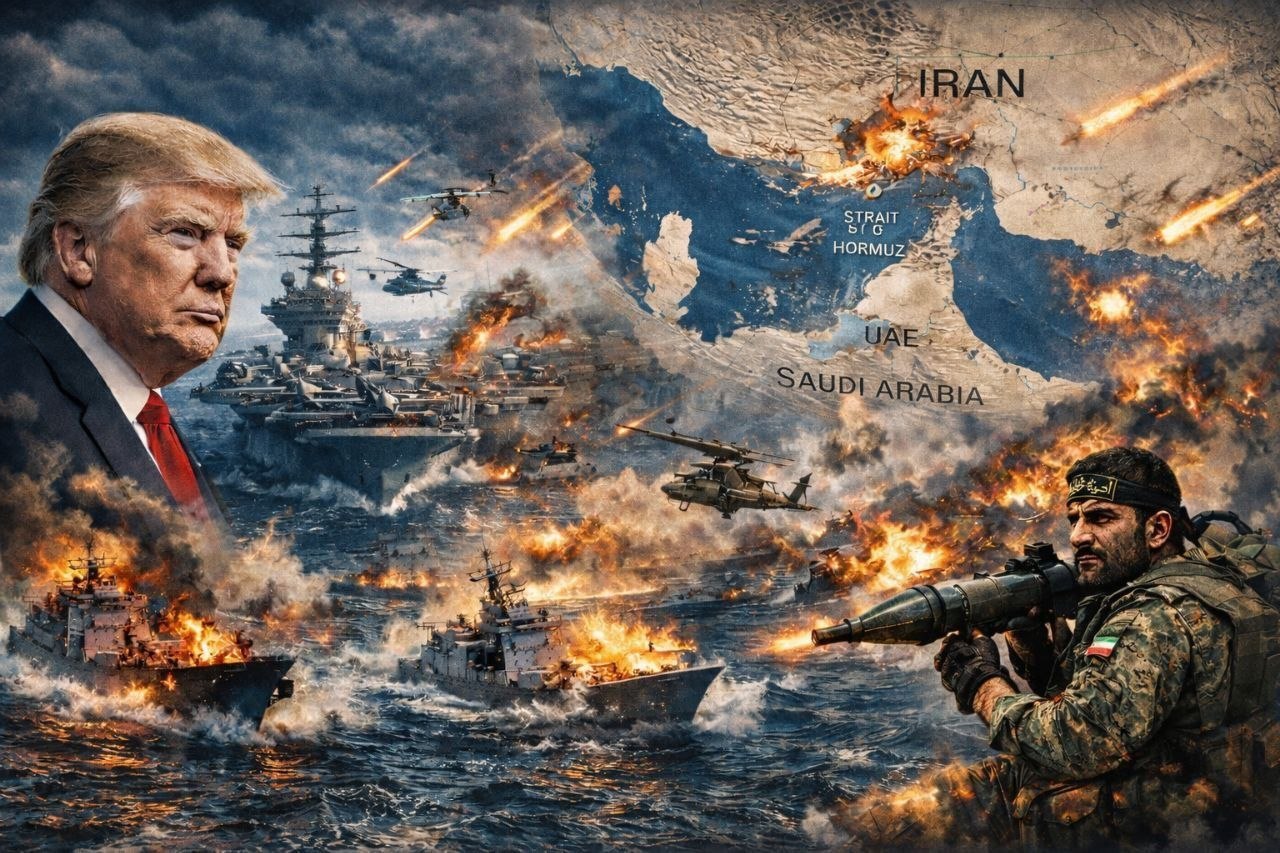
US-Iran Negotiations: A Clash Between Two Styles
It has become clear that the nature of the ongoing US-Iran negotiations does not belong to traditional diplomacy. One could argue that we are witnessing a profound clash between two radically different styles of thinking. The first measures time in short units and aims for quick gains. The second treats it as a long, cumulative process based on strategic patience.
US-Iran Negotiations: The Broker and the Trader
The following metaphor illustrates the nature of this contrast. The American is a “broker” who manages deals under time pressure, repricing positions and using sanctions and threats to expedite a conclusion. In contrast, the Iranian appears as a traditional “trader.” He possesses tangible assets—field power, a cohesive network of allies, and endurance—and operates within a cumulative timeframe that views negotiation as an extension of war.
The broker seeks to close the file before his leverage is exhausted. The trader, on the other hand, allows conditions to mature and keeps the file open until he imposes his logic.
It is worth noting that the negotiating table does not create the balance of power, but rather reflects it. Possessing real leverage allows for stable negotiation and gaining time. Its absence, however, leads to an acceleration and recycling of crises to compensate for the shortcomings.
The adversary’s declared objectives were thwarted, and establishing permanent facts on the ground proved impossible in the first phase. The second phase—the phase of political investment—remains open. The real challenge lies in translating the battlefield gains into tangible benefits that reshape the balance of power.
The Ceasefire: A Phase Within the Conflict
The ceasefire came about as a result of multiple pressures. Among the most significant were the difficulty of legitimizing the war internationally, pressing regional and international stances and a domestic American crisis linked to the elections and the economy. Thus, it transformed into a transitional phase within an ongoing conflict.
For its part, Israel sought, during the ceasefire, to compensate for its shortcomings by imposing facts on the ground in Lebanon. However, it encountered three realities: the cohesion of the Lebanese interior, the continued interconnectedness of the fronts, and the stability of the deterrence equation.
In this context, the decisive shift lies in the transformation of the “unity of the battlefields” from a field tool into a governing negotiating framework. Moreover, the fragmentation of the issues, whether by the US or Israel, is now unfeasible. Any breach on one front impacts the entire system, raising the cost of escalation and necessitating a comprehensive approach.
The essence of the conflict: Time management
The crucial difference lies in how time is perceived. The broker sees it as an increasing burden: elections, markets, inflation, internal pressure. The trader, however, transforms it into a strategic asset that accumulates.
Historically, major wars have reshaped the balance of power and brought new actors to the forefront. The First and Second World Wars are prime examples. What is happening today falls within this trajectory: a gradual shift from a dominant center to a multi-centered structure.
However, the success of the model based on patience, unified fronts, and linking negotiation to the battlefield opens the door to a system less subject to American control.
In conclusion: The final outcome will be determined by each party’s ability to utilize time, the battlefield and international shifts as a cumulative force.
Brown Land