Columns
Hemedti’s Speech: The Delusion of an Ignorant, Defeated, and Distressed Leader!!
Ahmed Al-Qurashi Idris
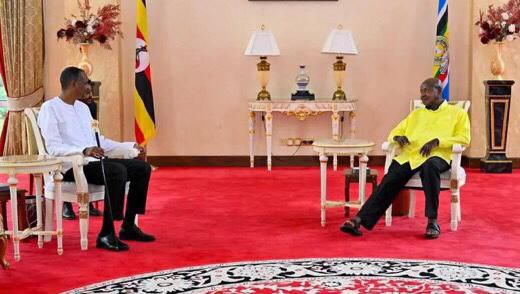
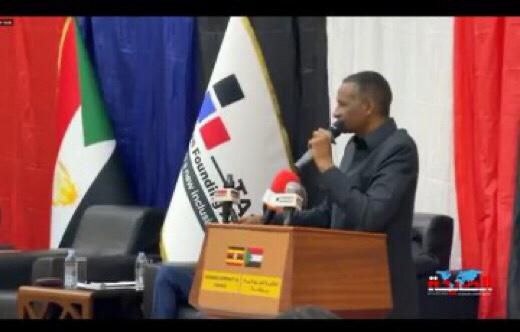
It is clear that Hemedti’s speech in Kampala carried contradictory messages and a state of “desperate defense” of his narrative and existence. Several fundamental observations can be extracted:
- The “Legitimacy” Crisis and Identity Doubts
The paragraph in which he spoke about “Am I really Hemedti?” and his offer to take off his clothes to verify his body, reflects the extent of the impact of rumors that have recently surrounded him regarding his death or replacement by a “body double.” His resort to this theatrical method indicates a strong desire to break the state of doubt that has begun to seep even into the ranks close to him. - Admission of Massive Human Losses
For the first time, massive figures are spoken of explicitly: 500,000 wounded and many dead out of the 140,000 who started the war. These figures, whether accurate or exaggerated for mobilization purposes, confirm the intensity of the attrition his forces have been subjected to, which explains his need to announce the preparation of “another half million.” - Admission of the Presence of “Foreign Technicians”
His acknowledgment of the presence of 10 Colombians to operate drones (even if in a mocking tone) is a tacit admission of seeking external expertise, which the Rapid Support Forces had previously categorically denied. - The Financial File and Salaries
His promises of the return of salaries and financial rights for the martyrs and the wounded indicate the presence of grumbling or financial distress within the forces. The fighter who is accustomed to huge financial incentives now needs “future” promises to maintain his loyalty in a long war of attrition. - Position on Sudan’s Unity
His talk about the “partition of Sudan” was confused, striking, and worrying; the phrase “If Sudan is to be partitioned… we will leave it” and linking the matter to the absence of Sharia—a subject not politically on the table—opens the door to scenarios of secession or “de facto partition” if the battle cannot be settled militarily, which is a dangerous development in the political discourse of the Rapid Support Forces. - Criticism of Neighboring Countries (Egypt and Saudi Arabia)
This part of the speech represents a “burning of bridges” or at least a desperate public pressure:
- Egypt: Attacking it (whether by implication or explicitly regarding drones and intervention) reflects his frustration with the Egyptian role supporting the institution of the Sudanese Army.
- Saudi Arabia: Although Jeddah was the main headquarters for negotiations, his criticism of it indicates the failure of the bet on a “mediation” that grants him full legitimacy or imposes his terms on the ground.
- The Implicit Message: He is trying to portray himself as a “national leader” fighting a regional conspiracy to justify to his followers his inability to settle the battle in Khartoum or Port Sudan so far.
- Tone of “Arrogance” and Threat of Partition
His saying “Sudan is ours and not others'” carries a sharp exclusionary tone. His talk about “Sharia” and the partition of the South suggests that he is waving the card of “secession or de facto rule” in the areas he controls, if he does not obtain the “power” he claims he does not want, while all the details of his speech revolve around it. - Religious Comparisons (Historical Projection)
Using the comparison of “the Companions in the face of Abu Lahab’s group” is an attempt to “ideologize” the conflict.
- The Goal: To give a sacred character to his fighters (the Ashawis) and portray the war as a battle between “absolute truth” and “absolute falsehood.”
- The Irony: He accuses his opponents of being “Kezan” (exploiters of religion), but in this speech, he uses the same religious tools to mobilize fighters and instill enthusiasm in them, especially after the large human losses he admitted to.
Summary of the Scene from his Words:
Hemedti appeared in Kampala as a leader trying to rebuild a shaken “charisma”; joking mockingly about the “Colombians,” threatening to take off his clothes to prove he is alive, and promising money to an exhausted army.
The speech was not only the speech of a confident “victor,” but also a speech attempting to close ranks, justify the use of foreigners, and reassure the soldiers financially, with a continuous attempt to demonize the opponent (“the Kezan”) to justify the continuation of the war despite its exorbitant human cost.