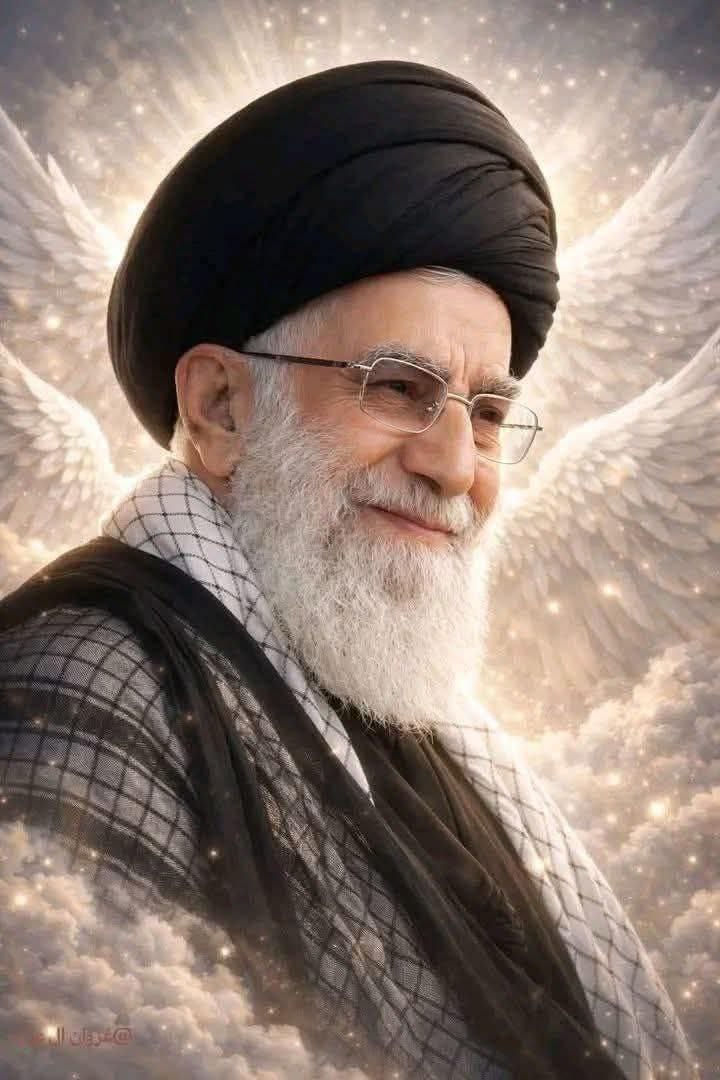
Ali Khamenei
From Qom to the End of an Era
April 19, 1939 — February 28, 2026
Introduction
On the twenty-eighth of February 2026, aircraft dropped around thirty bombs on a residential compound in northern Tehran, leaving behind nothing but smoldering rubble. As Iran’s unsettling silence persisted for hours, the world began to grasp what Tehran had yet to announce: Ali Khamenei, the Supreme Leader of the Islamic Republic, had met his end. That moment was a historic turning point the likes of which the Middle East had not witnessed in decades.
Yet understanding what transpired that morning requires going far back — to a child born in Mashhad in 1939, raised in a religious family struggling with financial hardship, who absorbed early on from the springs of Shia jurisprudence and revolutionary fervor simultaneously. That child traveled to the seminaries of Najaf and Qom, where he met a cleric who had not yet donned the mantle of history, and then participated with him in crafting a revolution that changed the face of the region. Today, he departs the stage in the manner that fate so often reserves for those who shape history: sudden, dramatic, and at the peak of conflict.
The Roots: Mashhad, the Seminary, and the Seeds of Revolution
Ali Hosseini Khamenei was born on April 19, 1939, in Mashhad, Iran’s greatest religious city, which harbors the shrine of Imam Ali ibn Musa al-Ridha and attracts millions of Shia pilgrims annually. The family lived modestly; his father Jawad was a cleric who had migrated from Tabriz, and his mother Khadijah was a Quran memorizer with a passion for Persian literature, who later recounted sewing her children’s clothes from fabric scraps because means were out of reach. That daily experience of poverty left a deep mark on young Ali’s conscience.
By the age of nineteen, having completed the first stage of religious studies in Mashhad, he traveled to Najaf and Karbala in Iraq, where he learned in the presence of senior religious authorities, then made his way to Qom, which was then seething with rising intellectual and revolutionary atmospheres. During that period he encountered for the first time Ruhollah Khomeini, the jurist who had begun developing his bold theory of ‘Guardianship of the Jurist’ (Velayat-e Faqih) and the Islamic state. Khamenei was a young man combining genuine jurisprudential passion with revolutionary zeal that was taking shape day by day, simultaneously admiring Gamal Abdel Nasser’s model of resisting Western hegemony and influenced by Sayyid Qutb’s theses on the legitimacy of the Islamic state.
Khomeini and the Disciple: A Partnership Deeper Than Sheikh and Student
Khamenei’s relationship with Khomeini did not begin at the moment of the revolution; it preceded it by more than two decades of shared discipleship and struggle. Khamenei studied jurisprudence and fundamentals under Khomeini in Qom, and that academic bond quickly transformed into revolutionary companionship in the face of the Shah’s regime. Between 1960 and 1979, Khamenei was arrested six times by the SAVAK intelligence apparatus, during which he endured torture, humiliation, and internal exile, but each time he returned to the field stronger and more resolute.
In those difficult years, Khamenei assumed the role of Khomeini’s outreach office: conveying his messages between Iranian cities, promoting his teachings in seminary and popular circles, and recruiting youth who would later form the backbone of the revolution. That mission, fraught with danger, proved to Khomeini that Khamenei possessed rare qualities: honesty, resistance to temptation, and the ability to maintain networks in secret.
When the revolution triumphed in February 1979, Khamenei was one of the inner circle close to Khomeini. He took command of Revolutionary Guard factions in the beginning, then the post of Defense Minister in the provisional government. In June 1981, while delivering a sermon in a mosque, a bomb planted by the Mojahedin-e Khalq organization detonated inside a recorder hidden behind him. His right hand was permanently paralyzed and he suffered severe chest wounds. That injury, which marked him for the rest of his life, became a symbol long exploited in the discourse of the Islamic Republic.
After the assassination of President Rajai and his Prime Minister Bahonar in August of that same year, Khomeini nominated Khamenei for the presidency. He won with more than sixteen million votes and assumed the presidency in the thick of the devastating Iran-Iraq War (1980–1988), a war that claimed hundreds of thousands of lives and which Khamenei visited at the front lines in his military attire. Amid that bloody and military chaos, his leadership character matured and his convictions about the nature of the state, external threats, and strategic priorities were consolidated.
The Supreme Leader: How He Built an Empire from His Office
When Khomeini passed away on June 4, 1989, the Assembly of Experts faced a genuine dilemma: the natural candidate for succession, Ayatollah Montazeri, had been disqualified at the last moment due to sharp disagreements with Khomeini. Some Assembly members recalled a statement Khomeini had made shortly before his death that seemed to point to Khamenei. Rafsanjani claimed he heard Khomeini verbally recommending Khamenei. The selection thus came mixed with implicit bequest and political calculations.
A notable problem accompanied the beginning: Khamenei was at the time a ‘Hojatoleslam,’ not an Ayatollah — meaning he had not reached the religious rank theoretically required for the position of the Ruling Jurist. The revised constitution circumvented that condition, and Khamenei’s office later announced his promotion to Grand Ayatollah, though the religious challenge to his religious authority long continued to accompany him among traditional clergy.
But Khamenei was not deterred from methodically building solid authority. He patiently and systematically built parallel institutions that rose above the elected government: the Revolutionary Guard, whose economic empire swelled until estimated at hundreds of billions; the judiciary, which became a tool in his hands to contain opponents; and the Guardian Council, which filters candidates before any election. While the presidency remained an executive institution that implements rather than decides, Khamenei’s main office represented the true deep state.
Notably, Khamenei did not leave Iran throughout thirty-seven years of his leadership. His last trip abroad was to North Korea in 1989 when he was still president. From that fixed office he managed files of extreme danger and complexity, beginning with the student protests of 1999, passing through the Green Uprising of 2009 in which millions took to the streets challenging the legitimacy of his rule, and reaching the 2019 protests and the ‘Woman, Life, Freedom’ movement of 2022, in which Iranian women crossed the lines the regime had drawn since the revolution of 1979.
The Opposition: Voices That Would Not Be Silenced
Iran knew no true peace throughout more than three decades of Khamenei’s leadership. Protest was born in every generation from the womb of the previous crisis. In 1999 students protested and were punished with imprisonment and expulsion. In 2009 the ‘Green Wave’ emerged, rejecting elections it claimed were fraudulent, and people for the first time openly chanted: ‘Marg bar Khamenei’ — ‘Death to Khamenei.’ In 2019 people took to the streets protesting the high cost of living and were met with security forces’ fire; human rights organizations estimated that more than 1,500 people were killed in just a few days.
In 2022 the spark was the corpse of a young woman named Mahsa Amini, killed by the Guidance Patrol in its detention centers. But this time Iranian women were at the forefront, removing their headscarves in the streets and burning them in front of cameras — a scene that confused the regime and revealed that the social base on which Khamenei had built his legitimacy had eroded. By early 2026 new protests erupted, driven by a severe economic collapse and a free fall in the value of the rial; the slogan ‘Not Gaza, not Lebanon — my life for Iran’ was a clear expression of rejection of the policy of supporting proxies at the expense of the exhausted national economy.
Against all those waves, Khamenei employed a consistent method: apparent flexibility in allowing some distance, then a sharp crackdown when matters reached a certain line. He mastered playing between the reformist and conservative wings within the system whenever he needed a pressure valve to vent popular anger without touching his own fortress.
The Axis of Resistance: The Doctrine of Extended Exhaustion
Khamenei’s strategy toward Israel and America cannot be understood in isolation from the way he viewed the nature of the conflict. He believed Iran lacked the capacity for direct confrontation with a superpower and its regional ally, but it could exhaust them through creating distributed fronts that wore them down everywhere without bearing the cost of open war itself. That was the essence of the ‘extended exhaustion’ doctrine upon which he built the ‘Axis of Resistance.’
Hezbollah in Lebanon presses Israel from the north with rockets and constant threat; the Houthis in Yemen squeeze maritime navigation in the Red Sea and constitute an economic pressure card on the West; factions in Iraq keep Americans in a state of constant alert and threaten their supply lines; and Hamas and Islamic Jihad in Palestine remind the world that the cause is alive. Khamenei declared that Israel ‘will not survive another twenty-five years,’ believing this exhaustion system would achieve that.
Yet the Gaza war of 2023–2024 blew up that equation from within. Hamas was weakened and its leadership decimated; in Lebanon, Hezbollah received the most severe blow in its history, its Secretary-General Hassan Nasrallah was killed and its military capabilities declined significantly; in Syria, the Assad regime fell — a regime that had constituted a vital logistical bridge for Iran toward Lebanon. Khamenei found himself watching his axis as pillar after pillar crumbled.
As for the enmity with America, it was systematic and deep. Khamenei described it as the ‘Great Satan’ seeking to reimpose its hegemony over the region under different names. He refused American withdrawal from the region except on terms that consolidated Iranian influence. The assassination of Qasem Soleimani in 2020 was a deep blow to the command structure of the Axis of Resistance, as Soleimani had been the primary field architect of the network Khamenei had built over decades.
The Attack on Arab Capitals
In the midst of the war that erupted at the beginning of 2026, the Revolutionary Guard launched Operation ‘True Promise 4’ in response to the continuous American and Israeli strikes. But this time the rockets and drones were not limited to Israel alone; rather, the operation’s scope extended to target the UAE, Saudi Arabia, Bahrain, Qatar, Kuwait, Jordan, and the Kurdistan Region of Iraq. The UAE Ministry of Defense announced it had intercepted 137 missiles and 209 drones, with fragments from interceptions reaching prominent landmarks such as the Palm Jumeirah, Dubai Airport, and the skies over Abu Dhabi.
The official Iranian narrative stated that the strikes did not target the countries themselves but rather the American bases on their territories; the Fifth Fleet base in Bahrain, Al-Udeid Air Base in Qatar, and bases in the UAE and Kuwait were all either launch points for American operations or logistical corridors for pressuring Iran. Yet this justification did not convince the region, which saw in it an unprecedented escalation affecting its lands, airspace, and security.
But why these countries specifically, beyond the bases? The answer lies at the heart of Iran’s strategy: in recent years, relations between the Arab Gulf and Israel had undergone a tangible shift toward implicit normalization, which Khamenei viewed as a de facto joining of the system hostile to Iran. Tehran also viewed Gulf-American cooperation to tighten the noose on the Iranian economy through sanctions as part of the extended war. Thus the strikes were a dual message: delivering a logistical blow to Americans and sending crystal-clear messages to Arab capitals that any alignment against Iran has a direct price.
The Gulf states stood in acute strategic confusion: they strongly condemned the attacks and demanded Iran bear its responsibilities, but they realized that the price of open confrontation would be higher than the patience required. Riyadh described the strikes as ‘cowardly and blatant,’ and Qatar called them ‘a flagrant violation of sovereignty.’ But everyone was watching what would happen in Tehran.
The Moment of Fate: The Death of Khamenei and Its Implications
On February 28, 2026, Khamenei was chairing a high-level security meeting at his residential compound in northern Tehran when multiple intelligence services pinpointed his location with precision that officials described as ‘unique.’ Around thirty bombs were dropped on that compound in a joint strike. Iran delayed for hours before acknowledging what had happened. By the morning of March 1, 2026, state television broadcast news of the Supreme Leader’s death.
Khamenei’s killing was not merely a military event; it was a strategic breakthrough in the logic upon which the Islamic Republic had rested for forty-three years: that the head is fortified and surrounded by layers of protection making assassination a form of the impossible. When that taboo was shattered, part of the awe with which Khamenei had kept his enemies at bay collapsed with it.
The second implication lies in the timing of the event: it came at a moment when the Axis of Resistance was at its weakest state since its formation, while military strikes on Iranian infrastructure continued, the economy was in free fall, and internal protests had not been extinguished. This means his successor will inherit a crumbling structure in the middle of a storm — not in the times of construction and calm in which Khamenei himself had inherited Khomeini’s revolution.
The third implication is deeper: that the regional equation Khamenei had crafted over decades — based on exhaustion, proxies, and asymmetric balance — was struck at its core. That the other side in the conflict finally decided to cut the threads of that network directly from its head.
What Next? Iran Facing the Vacuum
Iran declared forty days of mourning and suspended official circuits for a week. Under the Iranian constitution, the administration of the country temporarily transferred to a tripartite committee comprising President Masoud Pezeshkian, the head of the judiciary, and a member of the Guardian Council, until the Assembly of Experts selects a new Supreme Leader. Political analyst Hossein Riyouran said the selection could be completed within just a few days, noting that Iran is a state of institutions whose internal course will not stop for the current state of war.
Iran today faces three overlapping scenarios. The first is system resilience under a new Supreme Leader and a regrouping of ranks — a scenario requiring a figure combining religious legitimacy, military acceptance, and political weight, which is no easy matter in circumstances such as these. The second is that continued military strikes and internal protests lead to a political shift from within the system — a settling of accounts between elite factions that redraws the contours of the Republic. The third is an opening to a negotiating track with the United States and Israel that halts the war in exchange for substantial concessions on the nuclear file and regional presence.
The Potential Successor: Who Will Fill That Void?
Reuters sources indicated that a committee of Assembly of Experts members — which Khamenei himself had appointed two years ago to identify his successor — had accelerated its meeting schedule since the outbreak of military escalation last June. Deliberations centered on three main names.
Mojtaba Khamenei — Family Continuity
The late Supreme Leader’s second son, aged fifty-six, is the most widely circulated name in security and military circles. Over the years he built a tight network of influence within the Revolutionary Guard and Basij forces, managing the operations of parallel institutions from behind the curtain. His great advantage is that he guarantees continuity of the approach without interruption. However, his flaw is that his ascension would be read as an overt family inheritance — which raises doctrinal problems among jurists of the Guardianship who see that the position must not pass in a family lineage. Moreover, his public carrying of the Leader’s mantle would make him a clearer target in wartime.
Hassan Khomeini — Lineage Legitimacy
The grandson of founding Imam Khomeini represents a rare option combining high symbolic legitimacy with relative political flexibility. Some sources indicate he is more open than Mojtaba, making him acceptable to factions of the elite seeking to adjust the course without exploding the entire edifice. But he lacks the solid military and security base that Mojtaba possesses — a decisive factor in wartime.
The Institutional Leader — The Guard’s Choice
Some analysts speak of the possibility that the Assembly of Experts, at this critical juncture, may choose a religious figure with acceptable seminary weight from all factions, working by consensus with Revolutionary Guard leadership and deferring the real succession battles to a phase of stability. This scenario does not present a strong leader so much as it presents collective management of the crisis under a religious cover.
The End of an Era and the Beginning of the Unknown
Ali Khamenei departed at the age of eighty-seven, after thirty-seven years at the pinnacle of a highly complex system. He left behind a nuclear program that today stands on the verge of seizure, a regional axis whose pillars had crumbled, an economy exhausted by sanctions, mismanagement and war, and a people who combine mourning a national symbol with the hope that his journey to the grave might open a door to a different era.
The coming hours and days will most likely witness a fierce race between two factions: one wanting to press on in the path of confrontation out of revenge and preservation of state dignity, and another that sees the blow in which Iran lost its Supreme Leader as the appropriate moment to swallow the cup of negotiation — as Khomeini did in 1988 when he accepted the ceasefire with Iraq ‘like drinking poison.’
What US President Trump says about ‘knowing who he wants to rule Iran’ suggests that external pressure will not stop at the assassination of the Supreme Leader, but that he also wants to shape the contours of what comes after him. This is precisely what makes the choice of successor at this particular moment a truly existential gamble for the future of the Islamic Republic as a whole.
Rogaia ElJailani Elhussein – Brown Land