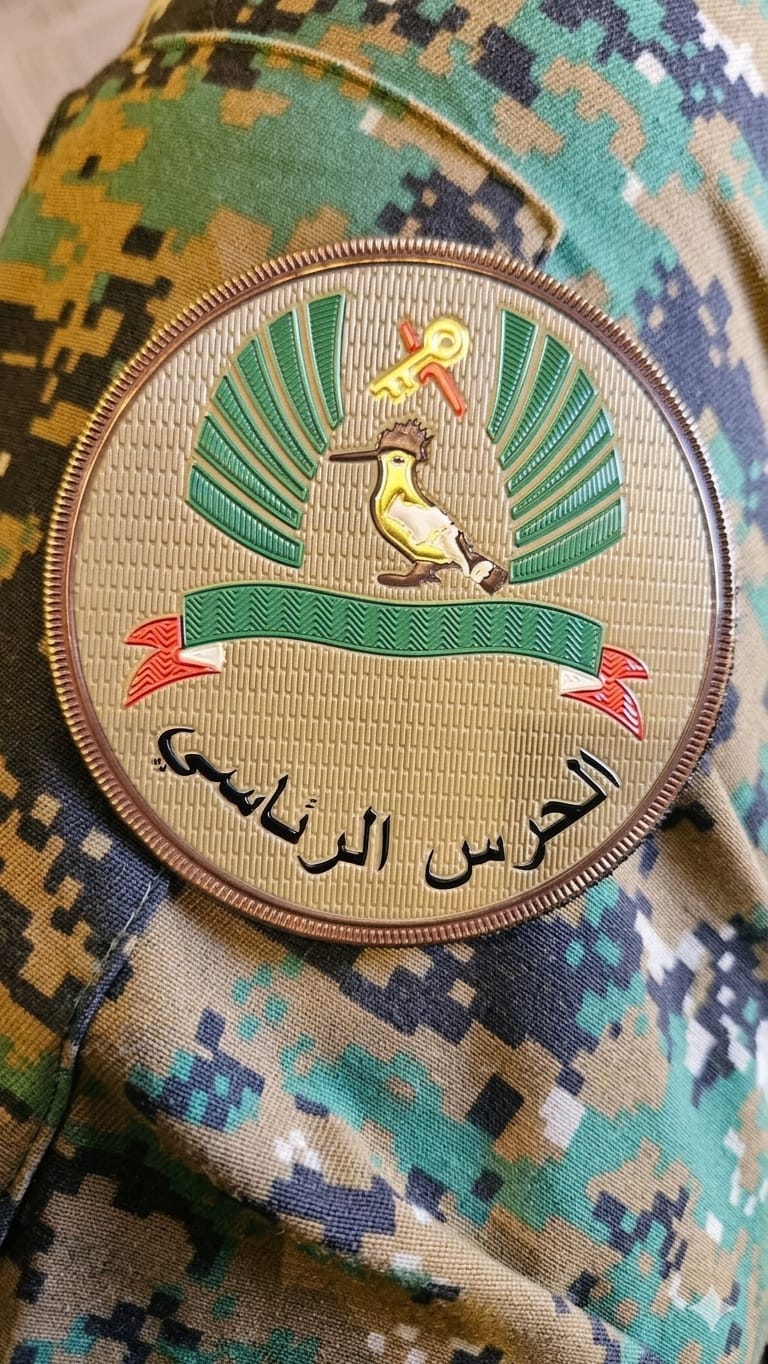
The Battle of the Presidential Guard: The Nuances of Absolute Sacrifice
By: Al-Shazali Al- Madeh, journalist
The morning of April 15, 2023, corresponding to the 24th of the holy month of Ramadan, was not merely the beginning of a war; it was an attempt to erase the existence of the Sudanese state from the geopolitical map forever. In that hour, the gamble was not on control, but on “uprooting,” as the “One-Hour Plan” was designed to be a crushing blow that would decapitate the military and political leadership in their quarters at the “Guest House” (Beit al-Diyafa).
Had that small group of the Presidential Guard broken during those critical moments in time, the Sudan we know would never have woken up, and no homeland would have remained to gather our fragments. In those meters separating existence from non-existence, history held its breath for fear of the birth of a “strange Sudan” established on the ruins of the Sudan of pride and dignity—a country ruled by gangs that know neither religion nor conscience. The alternative would have been the entry of the country into a tunnel of humiliation and disgrace with no exit, where honor is violated in broad daylight, free men are led to unknown fates, and our ancient cities are transformed into torn fiefdoms contested by highwaymen and ignorant individuals who recognize no faith or covenant. Defeat then would have meant eternal diaspora for Sudanese across the globe and the loss of national identity under filthy cross-border campaigns; we would have become a people searching for a homeland in the memory of books after the Janjaweed demolished the pillars of their great home and ancient glory.
Volcanic Iron: The Arsenal of Treachery and Fire Intensity
The attack on the Guest House was not a continuation of a war that sparked elsewhere; it was the war in its entirety. There stood the Commander, and meters away stood the Command—the seat of sovereignty, authority, and power. For this reason, they unleashed volcanoes of fire. More than two thousand militia members, carried by six hundred “Thatcher” vehicles equipped with full weaponry, surrounded the General Command and the Guest House in a hellish circle. Shells from anti-aircraft quad and twin cannons poured down, directed horizontally to harvest souls and demolish walls. Hundreds of snipers distributed themselves like ghosts atop surrounding towers (the Telecommunications Tower, Al Salam Hotel, and high-rise buildings under construction), turning every exposed corridor within the Guest House and the Command into a trap of certain death. This was accompanied by the deliberate disruption of wireless communication devices via advanced jamming technologies possessed by the attacking militia as they stormed the President’s house in a plan they dubbed the “One-Hour Plan.”
Storming the Walls and the Dance of the Loader
Amidst this hell, a massive “loader” emerged from behind the dust, moving like a legendary beast tasked with shattering the sanctity of the place. It did not just demolish the southern wall; the plan aimed to use it as a “demolition bulldozer” to bring the corners of the house down directly over the heads of those inside. However, the vigilance of the Presidential Guard knights turned that loader into a coffin for its driver, as a guard sniper picked him off from one of the balconies. The iron beast stopped in the courtyard, witnessing the failure of the plan for the total demolition of the building.
Legendary Steadfastness Alongside the President
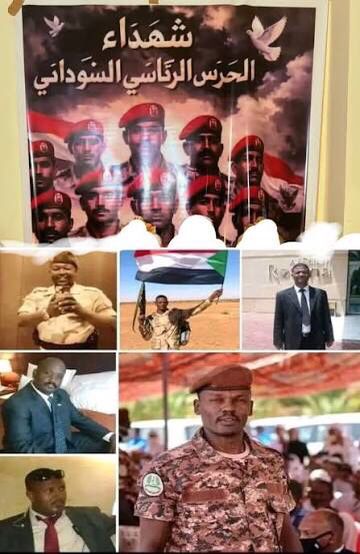
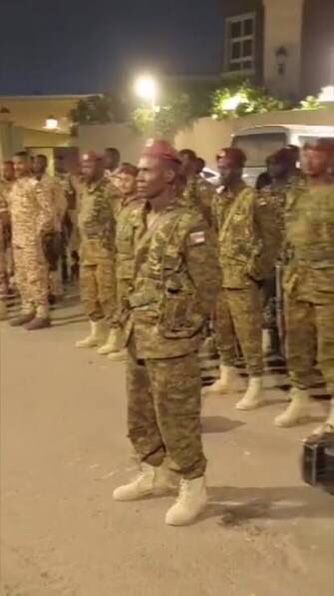
Inside those walls, six hundred soldiers and officers alongside the President were defending a homeland they realized they were its final link. These heroes, whose throats were parched from fasting, were surprised by the enemy with a heavy arsenal that exceeded all military scientific estimates for such a battle. The rooms and back corridors of the Guest House turned into theaters for Greek epics and cinematic scenes difficult to imagine: hand-to-hand combat, bayonets, zero-distance clashes, brawling, sniping, and smoke and dust filling the place. Amidst it all, the problem of similar uniforms arose, and the fighting was distinguished by personal recognition. Quickly, headbands were tied around the foreheads of the Presidential Guard elements, who rose as the fiercest of combatant knights. They were joined by members of the “Military Secretariat” when they saw the fighting intensify and the President himself sniping the enemy one by one, performing the duties of a battle commander with steadfastness and endurance.
In the heart of this blaze, the accompanying medical officer was doing the impossible given the intensity of cases before him. In the heat of the battle, he performed urgent amputations over the rubble and under the whizzing of bullets to keep the bleeding alive inside the corridors of the house until the battle cleared and they could be evacuated.
The Corridor of Death: The 300-Meter Journey
The moment of truth required moving the Commander-in-Chief from inside the battle in the rooms and corridors to the operations room in the Joint Staff building. The distance the Commander had to cross—safely, so the entire nation might remain safe—did not exceed three hundred meters. Yet, it was teeming with glass shards and building collapses, forcing the team to use narrow service corridors and the backs of buildings to avoid the snipers in the surrounding towers. The Commander advanced through those exposed corridors surrounded by a ring of “Special Action Forces” and his secretariat. Some among them rose as martyrs—lives that could have been his, were it not for God’s kindness to this good, patient, and reckoning people. The Commander crossed that deadly distance and reached the operations room amidst shouts of “Allahu Akbar,” which was the first omen of victory: that the President was alive and well, free from the shackles of captivity intended for him.
The Vaults of Secrets: The Battle of the Sovereign Briefcase
Simultaneously with the journey of crossing under fire, a silent battle was raging within the hallways of the Private Office. A small, sacrificial group took on the task of securing the “Sovereign Briefcase” and top-secret documents. Under the weight of the fire and the approach of the attackers to the living quarters and the President’s office, these soldiers executed a precise emergency plan to move what could be carried and burn what was feared might fall into enemy hands, ensuring the secrets of the Sudanese state would not fall to the militia even if all walls fell. Let the secrets remain with their trusted keepers. Thank God, it was done.
The Drone Mystery and the Evacuation of the “Majidat” (Noble Women)
Amidst this complex entanglement, the “mystery of the drone” emerged, hovering over the Guest House with suspicious precision to monitor movements and direct artillery and militia fire toward weak points—a drone the Guard dealt with vigilantly to disable its effectiveness. In the thick of it all, the ethics of the Sudanese Army manifested in their finest form, with extreme attention paid to the minute details of “evacuating the female element” from within the headquarters. The Commander-in-Chief set a firm condition: “I will not leave until their exit is secured first, and the attack is repelled second.” Indeed, a heroic evacuation of female citizens and employees (Majidat) was carried out under heavy covering fire. This gave a lesson that protecting honor precedes protecting life, and that the leader is the last to leave the battlefield.
The Martyrs of the Guest House: The Silent Farewell
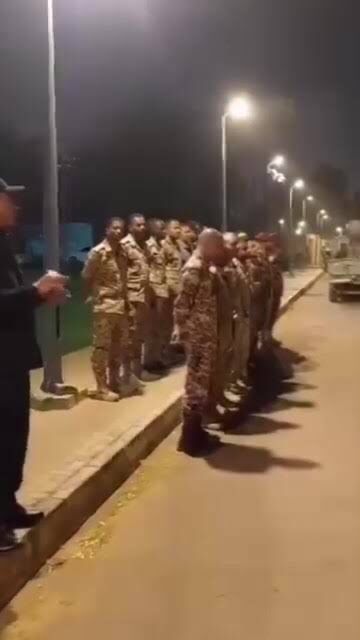
The story of burying the 35 martyrs (the “Moons of the Guest House”) is considered one of the most painful chapters of this epic. It was completely impossible to take the bodies to public cemeteries due to the intensity of the shelling. In a scene embodying military dignity, their comrades were forced to dig a “temporary mass grave” within the perimeter of the General Command, in the green spaces near the General Staff buildings. The heroes laid their comrades to rest in their military uniforms, turning that space today into a “Garden of Martyrs” containing the remains of those who prevented the fall of the state and preserved the nation.
Conclusion
In conclusion, the Battle of the Presidential Guard was not just a clash to secure a location; it was the existential test for the resilience of the Sudanese state. Al-Burhan’s appearance with his personal weapon from the heart of the General Command was not just a military message, but a political declaration of the end of the era of “adventure” and the beginning of the battle for survival. The dreams of a swift coup were shattered against the walls of that room, and those decisive hours remained the line that separated the survival of the national entity from the slide into the great wilderness.
On the anniversary of that battle.