
Against the Breaking
By Amal Ahmed Tabidi
When Falsehood Screams, Know That Truth Is Stronger
Introduction:
It was once asked:
(“What is the homeland?
It is not a question you answer and move on;
it is both your life and your cause.”)
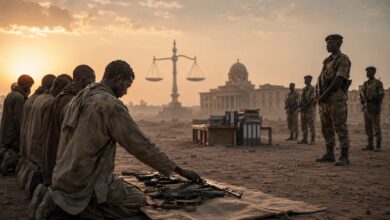
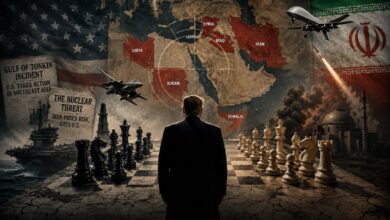
Power is what builds a state—here, I mean military strength and the possession of modern weaponry. These have become the standards that establish the prestige of the state. Consequently, many nations have moved toward building their military and economic power to face the challenges of an era that bypasses all human rights and in which the scales of justice are tilted, driven solely by interests.
We must work earnestly to build a state of law and institutions. We must learn from this devastating, lethal lesson and work toward fighting corruption, for it is the root of all calamity. Through it, ignorance has spread, rights have been lost, and the state has collapsed. No state is entirely free of corruption, but we must at least ensure it does not hinder the nation’s construction and progress.
Oversight institutions are essential, even if they are occasionally permeated by corruption or bypassed by a regime based on authoritarianism. From amidst these ruins, we dream of a homeland that fights corruption and the corrupt, attracts investments, and combats those who attempt to sow sedition through deterrent laws. We dream of a diplomacy directed at blocking the paths of traitors and agents driven by self-interest, and of raising the level of awareness through science and labor—discarding all forms of polemics. Let us remain silent for a while and let actions paint a new reality.
(The louder the voice of falsehood rises, know that the power of truth has begun to threaten their interests.)
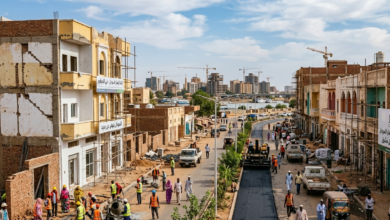
Investment and the attraction of capital will not succeed except through political stability. China transformed from a developing nation into a major industrial power; Singapore relied on investments and building advanced infrastructure. Development and growth do not happen by chance, but through well-studied strategic plans. Countries that were completely destroyed, where wars consumed everything in their path, nonetheless managed to rise. Nations like Japan, Germany, and China—where all facilities were leveled to the ground—succeeded in emerging from economic collapse. They turned toward education, industry, political will, and sound planning. Before all that, the primary agenda was fighting corruption, as it is a major obstacle to development. I repeat: we must fight it, dry up its pockets, and bury its sources. If it is not eradicated, the country will not progress.
Furthermore, we must restructure the institutional framework of the bodies entrusted with investment. I fear that the following saying may apply to us:
(“Pure people often arrive after we have exhausted ourselves with the wrong ones.”)