
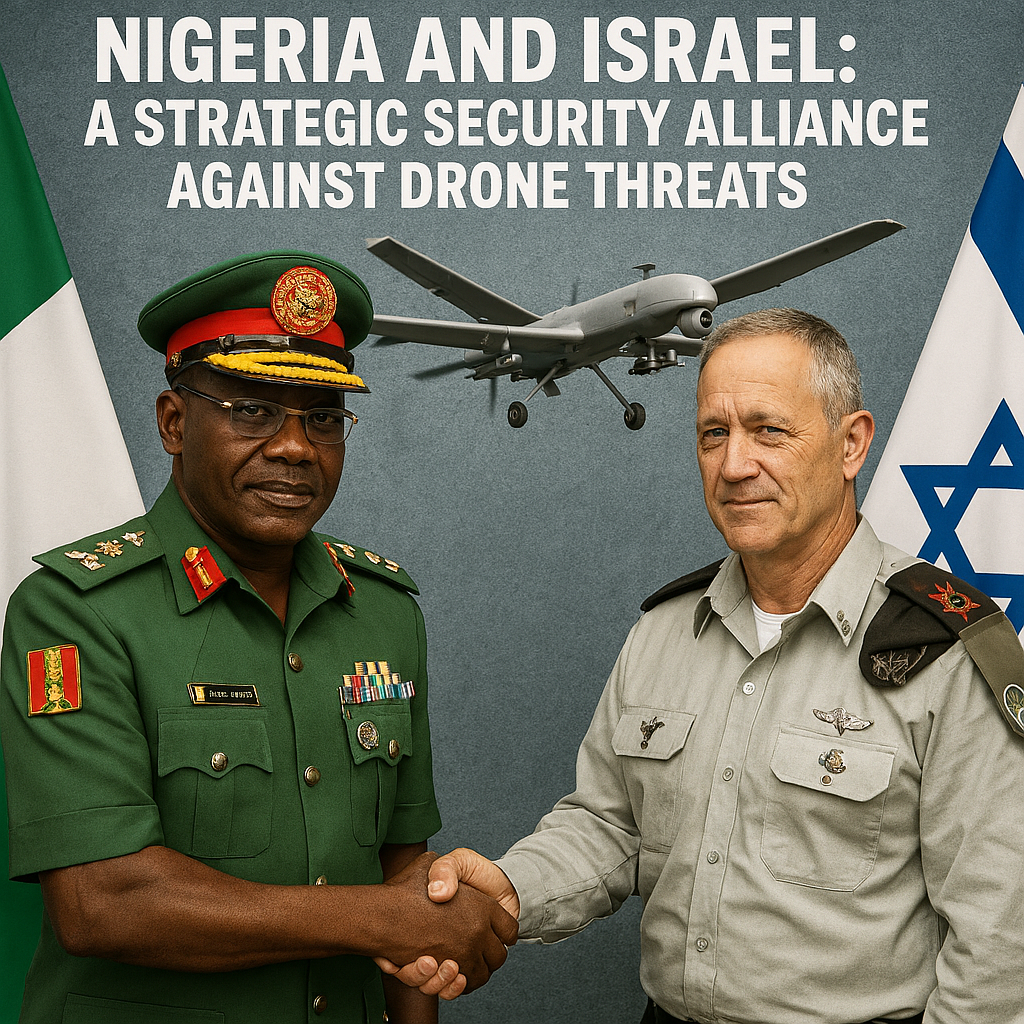
Nigeria and Israel: A Strategic Security Alliance Against Drone Threats
By Hassan Youssef Zerma, Brown Land West Africa Correspondent
Nigeria is witnessing a notable rise in drone attacks by the Islamic State West Africa Province (ISWAP) in the northern part of the country, prompting the Nigerian government to strengthen its international security partnerships, with Israel at the forefront.
In this context, the Israeli company Reguard Security, led by former officers of the Israeli Defense Forces (Tsahal), is providing comprehensive solutions for countering drones, cybersecurity, and specialized training programs for Nigerian security agencies. This includes advanced video geolocation tools to track the activities and propaganda of armed groups, reflecting a shift toward the use of smart technology in counterterrorism operations.
Strategic Implications
1. Enhancing Defensive Capabilities:
This partnership represents a significant step for Nigeria to compensate for its limited technical capacity in confronting drones, which have become a strategic weapon for armed groups.
2. Leveraging Cybersecurity
The integration of cybersecurity and digital monitoring solutions demonstrates Nigeria’s recognition that modern warfare extends beyond the battlefield to the digital and media domains.
3. Israeli Expertise:
Israeli experience in counterterrorism and reconnaissance technologies provides Nigeria with the ability to track attacks and plan proactively, enhancing the effectiveness of security responses and reducing human and material losses.
4. Regional Dimensions:
Strengthening cooperation with Israel may have regional and political implications, especially given Nigeria’s relations with its neighbors and ongoing conflicts with armed groups in the Sahel. This makes the alliance a key element in deterrence and rapid response strategies.
Conclusion
This initiative is part of a comprehensive strategy to modernize Nigerian security against complex threats like drones, underscoring that technology and international expertise have become central to any modern defense plan against armed groups. It also reflects Realpolitik in Nigerian policy, as the country seeks to secure its borders and achieve regional stability through smart and direct partnerships with technologically advanced nations.