Columns

Growing UAE Interest in South Sudan: Oil and Beyond

New Scene

By Abdul Samie Al-Omrani

South Sudan produces approximately 150,000 barrels per day from its three most prominent oil fields: Melut (Falaj), Sarjath, and Unity. The oil is exported to countries such as China, Japan, Italy, and Singapore, with the crude being of the Nile Blend, Fula, and Dar varieties. The pipelines for exporting South Sudan’s oil, stretching over 1,600 kilometers, pass through Sudanese territory to reach the export port in Sudan, under an agreement that allows South Sudan to export its oil through Sudanese land in exchange for transit fees. This arrangement was solidified following the resolution of outstanding issues in the Addis Ababa Agreement of August 2012.

However, oil extraction and export operations in South Sudan were significantly impacted by the sudden political shifts in Sudan, which led to the fall of the Salvation regime and the rise of the Forces of Freedom and Change (FFC). The FFC established a political and technical committee known as the Empowerment Removal Committee, which primarily focused on settling political scores with leaders of the former regime and dismantling key state-owned economic institutions. These institutions were labeled as remnants of the Salvation regime and targeted for removal, despite the economic damage this caused. The committee made several errors that severely damaged various economic facilities, including the oil industry. Hundreds of top oil engineers were dismissed under the pretext of their affiliation with the former regime, and the Operations Authority, responsible for securing Sudanese oil fields, was dissolved. These measures led to prolonged halts in oil production and export in both Sudan and South Sudan. Sudanese fields, which produced around 120,000 barrels per day, were also affected by the security and economic policies of the FFC.

One of the first major crises occurred in mid-2020 when oil froze in the export pipelines following the dismissal of large groups of engineers and technicians. Oil facilities were also subjected to sabotage and theft due to the lack of security after the dissolution of the Operations Authority. These factors collectively caused South Sudan’s oil production to drop from 250,000 barrels per day to less than 100,000 barrels from the Melut and Sarjath fields. Similarly, production in Sudanese fields in West Kordofan and Heglig fell to less than 40,000 barrels per day. Following corrective measures by the head of the Sovereign Council, who removed FFC ministers and halted the Empowerment Removal Committee’s activities, oil fields in both Sudan and South Sudan resumed operations. South Sudan’s daily oil exports returned to 150,000 barrels until the outbreak of war on April 15, 2023.

On January 31, 2025, political and economic circles in Sudan and South Sudan were surprised by a suspicious and contentious agreement between the United Arab Emirates (UAE) and South Sudan. The agreement granted the UAE control over South Sudan’s oil for 20 years, starting in January 2025 and ending in January 2044. This lopsided deal faced criticism from some South Sudanese intellectuals, though it went uncommented on by politicians in both South Sudan and northern Sudan. South Sudanese journalist Abraham Peter Marklo described it as a corrupt deal, arguing that it handed over all of South Sudan’s oil to the UAE under installment payment terms and harsh conditions, with a promise to construct an oil pipeline from South Sudan to Kenya’s Lamu port. This project is considered highly complex, with numerous studies highlighting the difficulties due to high costs, challenging terrain, and long distances. Constructing the pipeline is expected to take seven to eight years due to various obstacles.

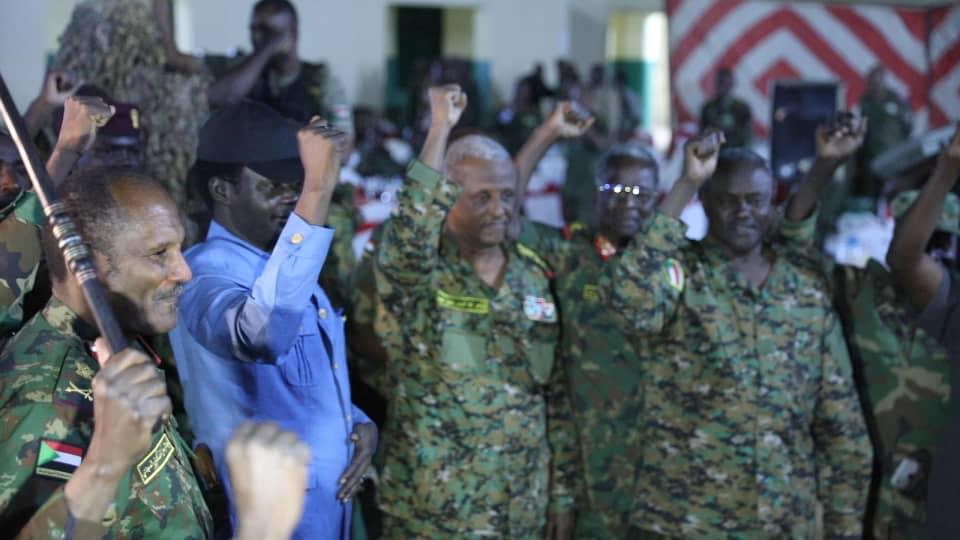
Many observers are asking why the UAE has such a growing interest in South Sudan’s political and economic situation. Following the deterioration of security conditions in November last year, after a failed coup attempt by the army chief of staff and a group of prominent military and political leaders, the UAE immediately sent a high-level envoy, Shakhboot, to calm the situation and urge Salva Kiir not to take repressive measures against the coup leaders. Many indicators suggest that these leaders are aligned with the UAE’s agenda in the Horn of Africa and the Great Lakes region. Reports have emerged that President Kiir bowed to Emirati pressure, with promises of economic and military support for his government. The UAE’s interest in South Sudan did not stop there; a week after the visit, the UAE announced the establishment of a military base in the Raja region—pardon, a “hospital”—similar to the military hospital it established in the Chadian region of Am Jaras. The UAE’s actions appear aimed at tightening the noose around the Sudanese army by leveraging economic incentives and personal bribes to Sudan’s neighbors, particularly Chad and South Sudan, both of which suffer from complex political and security conditions and near-collapsed economies. These countries are ruled by fragile and corrupt leaders who disregard their nations’ relationships with Sudan or any moral obligations due to Sudan’s past support. Both leaders quickly embraced the UAE, becoming pawns in its hands.

The recent deal to purchase South Sudan’s oil for approximately $12 billion, paid in installments, is seen by many as less about economic gain for the UAE and more about strangling Sudan’s economy and preparing a new ally to replace Kaka in case of any security or political developments that might topple him or force him to halt his illicit cooperation with the UAE against Sudan. The UAE’s choice of South Sudan appears to be a calculated move to partner in undermining the Sudanese army and providing a new haven for the rebel Rapid Support Forces, with the potential to support rebel leader Gharib al-Hilu. Thus, South Sudan’s oil is not the primary target for the UAE, which produces enough oil for its needs and exports the surplus within the OPEC framework. The hidden and overt objectives of this deal seem to be tightening the siege on Sudan through the southern axis, especially as UAE-backed militias face rapid decline and collapse. Meanwhile, Abdulaziz al-Hilu’s groups have been in contact with the UAE, and al-Hilu is now following clear Emirati directives to create security disturbances in South Kordofan. Al-Hilu has remained a rebel since joining the Sudan People’s Liberation Movement under John Garang in the 1980s.

It is crucial for Sudan to safeguard its rights regarding the transit of South Sudan’s oil and to ensure that South Sudanese authorities pay the dues on time or face the closure of the pipeline, halting the flow of oil monopolized by the UAE under this deal. In essence, the oil has become exclusively Emirati for the next 20 years.

Back to top button