Redrawn by Texts or by Elections?
Background to the Ethiopian Electoral Council's Statement on Disputed Areas in Tigray
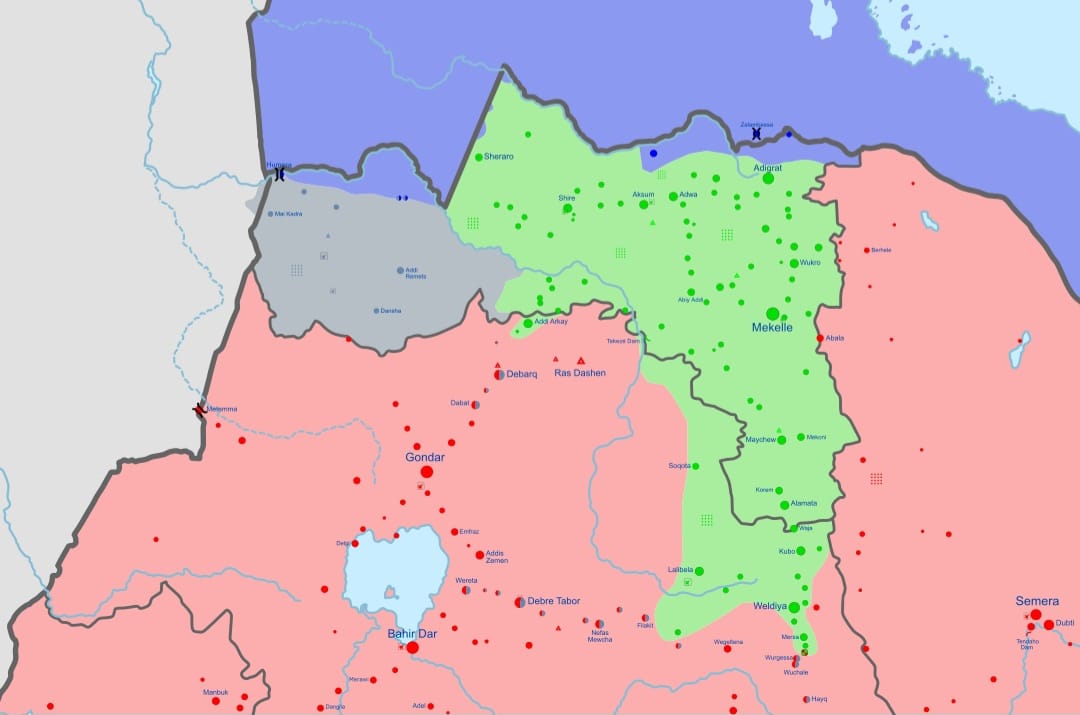
In a new escalation reflecting the fragility of the post-war trajectory in northern Ethiopia, the circulation of a statement attributed to the Ethiopian National Electoral Board sparked widespread anger in the Tigray region, after it was reported that a number of areas—including Humera, Tsegede, Korom, and Alamata—do not fall within the region, which was interpreted as an official effort to redraw Tigray’s borders through an electoral gateway.
Yet the story, when unpacked, is far more complex than a single statement.
First: What Was Officially Said, and What Was Interpreted?
As of the time this report was prepared, there is no published, verifiable text of an explicit statement from the Electoral Board stating literally that these areas are “outside the Tigray region.”
What is available from multiple sources points to correspondence or procedural arrangements related to electoral constituencies in areas not under the actual administrative control of the Tigray regional government, or constitutionally classified as “disputed territories”—arrangements that typically come pursuant to directives from the Ethiopian Federation Council, the body constitutionally empowered to interpret matters of regions and boundaries, before being referred for implementation to the Electoral Board.
This distinction between an “administrative electoral decision” and a “final sovereign ruling” is what was absent from the circulating discourse, or deliberately overlooked.
Second: Why These Areas Specifically?
Because they represent the core of the unresolved conflict deferred since the 2020–2022 war:
Western Tigray (including Humera): An area that witnessed a forced change in control and administration, and remains the subject of an open dispute.
Northwestern Tigray (Tsegede): A geographical nexus between Tigray and Amhara.
Southern Tigray (Korom and Alamata): Areas repeatedly cited in UN and research reports as zones of administrative and political dispute.
These files were not resolved in the Pretoria Agreement—they were deferred—which means that any technical procedure, whether electoral or administrative, is read politically as an entrenchment of the fait accompli.
Third: The Timing… When Elections Become an Instrument of Sovereignty
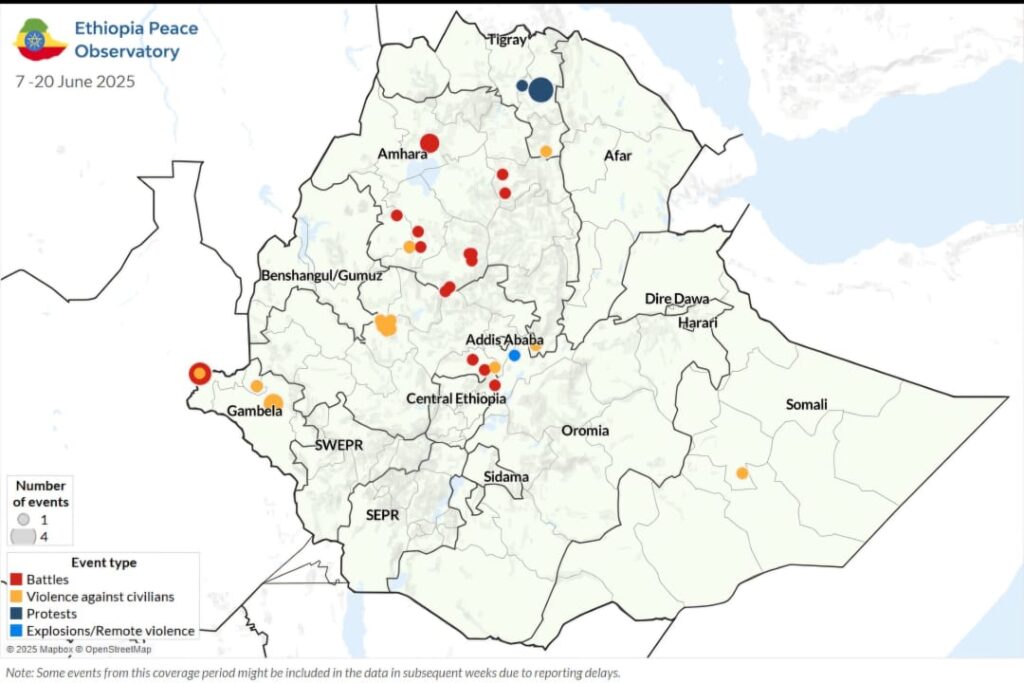
This controversy comes amid field tensions at the outset of 2026, including clashes, military movements, and drone strikes in the vicinity of Tigray, which have brought the specter of war back to the forefront.
In this context, elections no longer appear to be a mere democratic exercise, but rather a mechanism for redefining who owns the land and who administers it.
Here, the question shifts from “where will residents vote?” to “to which region do these residents fundamentally belong?”
Fourth: A Legal-Political Reading
Constitutionally, the Electoral Board does not possess the authority to redraw regional boundaries, but it does implement decisions or interpretations issued by higher federal institutions.
Politically, any electoral arrangement in disputed areas prior to the legal resolution of their status constitutes a high-risk step, as it produces a reality that is difficult to reverse afterward.
For Tigray, these steps are viewed as a soft attempt to carve away lands whose fate has not been determined through dialogue or agreed-upon constitutional mechanisms.
Fifth: Conclusion
What is happening is neither a “passing electoral statement,” nor can it be reduced to the language of accusations or slogans.
It is a struggle over regional sovereignty being conducted through administrative tools, within a state that has not yet concluded the aftermath of its last war.
And in the absence of a clear, officially published text, the greatest danger remains the transformation of technical procedures into permanent political facts—imposed not through consensus, but through the fait accompli.
Brown Land will continue to verify original documents and track the course of these decisions within Ethiopian institutions, as part of a series of follow-up reports—because what is being redrawn today on paper may tomorrow become borders drawn in blood.
Verification Methodology
This report relied on a multi-tiered verification methodology, combining a review of reliable open sources with a comparative analysis of the legal and political contexts. Claims circulating regarding a statement attributed to the Ethiopian National Electoral Board were traced by searching for officially published texts or documented statements issued by the relevant institutions, including electoral bodies and constitutional authorities competent in regional matters.
The report also drew on a review of international governmental and research documents addressing the status of the disputed areas in western and southern Tigray, alongside recent international media reports tracking security and political developments in the region during 2025–2026. What appeared in discourse circulating on social media was compared against the Ethiopian constitutional framework, particularly the actual powers of state institutions with respect to regional demarcation and the organization of elections.
Given the unavailability of an officially published text confirming the circulated wording of the statement, the report maintained a clear distinction between verifiable facts and political readings or interpretations, with explicit reference to areas of ambiguity or gaps in information. The editorial board affirms that this file will remain under ongoing monitoring and will be updated as soon as original documents or new official statements become available.