On the Occasion of the 70th Anniversary of Establishing Diplomatic Relations Between Russia and Sudan
Mohammed Elghazali Sirrag
Ambassador of the Republic of the Sudan to the Russian Federation
January 5, 2026
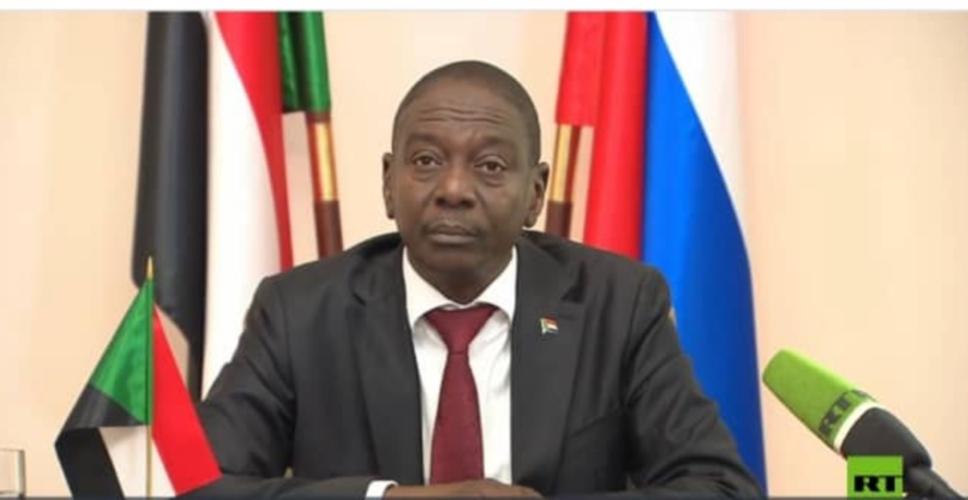
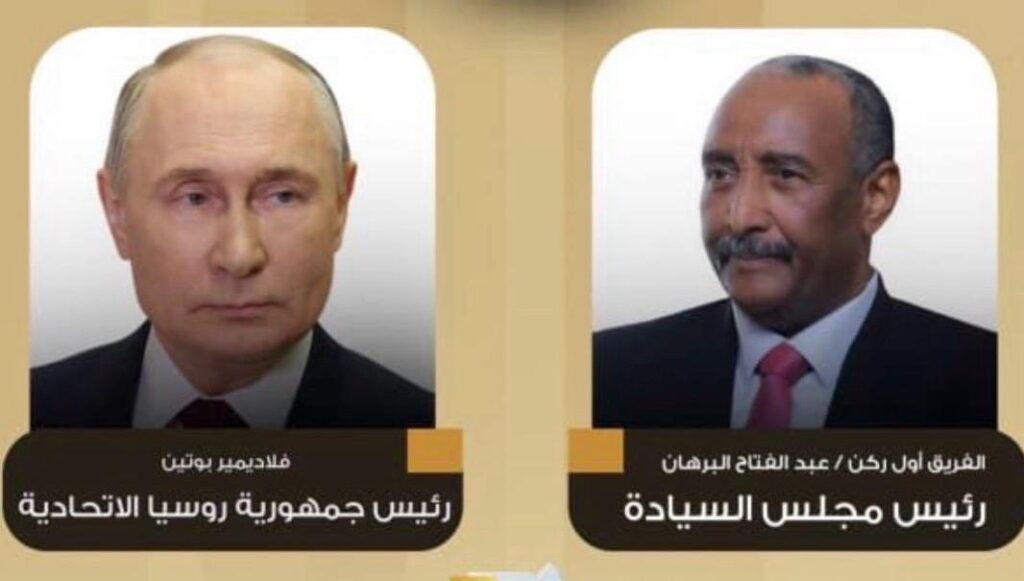
Today, January 5, 2026, marks the seventieth anniversary of establishing diplomatic relations between Sudan and the former Soviet Union, now Russia.
The establishment of diplomatic relations between the two countries, just five days after Sudan gained its independence, indicates deep and significant implications regarding the importance of the two countries to each other. Their visions aligned on the importance of supporting African liberation movements, given that Sudan was the first sub-Saharan African country to gain independence. Furthermore, the Soviet Union and later Russia on one hand, and Sudan on the other, hold important geopolitical positions on the world’s political and economic map and share a common political and economic vision based on established principles in international relations. These features have contributed to maintaining, most of the time, advanced relations with a high capacity to overcome regional and international changes and polarizations, which is commendable and appreciated thanks to the wisdom and understanding of the leaderships of both countries.
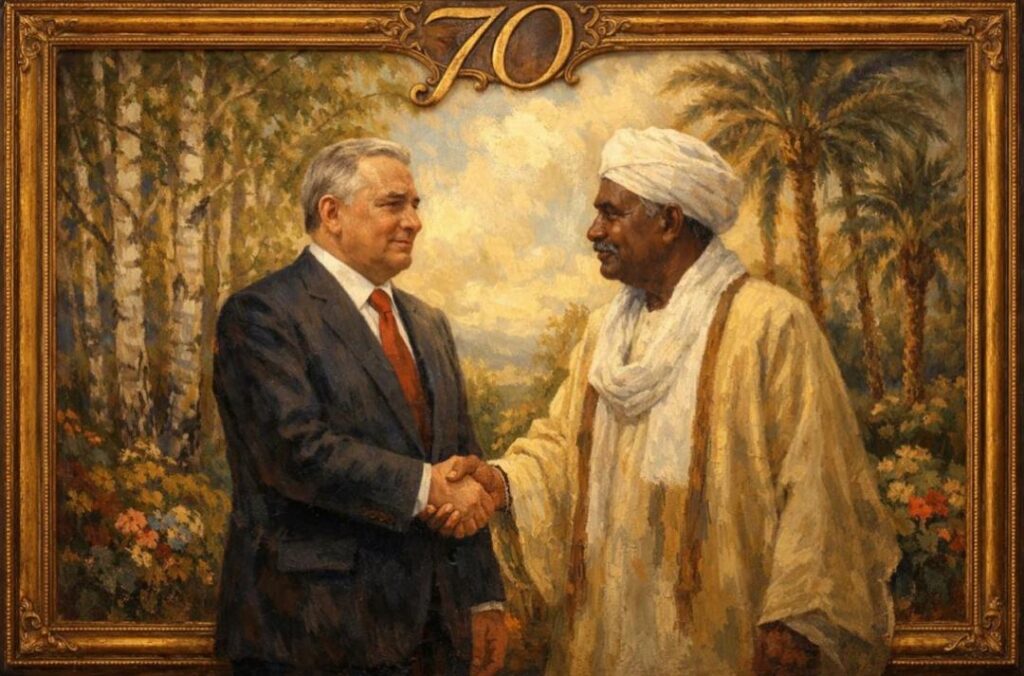
Five years after establishing diplomatic relations, the two countries exchanged high-level visits. Then-Sudanese President Ibrahim Abboud visited the Soviet Union in July 1961, and Soviet Union President Leonid Brezhnev visited Sudan in November 1961. Relations between the two countries during the period following Sudan’s independence were characterized by close cooperation, and Russia’s contributions to Sudan’s economic development efforts were evident, with the signing of seven agreements that led to a major economic boom, covering a number of economic, commercial, cultural, scientific, and aviation service fields. Many development projects were implemented, such as the grain silos in El-Gadarif and Port Sudan cities, fruit canning factories in Wau and Karima, an onion drying factory in Kassala, and the Babanosa dairy factory, the geophysical survey project for the Red Sea area, the veterinary research laboratory, and Soba Hospital. Sudanese products, such as gum Arabic and sesame, also found their way to the Russian market. This was accompanied by development in political and military relations, as the origin of Sudanese military hardware is Russian.
The two countries have continued to exchange political support in international forums, a product of the alignment in their political vision. Sudan finds the guiding principles of Russian foreign policy to be an important and fair basis for establishing and maintaining friendly relations, such as the principles of equal sovereignty, non-interference in the internal affairs of states, and the exchange of benefits based on mutual interest. This vision has granted the relations vitality, sustainability, and an incentive to develop and strengthen them in all fields across different eras.
Since the outbreak of the crisis in Sudan in April 2023, Russia’s actions have demonstrated the strength of the friendship between the two countries. In April 2024, the Russian president’s envoy to the Middle East and Africa, former Deputy Foreign Minister Mikhail Bogdanov, became the first high-level foreign official to visit Sudan since the outbreak of the war. Through this visit, Russia expressed clear and unequivocal support for the legitimacy of the Sudanese government and its existing institutions. Moscow has not deviated from that policy, and its political statements in international platforms have remained supportive of Sudan and its sovereignty. Its stance, using the veto right in the United Nations Security Council in November 2024, represented the peak of development in relations between the two countries, being the first time a veto was used on a matter related to Sudanese affairs since the establishment of the United Nations. This position spared Sudan the consequences of external interventions and formed a safeguard against implementing agendas targeting Sudan’s sovereignty and territorial integrity. Positive Russian stances continued with the convening of the first ministerial committee for Sudan after the war in September 2025, which resulted in an economic and trade cooperation protocol expressing the mutual will of the two countries to develop economic and trade relations. The protocol clearly charted a roadmap for economic development and the exchange of interests based on mutual benefit in many important and vital sectors, contributing to reconstruction efforts in Sudan after the war that brought ruin and destruction at the hands of the rebel and terrorist militias. This gives Russia a leading position, as it had in the period following independence, in the country’s comprehensive economic development efforts.
Sudan has remained an active partner in multilateral diplomacy frameworks, especially through the mechanisms of Russian-African partnerships. His Excellency the Chairman of the Sovereignty Council, General Abdel-Fattah Al-Burhan, participated in the proceedings of the first Russia-Africa Summit in 2020, and Sudan was represented at the second summit in 2023 by Mr. Malik Agar, Deputy Chairman of the Sovereignty Council. Sudan’s participation in the two ministerial meetings of the Russia-Africa Partnership Forum, the latest of which was held in Cairo last December, has been regular. This stands as an indication of Sudan’s firm belief in the Russian role in enhancing partnerships and in building relations on sound foundations based on justice, shared equally by the international community to build a multipolar world where the choices of states in building their regional and international relations take shape in a manner that preserves their dignity and prestige and safeguards their culture and beliefs.
The regular convening of bilateral cooperation mechanisms between the two countries also stands as witness to the shared will to develop this relationship. Mechanisms such as political consultations, the Intergovernmental Russian-Sudanese Commission on Trade and Economic Cooperation, other specialized committees, and exchanged high-level bilateral visits have continued to be held periodically. Recent visits include that of Russian Foreign Minister Sergey Lavrov to Sudan in February 2023, the visit of former Sudanese Foreign Minister Dr. Ali Yousuf in February 2025, and a number of visits by businesspeople and ministers from both countries, the latest being the visit of the Sudanese Ministers of Finance and Energy last October and their meeting with Russian Deputy Prime Minister Alexander Novak.
Cultural cooperation remains a prominent feature in the bilateral relations between the two countries. Thousands of Sudanese students received their university and postgraduate studies in Russia during the Soviet era. Russia continues to offer Sudan 100 annual scholarships in various fields, enabling students to acquire Russian knowledge and contribute to the development of their country. Two archaeological missions from Russia are also working in Sudan and have achieved great success in exploring the depths of Sudanese civilization, which spans thousands of years. Furthermore, the establishment of a center for studying Sudanese civilization at the Russian State University for the Humanities is one of the landmarks of cultural development between the two countries, being the first specialized center for studying Sudanese civilization separately from other civilizations. The center is run by Professor Eleonora Kormysheva, a friend of Sudan, who is also the head of the Russian archaeological mission to Sudan. She has just returned from a working trip to Sudan and is preparing to return again with her team.
The two countries enjoy strong historical ties of friendship based on a clear vision and political will, supported by their inherent economic potential. They thus look forward to a promising future of further development, growth, and prosperity in a multipolar world characterized by equality in sovereignty, non-interference in internal affairs, and the building of equitable relations based on mutual interest. These principles, on which Russia bases its foreign relations, remain a source of support and strength for Sudan as it faces existential challenges to its identity as a state and to the dignity and existence of its people, who have demonstrated their resilience, determination, and ability to overcome these dangerous turning points with the support of friends, foremost among them the Russian Federation.