Power Struggles in the Horn of Africa: The Negative Repercussions on the Region
By: Anas Al-Tayeb Al-Jailani
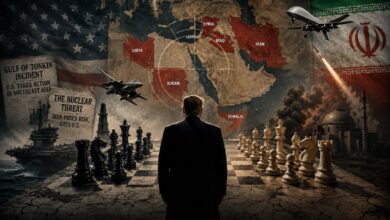
The Israeli announcement on Friday, December 26, 2025, recognizing the so-called “Somaliland” as a sovereign state has triggered a swift wave of global and regional reactions. This recognition represents a dangerous escalation that threatens regional security and constitutes a flagrant violation of the principles of international law and the UN Charter. Furthermore, it undermines the foundations of international peace and stability, contributing to the destabilization of the Red Sea, the Horn of Africa, and the Gulf of Aden. It also heightens the specter of war, violence, and instability in a region that has been volatile for decades.
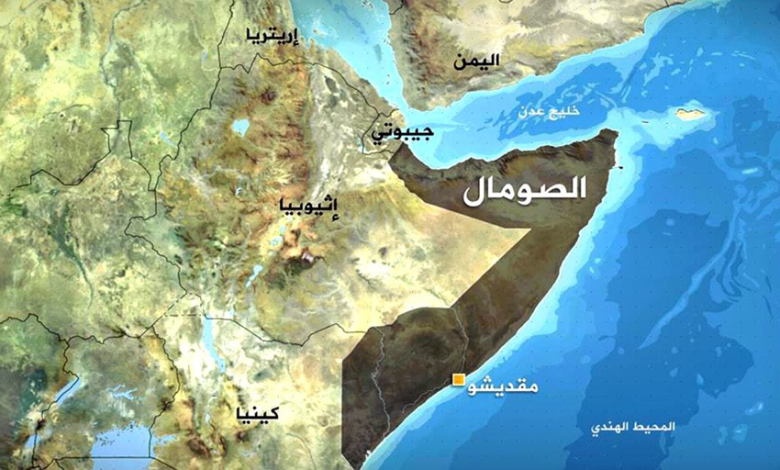
Geographically, the Horn of Africa is defined as the region south of the Red Sea—the horn-like protrusion into the Indian Ocean. It overlooks three vital waterways: the Indian Ocean, the Gulf of Aden (via the Bab al-Mandab strait), and the Red Sea. Politically, the concept of the Horn has expanded beyond Somalia, Djibouti, and Eritrea to include Sudan, Ethiopia, Kenya, South Sudan, and Uganda.
The Republic of Somaliland emerged historically from protracted civil wars and tribal alliances following the collapse of President Siad Barre’s regime. The northern region of Somalia suffered deliberate marginalization by successive southern governments in Mogadishu, fostering separatist sentiments that culminated in 1991 with the Somali National Movement (SNM) declaring the independence of “Somaliland.” This territory was historically known as British Somaliland during the colonial era. However, the republic has failed to gain any international or regional recognition since its inception.
Despite this lack of international recognition, Ethiopia—a landlocked nation—sought a maritime outlet following tensions with Eritrea (which led to the loss of access to the Port of Massawa) and rising costs and friction with its northern neighbor, Djibouti. Consequently, Ethiopian airlines and private carriers began flights to Hargeisa, the capital of Somaliland. Ethiopian commercial vessels also became active at the Port of Berbera in northern Somaliland, accompanied by the development of railway links. The strategic location of the Horn of Africa has intensified the race for political influence and security-economic leverage, leading many nations to seek control over ports as part of broader strategic plans for global expansion.
The recent Israeli move to recognize Somaliland is the culmination of a long history of clandestine relations and a quiet presence in the region. According to investigative reports and statements by former Israeli Defense Minister Moshe Dayan, Israeli commercial oil companies have long been active in the territory. Additionally, Israel’s diplomatic presence in Ethiopia has facilitated monitoring, expansion, and secret ties with the Somaliland government. This step must be viewed through its strategic dimensions: Israel seeks to control a pivotal region by establishing military bases overlooking the Gulf of Aden and Bab al-Mandab, thereby securing the Red Sea waterway.
This recognition is expected to trigger severe security tensions. Such a provocative move may catalyze the activities of ISIS and Al-Shabaab in Somalia as they seek to resist the Israeli presence. It is also anticipated to increase the targeting of commercial traffic at the Port of Berbera and heighten maritime piracy. Furthermore, the Houthi movement is likely to escalate its targeting of Israeli interests in the Horn of Africa, viewing the presence as an encroachment on its vital sphere of influence.
The move also carries negative implications for Sudan, Egypt, and Saudi Arabia. An Israeli presence in Somaliland and the Port of Berbera will destabilize the Red Sea, which had remained relatively calm. Any disruption here inevitably stifles international trade passing through the Suez Canal and the ports of Jeddah and Port Sudan. Last year’s Houthi attacks on shipping caused significant economic damage to global trade; this corridor, connecting Asia, Africa, and Europe, is the shortest route to European markets. Utilizing the Suez Canal shortens transit times by approximately fifteen days compared to the Cape of Good Hope route around Africa. Reports indicate that the decline in Suez Canal revenues due to insecurity in the Bab al-Mandab has reached nearly $5 billion annually. Moreover, the lack of security and the rise in piracy have forced global shipping giants like Maersk and Hapag-Lloyd to significantly hike maritime insurance premiums.
Required Action from Regional States
Despite the international and regional outcry—with the UN, EU, Arab League, African Union, and OIC all calling for the unity and territorial integrity of Somalia—more is needed. Red Sea littoral states, both Arab and African, must act urgently to revive the “Council of Arab and African States Bordering the Red Sea and Gulf of Aden.”
There is a pressing need for an emergency summit to formally launch this organization and agree on common policies and treaties to protect the Red Sea from foreign infiltration and unauthorized control of its ports and waterways. Convening this summit is a strategic necessity imposed by the mounting challenges aimed at destabilizing the region.
Israel’s recognition of the so-called Republic of Somaliland should not be viewed as an isolated event. It is one in a series of scenarios within a geopolitical struggle and plans to fragment the Arab world—from Somalia and Yemen to Sudan and Libya—aimed at demographic engineering and building new power dynamics. This requires a heightened state of awareness to protect the fundamentals of Arab national security and the overarching strategic interests of our countries and peoples.