Munich Security Conference… and Sudan
By: Anas El Tayeb El Jilani
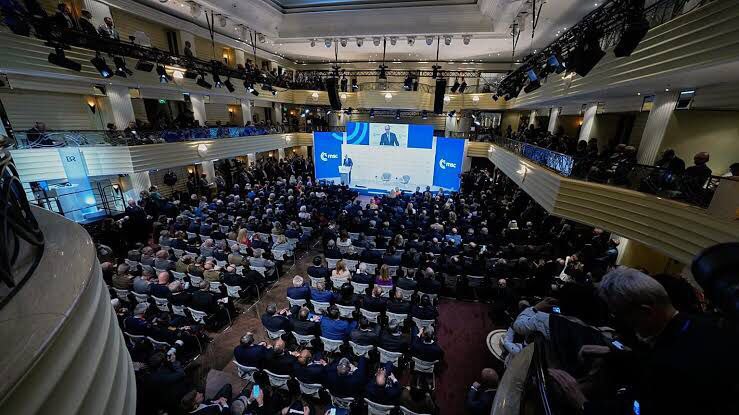
The 2026 edition of the Munich Security Conference (MSC), held under the theme “The Dissolution of Diplomatic Norms,” witnessed active diplomatic momentum. The high-level attendance added further prestige to this year’s events, with delegations from over 120 countries participating, including 65 heads of state and government, 100 foreign and defense ministers, and a diverse group of academics, politicians, and researchers in policy and security affairs.
Established in the German city of Munich in 1963, the MSC is considered one of the most important global platforms and has become the primary reference for policy and security. It serves as a forum to discuss surrounding challenges, exchange views on global security issues, multilateral cooperation, defense burden-sharing dilemmas, and the role of the United Nations in maintaining the global order and international peace and security. The conference also highlighted the necessity of European defense autonomy amidst escalating global wars and crises. Discussions covered European concerns regarding the repercussions of the Russo-Ukrainian war and growing anxiety on the continent over the destabilization of the global order and the erosion of the international rules-based system in favor of unilateral state power. Furthermore, the conference addressed the implications of the expiration of the New START nuclear treaty, hybrid conflicts, and other issues impacting the concept of global peace and security—and finally, Artificial Intelligence and its future role in defense and security economies. Discussions encompassed developments in Syria, Ukraine, Gaza, and Sudan.
Sudanese Diplomacy and the Prime Minister’s Activity
The Sudanese delegation was led by His Excellency the Prime Minister, Professor Kamil El Tayeb Idris, accompanied by the Minister of Foreign Affairs, Ambassador Mohieddin Salem. This participation is the first of its kind at the Prime Minister level following a five-year hiatus and came via an official European invitation. While the former Acting Foreign Minister, Ambassador Ali Youssef, participated in the previous edition, the invitation to the Prime Minister this time came directly from the Munich Conference organization. This represents European recognition of the Sudanese Prime Minister’s legitimacy and carries a significant political signal that cannot be ignored.
The schedule for the Prime Minister and the Foreign Minister was crowded and meticulously prepared by the Sudanese diplomatic staff in Berlin, led by Ambassador Ilham Shantir and the active Deputy Head of Mission, Ambassador Idris Mohammed Ali. In addition to important bilateral meetings, the Prime Minister conducted interviews with eight renowned media outlets. Similarly, the Foreign Minister held a media briefing attended by 11 news channels, providing a comprehensive briefing on the gains and successes Sudan recently achieved within IGAD and the African Union, as well as his recent diplomatic tour and the military victories achieved by the Sudanese Army on the ground.
The Prime Minister’s speech during the panel discussion dedicated to Sudan was powerful and coherent, presenting the true narrative of the situation in Sudan in eloquent and clear English. Drawing on the rich experience he gained through his work in international forums and membership in various international committees, His Excellency reviewed the “Sudan Peace Initiative.” He presented peace and security approaches and the horizons for an available solution, emphasizing Sudanese national ownership of this initiative, which complements existing initiatives and mediations proposed by the United States, the Arab Republic of Egypt, and the Kingdom of Saudi Arabia. The Prime Minister confirmed that the Sudanese Peace Initiative received widespread welcome from the United Nations, the African Union, IGAD, the International Conference on the Great Lakes Region (ICGLR), the Organization of Islamic Cooperation (OIC), and the World Council of Churches. The intervention was truly a lecture delivered before a high-level and specialized audience who perhaps had not previously had the opportunity to learn the details and repercussions of the Sudanese crisis. He presented perspectives on the dangers of international and external interventions and the use of outlawed militias and foreign mercenaries from all corners of the globe, which threatens the concept of collective security and international responsibility.
As for the second part of the panel discussion, which included the U.S. Presidential Envoy Massad Boulos, an opportunity was given to a young Sudanese man, Mohammed Fath al-Rahman Mohammed, representing Sudanese civil forces. He delivered a moving testimony as a witness to the events in Sudan, condemning the militia and the atrocities it committed against Sudanese citizens. Overall, the outcome of the discussions was significant, providing Sudan with a golden opportunity to reflect its own narrative in the manner it desired to reach the conference participants.
The Prime Minister’s program also featured an important popular dimension, represented by meetings with figures and leaders of the Sudanese diaspora in Germany and the “Gathering of Honorable Sudanese Abroad.” This served as a great appreciation for the roles of popular diplomacy and recognition of the initiatives undertaken to defend the Sudanese state as it faces an unprecedented existential challenge.
Among the most important seminars that garnered increasing attention was the one titled “The Turning Point: The International System Between Reform and Destruction.” It witnessed heated debates regarding the crisis of international institutions and the importance of modernizing and reforming international mechanisms to be more responsive to people’s aspirations for security, stability, and the achievement of justice and equality among nations. Key participants in this seminar included the Colombian Minister of Defense, the Head of the U.S. Mission in New York Michael Walter, and Ms. Kaja Kallas, the High Representative of the European Union for Foreign Affairs and Security Policy and Vice-President of the Commission. The intervention of Prince Faisal bin Farhan, the Saudi Foreign Minister, received notable attention as he stated that the world is passing through a transitional phase between a fading international system and another in the process of formation whose features have not yet emerged, calling on the conference to increase the pace of international dialogue to face mounting challenges.
The “Ukrainian House” event also saw in-depth discussions amidst reports indicating that the United States is exerting increasing pressure on Ukrainian President Volodymyr Zelenskyy. This is aimed at achieving a foreign policy success for the U.S. administration that might mitigate the impact of the Epstein scandals and the heated Congressional deliberations currently surrounding the administration domestically. Meanwhile, Europe is seeking to crystallize a unified European position toward the Russo-Ukrainian war and achieve a more realistic approach than the solutions proposed by the United States.
The curtain falls today, February 15, on the 62nd edition of the Munich Security Conference. What matters to us here is that Sudan’s agenda was present, and Sudan’s participation was strong, confirming that Sudanese diplomacy remains active and is on the verge of reaping the fruits of its sound planning and deliberate movement. It continues to score successes in all international and regional forums, where the balance is shifting in favor of Sudan. The conference was a precious opportunity seized by Sudan for the international promotion of its national initiative and to establish the concept of “One Government, One Army, and the Sovereignty of the Legitimate State.” The Sudanese delegation received the attention of the global media, which was present at the delegation’s activities. The Sudanese delegation returns today having won a new battle in the international arena, alongside the signs of victory for our valiant army in the “Battle of Dignity” across various combat fronts.