Summary of the African Union Statement on Sudan
The following key elements further highlight the political and strategic importance of the statement:
1. Recognition of the legitimacy of the transitional government headed by General Abdel Fattah al-Burhan, strengthening its regional standing.
2. Reaffirmation of Sudan’s unity, sovereignty, and territorial integrity within its internationally recognized borders.
3. Firm rejection of any parallel governments or entities, considering them a threat to state unity.
4. An urgent call for a ceasefire and humanitarian truce to pave the way for a comprehensive political process.
5. Emphasis that there is no viable or sustainable military solution to the Sudanese crisis, and that the solution must be political and negotiated.
6. Demand for the protection of civilians and accountability for violations under International Humanitarian Law and International Human Rights Law.
6. Support for the Sudanese National Peace Initiative and a call for its implementation in alignment with the African Union Roadmap.
7. Call for an inclusive inter-Sudanese dialogue that excludes no one and addresses the structural political and security root causes of the conflict.
8. Establishing a mechanism to identify external actors contributing to the conflict and to propose practical measures for addressing their role.
9. Rejection of foreign interference in Sudan’s internal affairs and a call to halt any military, financial, or political support to parties to the conflict.
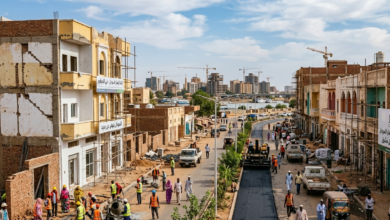
10. Welcome of the government’s return to Khartoum as a step toward restoring state institutions and public services.
11. Efforts to reopen the African Union Liaison Office in Sudan and strengthen the Union’s institutional presence in supporting the political process.
12. Mobilization of humanitarian and international support to address the humanitarian catastrophe and assist refugees and host countries.
13. Reaffirmation of the central role of the African Union in leading the peace process in coordination with regional and international partners.
14. Political Reading of the Statement
The statement reflects a clear shift toward reinforcing the legitimacy of a unified Sudanese state and rejecting fragmentation paths.
It strengthens the African-led framework for resolving the crisis and limits attempts to externalize the conflict beyond the continental umbrella.
It links the humanitarian, political, and security tracks within a comprehensive state-rebuilding vision.
It places political and diplomatic pressure on external actors involved directly or indirectly in fueling the conflict.
In conclusion, the statement represents an important step in repositioning Sudan within the African institutional framework and opens a political window of opportunity—if effectively utilized at the national level.
Dr. Omar Atta Al-Mannan