
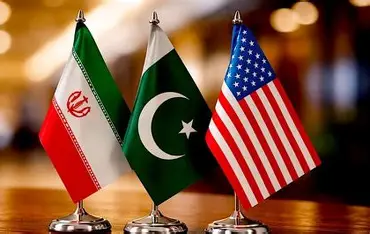
The Iranian-American negotiations recently convened their inaugural session in the Pakistani capital, yet this initial meeting failed to yield any substantive results, leaving the ultimate fate of these talks shrouded in uncertainty.
This ambiguity reflects the broader instability currently gripping the region, particularly as the expiration date for the existing ceasefire agreement looms dangerously close on the horizon.
The Beginning of the Process
It is essential to highlight that these high-stakes Iranian-American negotiations between the two sides actually took place over a grueling period exceeding twenty-one continuous hours, though it later emerged that the process had reached a “dead end” almost from its very inception. While it is true that no reasonable observer expected a comprehensive resolution to such complex issues within a single day, the appearance of U.S. Vice President J.D. Vance before the press following the first day’s conclusion deeply alarmed those who had pinned their hopes on a breakthrough in the peace process. The fundamental positions held by both parties remain so diametrically opposed that it is currently difficult to envision any scenario leading to tangible or constructive outcomes in the near future.
Typically, it is standard diplomatic practice for both sides to exaggerate their initial demands before eventually offering concessions and gradually narrowing their differences, yet the current confrontation between Iran and the United States possesses a uniquely volatile character. This is especially true for the Iranian side, which views the ongoing struggle not merely as a political disagreement but as an existential battle that defines its national survival.
According to various leaks, the Americans entered the negotiation process utilizing their traditional tactical framework by first offering a “bait”—the release of six billion dollars in frozen assets—before pivoting to present their rigorous demands. Interestingly, these specific demands are the very same objectives that Washington failed to achieve through military means, most notably the immediate and unconditional opening of the Strait of Hormuz to international traffic.
However, the critical issue of controlling this strategic waterway is interpreted in completely different ways by the two opposing parties, leading to a profound disconnect in the logic of the negotiations. Iran perceives its dominance over the Strait as a vital guarantee for securing future compensation and ensuring lasting peace, maintaining that the ability to close it at any moment serves as a necessary deterrent against potential attacks from Israel or the United States. Conversely, the White House proposes a model of joint supervision, a concept that appears entirely devoid of utility or strategic value for Tehran’s leadership. This fundamental disagreement is precisely what led the U.S. Vice President to declare that the negotiations have reached a total impasse for the time being.
American Provocation
Simultaneously, the U.S. Navy attempted to execute a familiar tactical scenario during the Iranian-American negotiations by engaging in a field provocation designed to test Iranian military resolve. While the sensitive discussions were still underway in Islamabad, two American destroyers began moving purposefully toward the Strait of Hormuz, a maneuver that was immediately detected and tracked by Iranian surveillance systems. Iran promptly informed the Pakistani mediators that if the American vessels did not alter their course immediately, they would be targeted and engaged within thirty minutes.
It appears that the Americans intended to test the seriousness of the Iranian warnings by continuing their advance, prompting Iran to initiate a drone-based attack without any hesitation. As the definitive indicators of an imminent strike became clear, the American ships finally retreated, leading Iran to withdraw its drones before they reached their final engagement range. Following this tactical friction and the subsequent stalling of negotiations on both the military and political fronts, President Donald Trump announced, in his characteristic style, that he would impose a total blockade on Iranian trade. Trump later asserted that Iranian ports and the Strait would remain under a strict U.S. military siege, a move that the American military subsequently claimed had been successfully implemented.
The Fate of Iranian-American Negotiations Remains Unknown
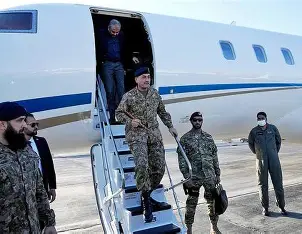
In the aftermath of these events, numerous leaks have suggested that communication channels between the two sides remain open despite the public hostility and military posturing. Yesterday, a high-ranking Pakistani delegation led by the Chief of Staff arrived in Tehran carrying a specific message from the Americans, according to various credible press reports. Following their detailed discussions with Iranian counterparts, the Pakistani officials are expected to meet with the Americans in a renewed effort to push the diplomatic process forward. The anticipated next step in this complex diplomatic dance involves the convening of a second, more intensive round of direct Iranian-American negotiations.
Furthermore, the situation is becoming increasingly complicated due to the escalating conflict in Lebanon, which has now been explicitly linked to the Iranian-American Negotiations. The Iranian leadership has formally stated that any final agreement must include a total cessation of Israeli aggression against Lebanon, emphasizing that this was a core condition understood since the beginning of the process. Notably, the Pakistani side, acting as the primary mediator between Tehran and Washington, has also confirmed the centrality of this condition to the ongoing talks. It is worth noting that the fate of these negotiations remains entirely uncertain, especially since the ceasefire is set to expire in approximately one week.
While the period might be extended to allow more room for diplomacy, the prevailing belief among geopolitical experts is that a return to active warfare is the most likely outcome sooner or later.
The Revolutionary Guard Warns
For its part, the Naval Forces of the Iranian Revolutionary Guard Corps (IRGC) issued a stern warning stating that any “wrong move” by the enemy would plunge them into “deadly whirlpools” within the Strait of Hormuz. In an official statement, the IRGC naval command reaffirmed its absolute control over the Strait, pointing out that all maritime traffic in this strategic corridor is subject to its specific regulations and constant monitoring. They further clarified that while they permit certain non-military vessels to transit the Strait, such passage is strictly contingent upon prior coordination with Iran and adherence to established Iranian guidelines.
Iran Ready to Continue the Fight
In this context, Mohsen Rezaei, an advisor to the Iranian Supreme Leader, emphasized that Tehran is fully prepared for a long-term war of attrition, unlike the United States which he claims lacks such endurance. Rezaei stated that Iran will not relinquish its strategic leverage over the Strait of Hormuz until all of its national rights are fully restored and recognized. He added that based on the bitter experiences of previous negotiations, Iran must be far more precise in drafting agreements this time, with a heavy emphasis on resolving critical economic issues. He further remarked that unlike the Americans who fear a sustained conflict, the Iranian people and military are intimately familiar with and fully prepared for a protracted war.
He challenged the American narrative by asking why Washington does not dare to cross the Strait of Hormuz if the Iranian Navy had truly been destroyed as claimed. Rezaei concluded by noting that unlike previous negotiations where the adversary dictated the terms, it is Iran that has set the preconditions for this current round of talks.
Meanwhile, the Iranian “Tasnim” News Agency reported that the Iranian negotiating team will conduct the necessary internal investigations following their meeting with the Pakistani delegation. Citing an informed source, the agency wrote that a final decision regarding the next round of Iranian-American Negotiations will be made based on these internal assessments. The agency also noted that the ceasefire in Lebanon serves as a positive indicator for Iran’s decision-making process regarding the continuation of the diplomatic track. Finally, it stressed that the United States must adhere to a logical framework for negotiations and avoid obstructing the process by exceeding its boundaries or violating the promises it has made.
What Happened in Isfahan?
In a related context, it is important to draw attention to a specific incident that occurred during the war which continues to have a significant impact on the negotiation process. This pertains to the story of the “missing” American pilot, whom the U.S. command claimed to have rescued during a specialized operation conducted in southern Iran. It later became clear that this operation resulted in substantial casualties among American forces, a reality that Washington has notably refused to officially acknowledge or confirm to the public.
Subsequent analytical reports have suggested that the truth differs fundamentally from the official Pentagon narrative regarding the true nature of that mission. It is widely believed that the operation was not actually a rescue mission but rather a tactical airborne landing deep within Iranian territory, possibly near a sensitive nuclear site.
This American operation represented the first attempt at direct ground military action during the war, aimed at either testing Iranian ground defense capabilities or attempting to seize enriched uranium. In either case, the Iranian side successfully thwarted the operation, forcing the American forces to retreat hastily and evacuate Iranian territory under pressure. It should be noted that the failure of this ground operation was one of the primary factors that pushed America toward the negotiation table to reassess its strategy.
In conclusion, we wish to point out that the American side continues to mobilize and build up military forces in the Middle East during this ceasefire period. Similarly, satellite imagery indicates that Iran is also making significant efforts to reposition its missile platforms in preparation for potential escalations. Consequently, the two paths of diplomatic negotiation and the return to full-scale war are currently running parallel to one another in a race against time.
Exclusive: Brownland