UAE’s Withdrawal from OPEC: A Quick Look
The UAE announced its decision to withdraw from the Organization of the Petroleum Exporting Countries (OPEC) and the OPEC+ alliance. The decision will take effect on May 1, 2026, according to the announcement.
Statement Explaining Reasons for Withdrawal from OPEC
In a press release, the UAE explained that the decision follows a comprehensive review of its production policies and current and future capabilities in light of global market fluctuations and geopolitical challenges. These include tensions in the Arabian Gulf region and the Strait of Hormuz, which affect supply dynamics.
The UAE also affirmed that this step aligns with its long-term economic vision, which focuses on enhancing investment in domestic energy production.
It added that the stability of the global energy system requires flexible, reliable, and competitively priced supplies. Furthermore, the statement indicated that the UAE has continuously invested to meet demand efficiently, prioritizing stability, cost, and sustainability.
He stated that the withdrawal does not mean the UAE is abandoning its commitment to the stability of global markets, but rather enhances its ability to respond more flexibly to market demands, while continuing its role as a responsible producer by gradually and thoughtfully increasing production according to demand.
This decision ends decades of cooperation within OPEC, as the UAE joined the organization in 1967. Its membership continued after the formation of the UAE in 1971. And during this period, it contributed to supporting the stability of the oil market and strengthening coordination among producing countries.
Implications of the decision for Saudi Arabia
The move by the UAE leadership indicates widening differences between Abu Dhabi and Riyadh. Furthermore, it confirms the UAE’s increasing alignment with the agenda of the United States and its allies.
Question: What does the UAE’s withdrawal from OPEC mean for Saudi Arabia?
The UAE’s withdrawal from the organization is not merely a technical step. It is a development that could present Saudi Arabia with significant strategic challenges:
First: A blow to Saudi leadership within OPEC
Saudi Arabia has effectively led the organization for decades. However, the departure of the third-largest producer means a decline in the organization’s weight itself, and consequently, a decline in Saudi influence, which is based on this collective framework.
Second: Loss of Market Control
Saudi Arabia’s strength lay in its “collective management of production.” With the UAE’s withdrawal, collective commitment weakens, reducing Riyadh’s ability to control prices or steer the market as it once did.
Third: Risk of a Price War
If the UAE freely increases its production, Saudi Arabia may find itself compelled to increase its output to protect its market share. This scenario revives the specter of a “price war,” which drains everyone and severely impacts revenues.
Fourth: Threat to the Cohesion of the Oil Alliance
The withdrawal of a country the size of the UAE could encourage other countries to follow suit, threatening the complete collapse of the quota system.
What is Trump’s connection to this decision?
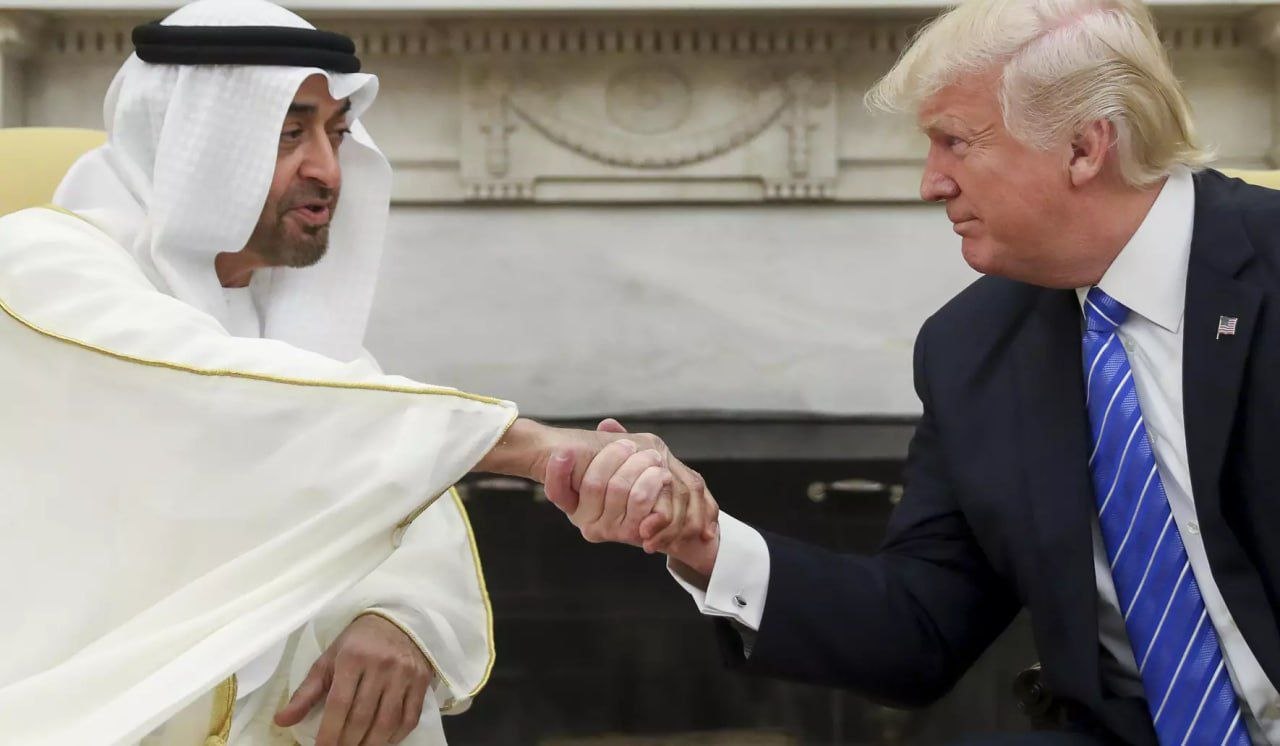
The UAE can now freely increase its oil production and supply it via pipeline to Fujairah. This will allow it to bypass the Strait of Hormuz, which is closed to others. This is precisely what US President Donald Trump needed: a large supply of oil on the market, which would temporarily lower prices. This factor puts pressure on Iran in the context of the ongoing confrontation between the two countries.
At the same time, the UAE, an ally of the US and India, is waging an economic offensive against Pakistan, a Saudi ally and a Chinese ally. Pakistan was shocked by the UAE’s demand for immediate repayment of a $3.5 billion loan from the International Monetary Fund. This demand not only threatened to undermine peace efforts in Islamabad, which is unacceptable to the UAE, but also threatened to deplete 20% of Pakistan’s central bank reserves, already burdened by internal instability and external debt obligations. Saudi Arabia came to Pakistan’s rescue with a new $3 billion deposit and a one-year extension of an existing $5 billion loan.
Russia, through its presidential spokesman Dmitry Peskov, confirmed that it would not withdraw from the organization. Peskov added in a press statement that Moscow hopes for continued dialogue on the organization’s future. “Russia respects the UAE’s sovereign decision”, he said.
New divisions are rapidly emerging in the world, dismantling old systems and alliances. As some experts have commented, the United States has activated its Trojan horse – the UAE – in the region.
Special Report: Brown land