Iran’s Slopaganda War
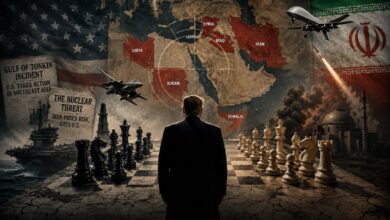
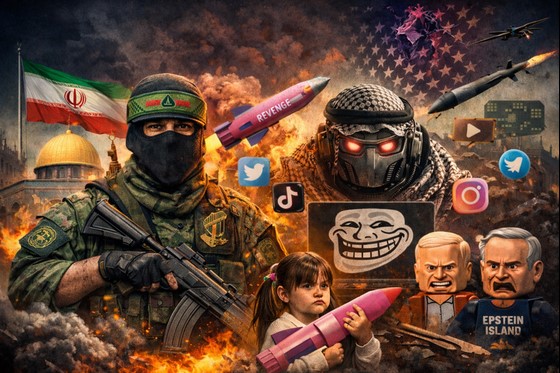
Tehran’s propaganda has moved far beyond official doctrine. In the algorithmic age, it fuses troll culture, symbolism, satire, AI voiceovers, viral clips, and online scandal into a form of narrative warfare meant to lay bare Western hypocrisy and the fragility of its moral claims.
By Sabah Al-Makki

Iran’s wartime propaganda is no longer confined to slogans, sermons, or state television. It now moves through memes, AI voiceovers, troll aesthetics, and platform-native absurdity, turning internet junk culture into an instrument of narrative war.
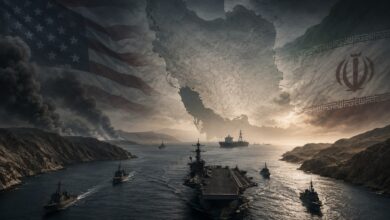
That battle matters not because it rests on any single slogan, platform, or medium, but because it fuses nationalism, religion, historical memory, popular culture, and digital improvisation into a wartime narrative aimed squarely at confronting the United States (U.S.) and Israeli aggression. What is at stake is not merely domestic legitimacy, but the struggle to define Iran itself: a sovereign nation under siege, the Islamic Revolutionary Guard Corps (IRGC) as its shield, and the U.S. and Israel as aggressors whose own claims to moral authority can be turned back against them.
What has emerged is a form of “slopaganda“: AI-assisted, platform-native propaganda that borrows the speed, absurdity, visual grammar, and viral instincts of internet junk culture to wage narrative war at low cost and high velocity. Iran may not be able to dominate the conventional military balance against Washington and Tel Aviv, but it can still compete in the realms of attention, emotion, and interpretation. The aim is not necessarily to make Western audiences admire the Islamic Republic. It is to make them question the moral credibility of Western power, deepen fractures already running through rival societies, and reinforce the argument that Iran is not the author of chaos, but the object of aggression.
The Battle of Symbols
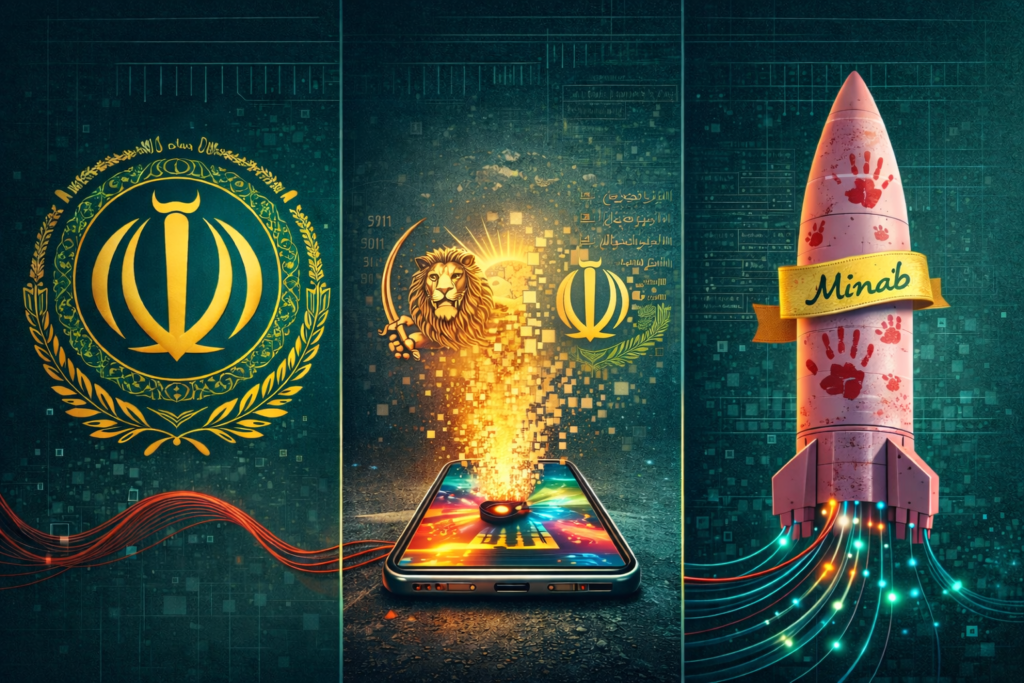
In this ecosystem, symbols are not decorative. They are compressed arguments about legitimacy, continuity, sacrifice, and national endurance.
The official emblem of the Islamic Republic remains the clearest visual marker of the regime’s Islamic legitimacy. Yet Tehran’s symbolic vocabulary is no longer confined to religious reference points alone. Increasingly, it draws on Persian history and national inheritance to widen its emotional base and reconnect the state’s ideological narrative to a deeper civilizational memory.
That is where the Lion and Sun acquire renewed significance. Because the symbol belongs to Iran’s pre-1979 state iconography, it cannot be dismissed as merely oppositional. It also carries the weight of an older national inheritance. From the regime’s perspective, such symbols need not imply rejection of the Islamic Republic. They can instead be absorbed into a broader claim that the current state is the guardian of an ancient nation and a long civilizational arc. The strategy, in other words, is no longer purely Islamic. It is increasingly civilizational.
The same logic shapes more populist visual messaging. One striking example is the so-called pink missile, linked to “the revolutionary little girl” and framed in memory of the Minab schoolgirls reportedly killed by American Tomahawk missiles. The point is not merely to soften the appearance of force. It is to domesticate retaliation itself, recasting military violence as intimate, emotional, and morally justified. In this visual grammar, force is presented not as naked power, but as grief transformed into duty.
From Official Messaging to Troll Culture
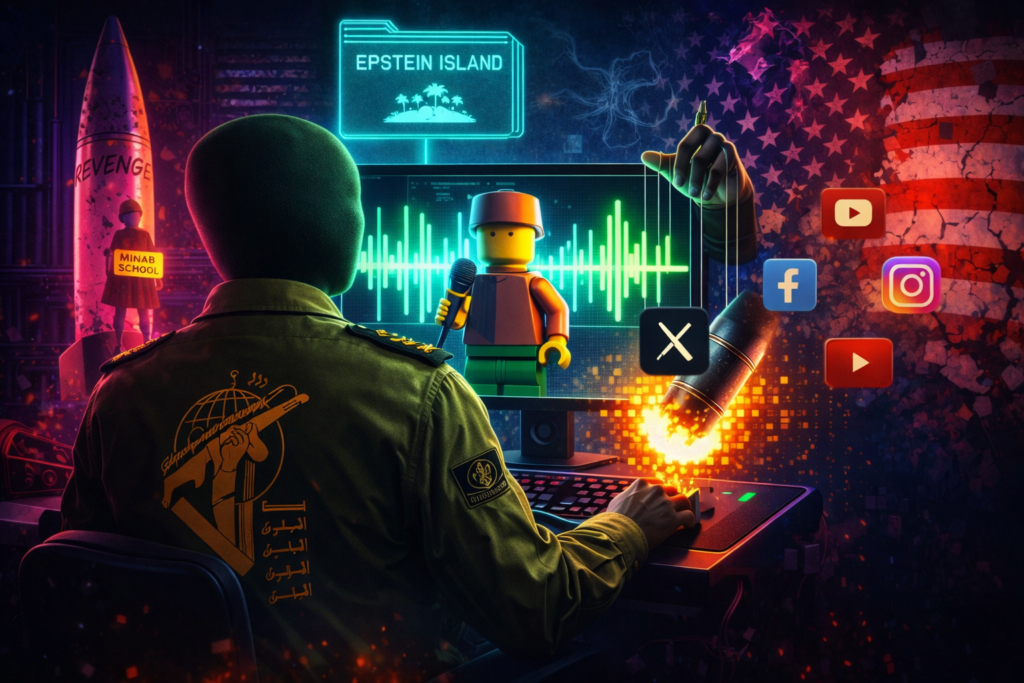
If symbols compress ideology into an image, AI-driven memes and troll-style content convert it into fast-moving emotional warfare.
One of the most important shifts in Iran’s current media model is that it no longer relies only on speeches, state television, or official communiqués. Pro-Iran actors have moved decisively into internet-native forms that travel more effectively across digital platforms: short videos, meme aesthetics, satire, English-language voiceovers, and culture-war messaging calibrated for virality.
That shift matters because this material does not initially present itself as propaganda. It presents itself as content. Online attention is no longer secured by institutional authority alone; it is won through familiarity, rhythm, humor, emotional charge, and cultural fluency. Rather than merely translating Iran to Western audiences, this ecosystem weaponizes the West’s own symbolic language and media habits against it.
The Lego and Rap Formula
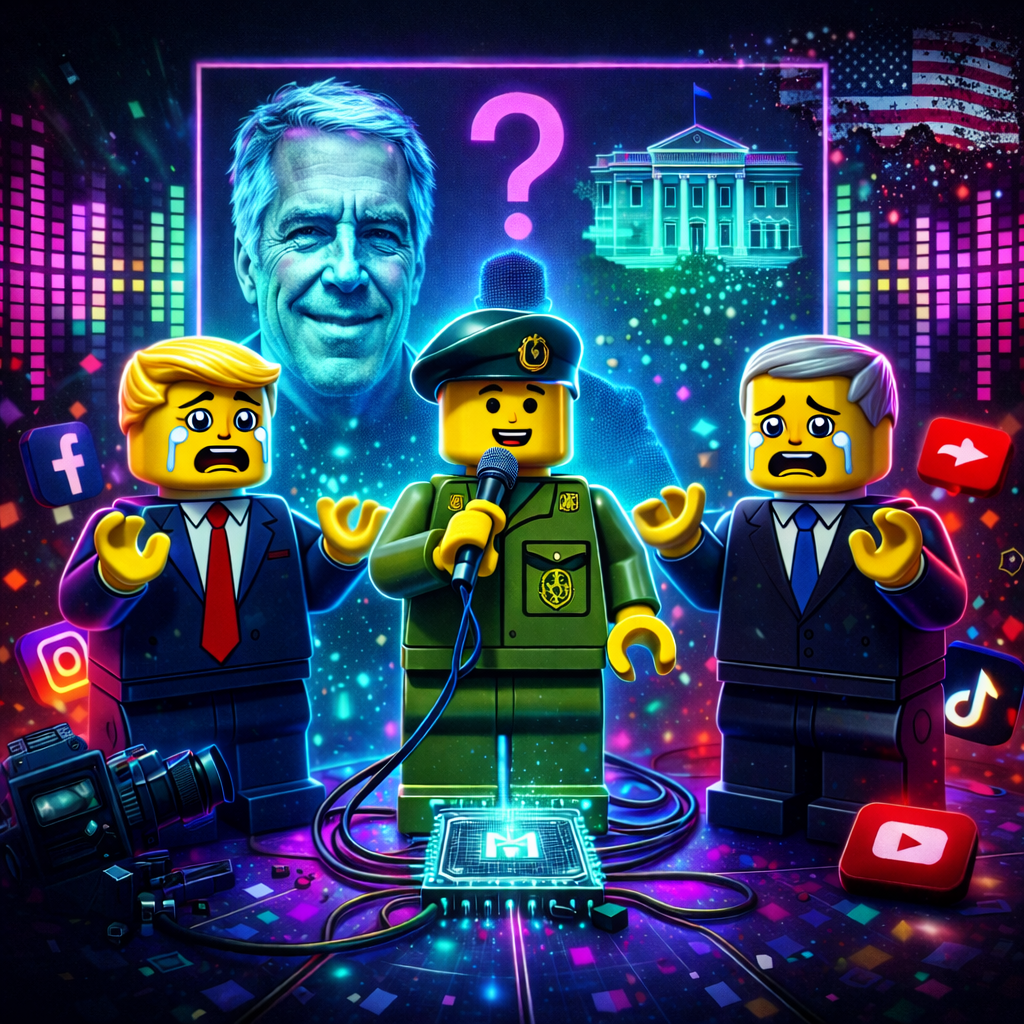
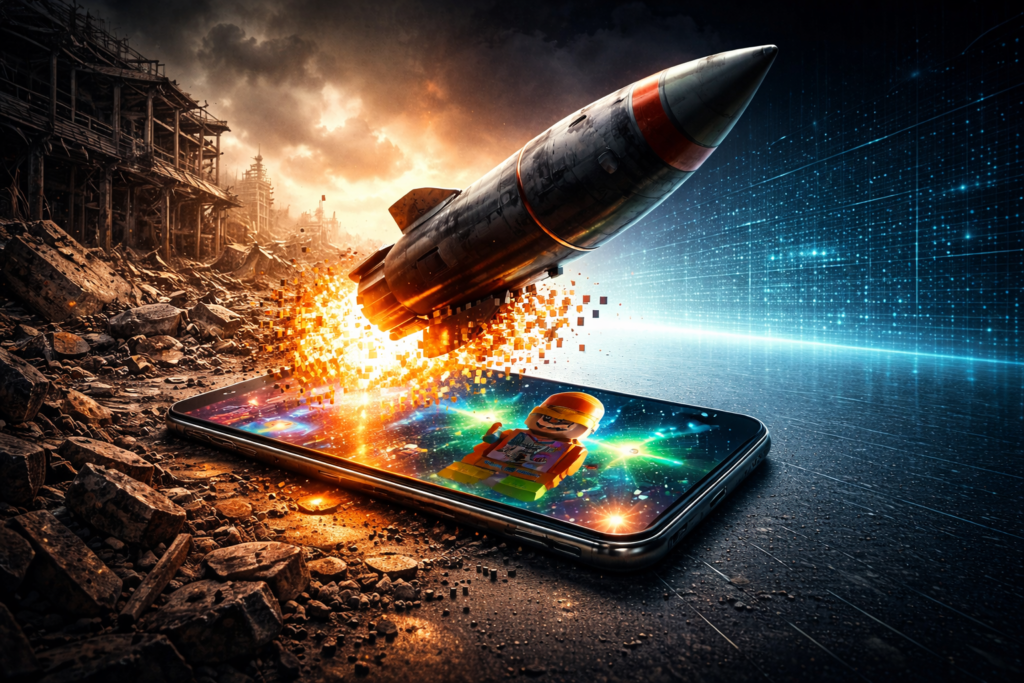
The most distinctive feature of this campaign is its fusion of childish aesthetics and sharp political aggression. The Lego-style videos are especially revealing because they use innocence, nostalgia, and visual simplicity as vehicles for hard political messaging.
Pro-Iran productions have used Lego-like animation, satirical storylines, and AI-generated English-language audio to attack Trump, the U.S. administration, Israel, and Western narratives of the war. One of the most striking recurring themes has been Jeffrey Epstein, invoked not because it bears any direct relation to Iran’s battlefield position, but because the war itself is cast as a distraction from the Epstein files scandal in American political life. The logic is simple: do not begin with Iranian grievances alone; begin with the adversary’s own scandals, fractures, and unresolved obsessions.
The use of rap, or rap-like delivery, serves the same purpose. It is rhythmic, repeatable, and instantly legible to online audiences. Even when the voice is synthetic, the cadence makes the message feel contemporary rather than official. Iran’s propagandists are not merely rendering Iranian media forms in English; they are appropriating the adversary’s own entertainment grammar and repurposing it as a weapon of narrative disruption. That is why such content travels so effectively. According to researchers at the Institute for Strategic Dialogue, two coordinated pro-Iran X networks exceeded one billion views in the first month of the conflict alone.
The Gray Zone Behind the Content
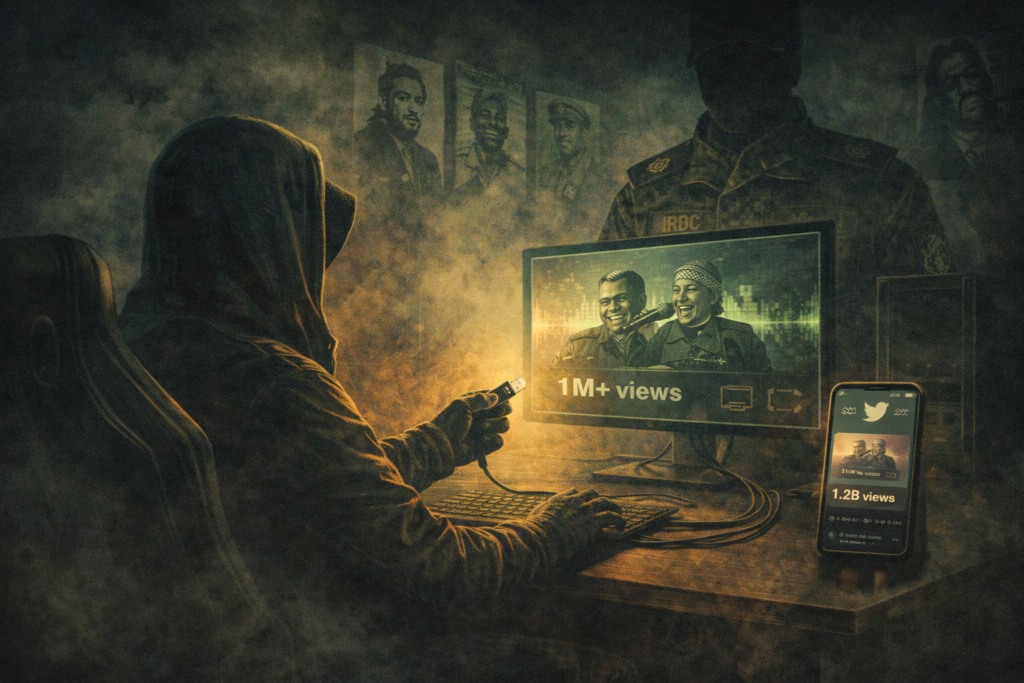
The actors behind this material appear to operate in a strategically valuable gray zone between apparent independence and state alignment.
One example is Akhbar Enfejari, referred to in some English-language coverage as Explosive Media or the Explosive News Team: a group that presents itself as independent while producing highly polished pro-Iran content from inside Iran. It casts itself as a challenger to Western media dominance, yet its sophistication and operating environment suggest, at a minimum, indirect state backing, protection, or tolerance.
That ambiguity is one of the model’s central strengths. The state does not always need to hold the microphone directly if aligned actors can circulate the message with sufficient plausibility, speed, and virality. The result is a form of deniable alignment: messaging that closely serves state interests while retaining the energy, flexibility, and cultural texture of apparent independent creativity.
Why It Works
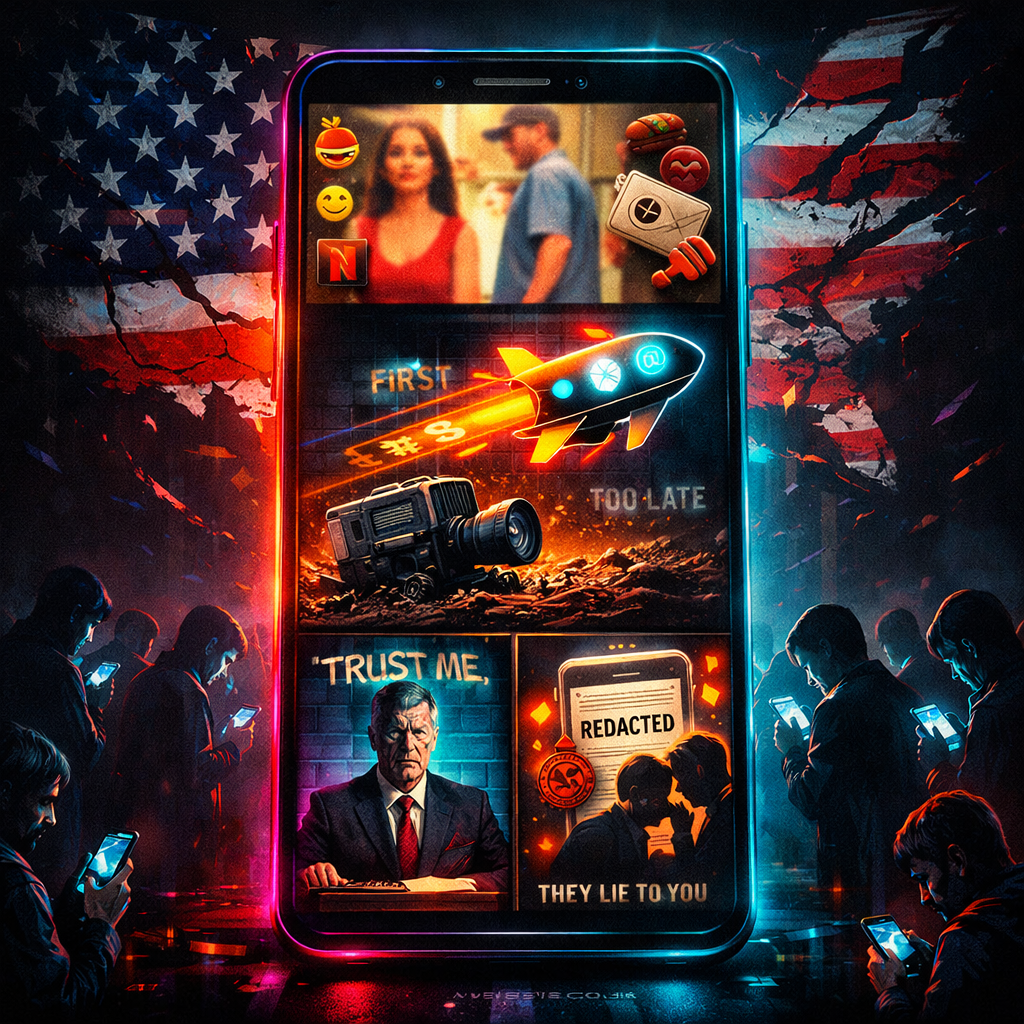
Iran’s success in this domain rests on an insight many states still fail to grasp: online influence is no longer won by sounding authoritative. It is won by sounding native to the platform.
First, there is cultural fluency. These memes are built around American scandals, American speech rhythms, and American online aesthetics. Rather than arriving as obviously foreign messaging to be scrutinized, they appear in forms already associated with entertainment, irony, and political gossip.
Second, there is speed. Troll-style content moves faster than institutional media. It reacts to events, improvises around headlines, and floods platforms before rebuttal or fact-checking catches up. In asymmetric warfare, speed is not merely an advantage. It is itself a weapon.
Third, there is emotional inversion. Iran’s campaign does not begin by asking Western audiences to sympathize with the Islamic Republic. It begins by inviting them to distrust their own elites, media systems, and strategic narratives. That is a far easier proposition. By targeting existing doubts, Iran turns Western fractures into a battlefield resource.
The IRGC as Shield
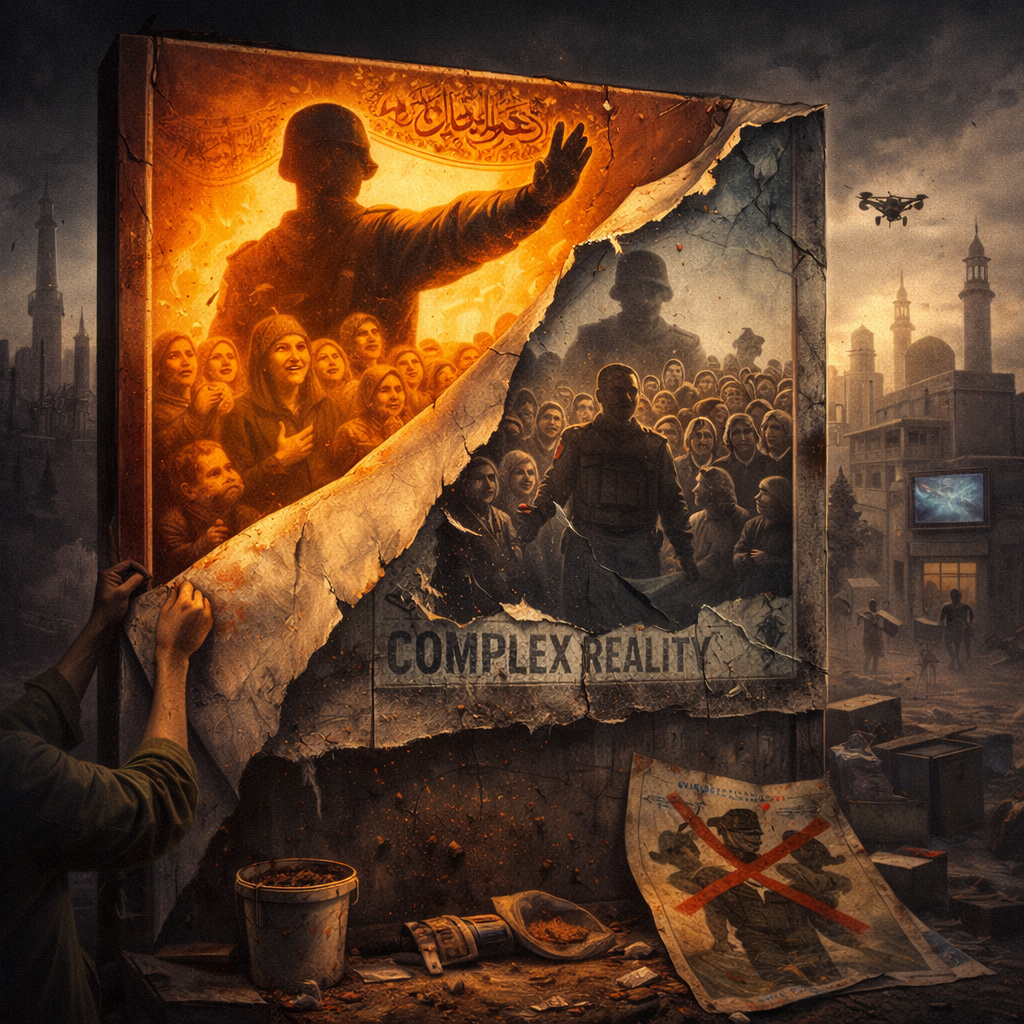
This narrative also reshapes how the IRGC is presented.
Across much Western coverage, the IRGC appears primarily as a coercive security institution. In Iran’s wartime narrative, by contrast, it is elevated into the heroic defender of the nation, the instrument of deterrence, and the embodiment of sacrifice in the face of foreign attack. Public campaigns in Tehran have reinforced this image in explicitly emotional and patriotic terms, linking the IRGC to suffering, vengeance, endurance, and survival. The message is unmistakable: the IRGC stands between the nation and destruction.
That framing matters because it fuses the religious, national, and emotional strands of the broader messaging effort. The IRGC is cast not merely as a military institution, but as the living guardian of Iran’s sovereignty, continuity, and historical endurance.
The Limits of Slopaganda
Yet the innovations should not obscure the limits.
Memes do not stop missiles. Troll videos do not neutralize hard power. They can shape mood, exploit hypocrisy, and impose political costs on an adversary’s public debate, but they do not substitute for deterrence in the military sense. Iran’s model is effective as an asymmetric instrument of narrative warfare, not as a shield against bombs.
Its success, then, must be defined carefully. It has not reduced Western and Israeli coercive capacity in any fundamental way. What it has done is make the war harder to narrate cleanly, harder to moralize without contradiction, and harder to isolate from the internal fractures of the societies waging it. Tehran may not win the war of force, but it can still shape crucial parts of the war over interpretation.
Lessons from Tehran’s Slopaganda
The broader lesson is not that Iran has discovered a magic formula. It is that actors with fewer conventional advantages can still compete effectively in the information sphere by exploiting speed, deniability, symbolism, and cultural fluency.
The first lesson is that modern slopaganda works best when it is adaptive and adversarial rather than defensive and literal. Iran’s campaign did not primarily try to persuade Western audiences that the Islamic Republic is admirable. It sought instead to expose Western hypocrisy, exploit American scandals, and cast U.S. and Israeli power as morally compromised.
The second lesson is that ambiguity is an asset. Messaging becomes more resilient when it travels through actors operating in the gray zone between apparent independence and state alignment. That deniable structure allows content to circulate with the energy of subculture rather than the stiffness of official doctrine.
The third lesson is that cultural translation matters more than ideological repetition. Iran’s campaign worked not because it explained itself more clearly, but because it translated its message into the scandals, visual codes, humor, and emotional triggers already familiar to Western users. It did not merely enter English-language discourse. It entered Western internet culture.
The fourth lesson is speed. In a platform-driven information war, the first emotionally resonant framing often matters more than the most accurate one. Memes, AI voice tools, and short-form video enable agile actors to move faster than formal institutions and shape initial interpretation before facts are fully settled.
The fifth lesson is that entertainment has become a battlespace. Attention is now won less through formal news than through satire, animation, meme logic, music, and short viral clips. In that environment, the decisive rival is no longer simply the broadcaster, but the platform itself and the consumption habits it rewards.
The final lesson is also the central warning. Information warfare can exploit contradictions, mobilize emotions, surface details often omitted from mainstream coverage, and complicate an adversary’s narrative by presenting events through a rival lens. In doing so, it can prompt audiences to question official claims, seek additional information, and reach more critical judgments. But it cannot substitute for material deterrence. Memes may shape interpretation even if they do not stop missiles. They remain potent weapons in a battlespace where narrative, speed, and perspective often shape understanding before the facts are settled. Whether one accepts the generational labels or not, contemporary conflict already extends beyond classic 5GW. It is increasingly hybrid, cognitive, algorithmic, and multi-domain.
Conclusion
Iran’s slopaganda model offers a revealing picture of what asymmetric communication looks like in the age of AI, platform culture, and permanent narrative war. Faced with superior conventional force, Tehran and its aligned media actors have sought to transform structural disadvantage into narrative agility, replacing the stiffness of official messaging with troll-style ambiguity and straightforward persuasion with the strategic exploitation of Western contradiction.
Iran has not won the military contest through memes. But it has demonstrated that a state under pressure can still shape the symbolic terrain of war, present itself as the aggrieved party rather than the destabilizer, and weaponize the adversary’s own media culture against the adversary. In that sense, Tehran has not prevailed in the war of force. But it has become markedly more capable in the war over interpretation.
About the Author
Sabah Al-Makki is a Sudanese writer and Deputy Editor-in-Chief at Brown Land News. Her work examines political violence, international law, cultural resistance, and social awareness through the lens of Sudan’s unfolding realities. She challenges dominant narratives by centering the voices of Sudanese citizens, both inside the country and across the diaspora, whose perspectives are often excluded from global discourse. Her writing interrogates the meanings of war, peace, and justice, insisting that actual change begins with dismantling colonial paradigms. Sabah approaches journalism as a form of cultural, cognitive, and philosophical resistance, confronting the structures that sustain conflict and silence. She writes from within the storm.
Exclusively published by Brown Land News.
Where sovereignty is not negotiable, and truth defies revision.
Our Land. Our Voice. Our News.