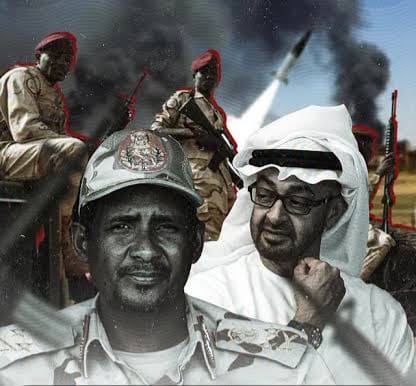
Dubai: The Lungs Through Which the RSF Breathes
International Documentation of the Financing and Arming Network
A War Conducted from a Thousand Miles Away
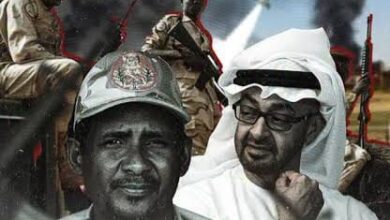
While the villages of Darfur burn and Sudanese families are driven from their homes in Khartoum and Omdurman, deals are being struck in the corridors of Dubai’s opulent companies that shape the course of this war more than the battlefield itself. This picture — as outrageous as it is damning, supported by overwhelming evidence from United Nations reports, human rights organizations, and international investigative journalism — makes the United Arab Emirates a pivotal player in what has become one of the most tragic humanitarian conflicts of the twenty-first century.
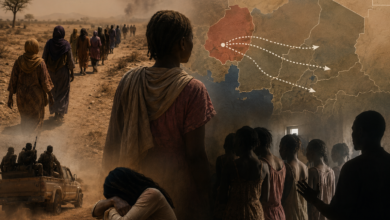
According to estimates from the Armed Conflict Location and Event Data Project (ACLED), based in the United States, at least 59,000 people have been killed in Sudan since the war erupted in April 2023, more than twelve million people have been displaced in the world’s largest displacement crisis, and a further fifteen million live in areas threatened by famine.
I. What the United Nations Has Said
In January 2024, the UN Security Council Panel of Experts published its report confirming the existence of an “air bridge” transferring weapons from the UAE to the Rapid Support Forces via Amdjarass airport in eastern Chad. This report was subsequently reinforced by independent research conducted by the Conflict Observatory, funded by the U.S. State Department, which concluded with “near certainty” that UAE weapons were transferred to the RSF through Chad.
In October 2025, the UN Fact-Finding Mission classified what the RSF committed in the city of El Fasher — from October 2025 and before — as bearing “characteristics of genocide,” citing what it described as “external support that enabled these forces to carry out mass violations.” And in April 2026, Refugees International confirmed the existence of “compelling new evidence” of the UAE’s continued arming of the RSF, including the deployment of Colombian mercenaries who served as drone pilots and military instructors in El Fasher at the moment of its fall.
II. The Network of Front Companies
The military and financial support network does not operate in the open, but rather through a web of commercial entities tracked by UN expert reports and U.S. Treasury designations. Chief among these is Al-Junaid Multi-Activities Company, which experts regard as the “backbone” of the Dagalo family’s wealth; it controls the gold mines of Jebel Amer and exports its proceeds to Dubai for use in weapons procurement, and has been sanctioned by both the United States and the United Kingdom.
Operating in a similar fashion is Tradive General Trading, a Dubai-based company controlled by Al-Goney Hamdan Dagalo — brother of the militia’s commander — accused of importing pick-up trucks that are then reconfigured as combat vehicles, along with military communications equipment and drones. In 2025, the United Nations extended its Sudan sanctions regime and arms embargo through September 2026, while human rights organizations have called for expanding this embargo to cover all Sudanese territory.
III. Sudanese Gold Funds the War Against Sudanese People
A painful paradox is revealed by financial reports: Sudan’s gold wealth, which was meant to be a driver of development and prosperity, has been transformed into fuel for a war of annihilation. The Sudanese Central Bank disclosed that approximately 97 percent of official gold exports from army-controlled areas in 2024 went to the UAE, at a value of one billion five hundred and twenty million dollars. In RSF-controlled areas the situation is even more acute, with gold smuggled outside any official oversight framework.
The European Parliament has scrutinized this matter with a critical eye, calling for strict monitoring of Sudanese gold smuggling networks to Dubai and asserting that “Sudan’s gold is financing the RSF’s war.” Meanwhile, Human Rights Watch described the UAE as providing the “military and financial lifeline” to a militia accused of committing crimes against humanity.
IV. The Global Press and Its Role in Lifting the Veil
The world’s leading media institutions converge in documenting this Emirati role to an unprecedented degree. The New York Times published satellite imagery showing UAE cargo aircraft at Chad’s Amdjarass airport; the Wall Street Journal documented the delivery of advanced weapons to the militia in October 2025; the French newspaper Le Monde revealed in March 2026 the involvement of intermediary African aviation companies; and The Guardian focused on the “blood gold” file and the mechanisms of its laundering in Dubai’s markets.
In April 2026, the Conflict Insights Group published a detailed report using phone data to track fifty devices used by Colombian mercenaries between April 2025 and January 2026, showing their presence at locations that included a military training facility in Abu Dhabi — what the report’s authors described as “a direct link between Abu Dhabi and the Rapid Support Forces.”
V. The Emirati Position and the Diplomatic Response
The UAE categorically denies these allegations. Its embassy in Washington issued a statement in December 2025 affirming that “the UN Panel of Experts report issued in April 2025 contains no documented evidence of Emirati support to any party,” adding that its efforts in Sudan are confined to “humanitarian work and support for peace efforts.” In February 2026, it also announced a pledge of five hundred million dollars in support of the UN humanitarian system. However, human rights organizations described this humanitarian pledge as “aid-washing,” noting that the harm the UAE inflicts on Sudanese civilians — through financing, arming, and mercenaries — vastly exceeds whatever humanitarian assistance it provides. Sudan filed a complaint against the UAE before the International Court of Justice in March 2025, though the Court has not accepted the jurisdictional challenge due to an Emirati reservation on the Genocide Convention.
When Neutrality Becomes a Crime
The international community faces a clear moral and legal reckoning: nations and international institutions cannot bind Sudanese people to peace while allowing a member state to fuel the war. Diplomatic exceptions and economic balancing acts with the UAE do not justify the failure to take deterrent action. And while the United Nations continues to renew the arms embargo and issue its reports, Sudanese civilians continue to pay the price — alone.