Hemedti… Foolish Confessions and a Fabricated Appearance
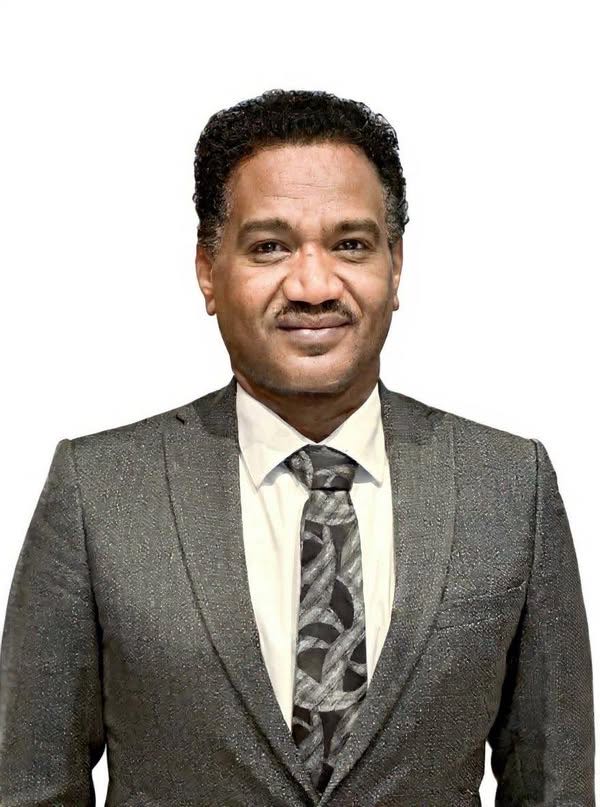
By: Dr. Osama Mohamed Abdelrahim
(The Speech of Indictment and Admission)
The recent appearance of Mohamed Hamdan Dagalo (Hemedti), leader of the Rapid Support Forces (RSF) militia, from outside Sudan was neither an ordinary media event nor a traditional political speech framed within routine war propaganda. Rather, it was closer to an “open confession session.” In his attempt to defend himself, he instead revealed a staggering level of contradiction, confusion, and detachment from reality, admitting to a series of facts that constitute unprecedented political, moral, and legal indictment.
The speech—in its timing, content, and production—reflects the severe pressure Hemedti and his militia are facing. It reveals a desperate attempt at regional repositioning, marked by a pivot toward Africa to boost the morale of forces that are eroding on the battlefield and organizationally, amidst a clear decline and loss of resources and political cover.
The most dangerous element of the speech was what can be considered an implicit admission of his militia’s responsibility for igniting the war. By attempting to recycle justificatory narratives regarding the conflict with Islamists and the former regime, he was not addressing reality as much as trying to selectively rewrite political history. This underscores that the war was a political project rather than a mere reaction, as he previously claimed.
In a striking paradox and blatant contradiction, Hemedti announced his support for the separation of religion and state—a transparent attempt to woo foreign political circles—while simultaneously attacking what he termed “Kezan religion” (Islamist ideology). This approach reflects intellectual and political disarray, proving that religious discourse has never been a value-based framework for him, but rather a shifting political tool used according to necessity.
Furthermore, his admission to striking aid trucks, claiming they carried ammunition, is a grave statement that opens the door wide for legal accountability. This is especially significant given multiple reports confirming the targeting of humanitarian convoys and service facilities, reinforcing the image of the militia as a force that disregards the rules of war and International Humanitarian Law.
The speech was not devoid of threats concerning the economy, including talk of disrupting the banking system. This signals a shift in the militia’s rhetoric from military control to economic sabotage—a clear indicator of their inability to achieve genuine territorial gains.
His remarks on the impact of drones in halting his forces’ progress represent a candid admission of the failure of the project to seize the capital and central Sudan. It is a manifest acknowledgment of defeat, explaining his tone of justification and his attempt to blame external factors. Moreover, his admission of using foreign mercenaries to operate these drones provides further evidence of the militia’s non-national character, bolstering the narrative that it is a trans-border project relying more on external support than internal foundations.
His criticism of the Kingdom of Saudi Arabia and the Jeddah platform can only be understood as an attempt to appease regional backers. This shift reflects his transition from a seeker of mediation to an attacker of peace pathways. Similarly, his claim that the solution must be “African,” coupled with his appearance in African attire, reveals a calculated attempt at political repositioning following a decline in support within his Arab surroundings—a move that seems more like political panhandling and distraction than a strategic choice.
Hemedti’s meeting with the so-called “Tasees” delegation and Ugandan President Yoweri Museveni must be viewed through the lens of the militia’s frantic quest for external political legitimacy to compensate for domestic losses. However, Museveni’s subsequent statements remained cautious, focusing strictly on the necessity of dialogue and a political solution without endorsing the delegation’s positions. This highlights Uganda’s awareness of the sensitivity of the Sudanese file and places a ceiling on any attempt to market a parallel political reality.
The orchestrated gathering in Uganda, funded and mobilized under the guise of the “Sudanese Diaspora,” cannot manufacture legitimacy regardless of the media noise. Nevertheless, it serves as a wake-up call to the internationally recognized government: political nature, like physical nature, abhors a vacuum.
His frequent costume changes within a few hours—alternating between traditional, African, and civilian attire—felt like a disjointed theatrical performance. While intended to evoke African cultural symbolism, it instead manifested a loss of stability and political identity.
Ultimately, Hemedti’s recent speech was nothing more than a blend of unintended confessions, intellectual contradictions, and failed attempts at repositioning. What was meant to be a show of strength turned into a self-indictment of atrocities and a testament to the militia’s erosion. While wars may drag on, the state and its institutions remain the decisive factor, for history proves that while conflicts fade, only states endure.
Saturday, February 21, 2026