
Columns
- Columns

The Electoral Commission
Dr. Elshafie Khidir Saeid The success of the Electoral Commission in its tasks depends entirely on the success and achievement of the tasks of the Constitutional Commission if we want the outcome of the elections to be a stable political system that expresses in all honesty and transparency the trends of public opinion, regardless of the winner or loser in the elections, and far from falsifying the will of voters through tribal, sectarian, religious or…
- Columns
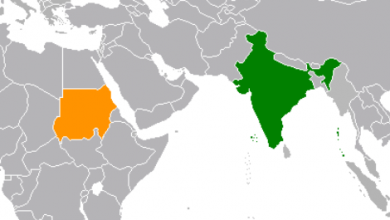
The Future of Sudanese-Indian Bilateral Relations
Ahmed Hassan Hurga Sudan-India bilateral relations are old and have deep roots; we can say that relations between the two countries are witnessing a great development in all fields. The historical relations between the two sides is a model and at the same time is distinguished, this comes as a result of the keenness of the two countries which played an important role in developing the relationship and pushed it ahead. The two States are…
- Columns
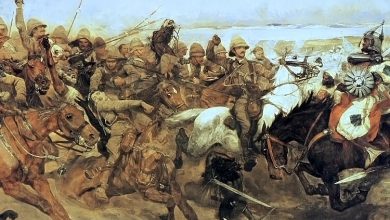
Rise and Fall of the Three Revolutions
Omer B. Abu Haraz In the article of last week, the sequence of events in the governance of Sudan since 1885 to date was narrated, mentioning that since the independence of Sudan in 1956 (65 years) democratic civilian rule was in 13 years only of which 4 years were the transitional hybrid rule of civilians and military – including the ongoing transitional period. The other 52 years were autocratic military rules after three full-fledged military…
- Columns
Towards Bringing an End to Illiteracy
Muawad Mustafa Rashid A few years ago, the Ministry of General Education revealed the existence of more than 9 thousand and a half illiterate citizens in Sudan. At that time the Ministry announced the launching of an initiative towards literacy with a cost of more than one billion and 653 thousand Sudanese pounds. On their part, the adults’ education officers demanded issuing a Presidential decree on mandatory literacy. It was a good step that the…
- Columns

The Broken Window Theory in Sudan
Mohammed Saad Kamil Philip Zimbardo, a Stanford psychologist, reported in 1969 on some experiments testing the broken-window theory. He arranged to have an automobile without license plates parked with its hood up on the street in an area where poor people live and a comparable automobile on a street in an area where rich people live. The car in the poor area was attacked by “vandals” within ten minutes of its “abandonment”. Within 3 days…
- Columns

Has Medication Become a Luxury?!
Al-Sammani Awadallah The recent policies adopted by the transitional government in lifting subsidies on the essential commodities have harmed the lives of the citizens and led to more suffering besides its expanding the poverty circle and disappointment. However, there are essential commodities that the citizens could not have any alternatives to it to ease their suffering. The right to get medical treatment is one of the basic rights, but freeing the medicine US Dollar exchange…
- Columns
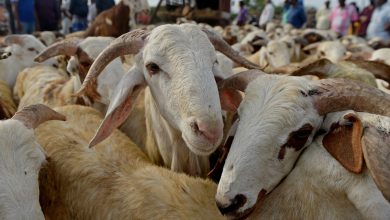
Slaughterhouses required!
Osman Mirghani Minister of Animal Wealth, Dr. Hafiz Ibrahim happened to affirm that Sudan needs 50 slaughterhouses out of which only 10 are available, describing Al-Kadaru slaughterhouse as the most modern and also the biggest in Sudan. A few years ago the Chinese Ambassador spoke about a modern slaughterhouse to be established in Khartoum with a cost of US$80 million, but it seems that the project has vanished within the unstable relation between the two…
- Columns
The Vicious Circle Is Still Working
Omer B. Abu Haraz From what is happening now and since the ousting of the longest autocratic rule of the Islamic Salvation regime, it is clear that Sudan is still right in the middle of the loopholes of the vicious circle of the short democratic rule followed by the long autocratic military regime. The British colonization to Sudan in 1898 after defeating the Mahdia Islamic Rule (1885 – 1898) stayed in power for 58 years.…
- Columns
I am Secular! (2 – 2)
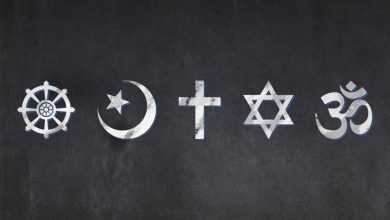
Muawad Mustafa Rashid Secularism Is Not Atheism Atheism is a lack of belief in gods. Secularism simply provides a framework for a democratic society. Atheists have an obvious interest in supporting secularism, but secularism itself does not seek to challenge the tenets of any particular religion or belief, neither does it seek to impose atheism on anyone. Secularism is simply a framework for ensuring equality throughout society – in politics, education, the law, and elsewhere…
- Columns

Sudanese Media and Its Limited Effects (2–3)
Mohammed Saad Kamil The borders’ designed freedom, with all its redlines and banned circles, is but another feature of the latent causes behind the weakness of the Sudanese media and its inability to transform to real authority. The crucial issues, which affect the public and contribute to building the institutions on a strong basis are not allowed to be dealt with. However, most of the ruling regimes in Sudan remained to reject opening the door…