Russia’s Motives for Using the “Veto” and Its Impact on the Future of Sudan’s Political Process
The Face of Truth / Ibrahim Shglawi
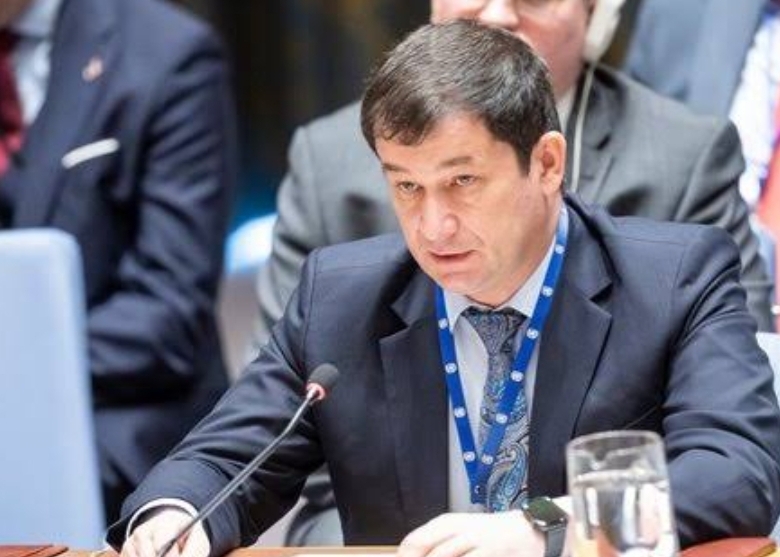
Yesterday, Russia used its veto power in the United Nations Security Council against a British draft resolution aimed at undermining Sudanese sovereignty by imposing restrictions on the Sudanese government amidst the ongoing crisis in the country. This move, which was met with widespread approval in the Sudanese street and unusual discontent among supporters of the “Taqaddum” Civil Forces Coordination, raised questions about Russia’s political and security motives behind this decision.
Thus, Russia’s use of the veto in favor of Sudan represents a significant diplomatic shift that reflects a change in its regional strategy. It also has profound implications for Sudanese-Russian relations and possibly for the future of the political process in Sudan. In this article, we will explore this development in detail to provide insight into its significance.
The British Draft Resolution: Nature and Background
First, it is essential to discuss the nature of the British draft resolution and the efforts Britain has consistently made, reportedly influenced by the “Taqaddum” Civil Forces Coordination, led by Abdalla Hamdok, to pressure Sudan. Some observers have even accused Taqaddum of fueling this war by openly supporting the Rapid Support Forces’ coup in mid-April of last year.
The UN Security Council began deliberations on the draft resolution concerning Sudan, aiming to impose sanctions on the Sudanese government and hold it accountable for human rights violations. The resolution also called for deploying international forces to stop the ongoing conflict in the country. The resolution equated the Sudanese army with the Rapid Support Forces militia, conditioning a ceasefire on maintaining the current positions held by both sides. The stated goal of these measures, according to the Security Council, was to pressure Sudanese authorities to agree to a ceasefire and engage in dialogue with the militia.
Russia’s Veto: A Strong Message to the World
Despite British and American attempts to pass the resolution, it faced strong opposition from several Security Council member states. This prompted the French delegate to request closed consultations to resolve disagreements over the draft. With negotiations deadlocked, Russia decided to use its veto power, a move widely regarded as strong support for Sudan against foreign interference.
This veto provided significant backing for Sudanese sovereignty and sent a message to the world that friendships built on trust, free from ulterior motives, are always productive. Russia’s stance was not just a routine diplomatic move; it carried a strong message on several levels.
Politically, it showcased Russia’s support for Sudanese sovereignty against external efforts to impose control over the country.
Strategically, it highlighted Moscow’s broader objection to Western interventions aimed at undermining national systems in the region, a stance that could encourage African nations to seek stronger ties with Russia.
Regionally, the veto aligned with Russia’s strategy to expand its influence in Africa and counter Western pressures that seek to reshape the region to serve their interests.
Sudan’s Geostrategic Importance
From a security perspective, Sudan is a crucial geostrategic hub in the Red Sea region, which continues to be a battleground for major powers’ interests. This unique geographical position, coupled with Sudan’s abundant natural resources, makes it an attractive market for Russian investments, particularly in energy and mining sectors.
Russia’s support for Sudan strengthens its role in shaping regional security dynamics and countering Western expansion in the area.
Sudan’s Response and the Way Forward
Following Russia’s veto against the British draft resolution, the Sudanese government expressed its deep gratitude to Moscow. In an official statement, Sudan’s Ministry of Foreign Affairs welcomed Russia’s use of its veto power, describing the move as a commitment to the principles of justice and respect for state sovereignty. The ministry also praised Russia’s rejection of imposing guardianship on the Sudanese people through international mechanisms, asserting that this veto represents support for the country’s independence and unity.
This Russian stance also bolsters the Sudanese government’s position on the international stage, providing some relief amid mounting international pressure. The veto reflects a shift in global political dynamics, as Sudan seeks to forge new alliances beyond Western influence, enhancing future cooperation with Russia.
Russia’s Changing Diplomatic Doctrine
Observers note that this development reflects a shift in Russia’s diplomatic doctrine, especially when compared to its traditional use of the veto during the Soviet era, which primarily protected Russia’s interests and those of its allies. The veto against the British resolution on Sudan signals a transformation in Russia’s approach to African issues.
Many analysts believe that Russia’s move seeks to strengthen its standing in Africa by presenting itself as a strong ally against Western hegemony. This aligns with Moscow’s vision of expanding its military and economic influence on the continent. Supporting Sudan in this context may pave the way for closer ties with other African nations.
The Broader International Context
This Russian action potentially places Sudan within the framework of ongoing global transformations and the “new Cold War.” Some analysts suggest that Russia’s stance may be part of broader international maneuvers, especially in light of shifts in U.S. leadership.
Some sources indicate that there may be understandings between then-President-elect Donald Trump and Russian President Vladimir Putin on how to approach Sudan. This could significantly alter U.S. foreign policy toward Sudan when the new administration assumes office in January.
Challenges for Britain
Conversely, Britain finds itself in a difficult position, particularly with its support for armed militias in Sudan, which implicates it as a key player in fueling the conflict. Despite international pressures, Russia has successfully positioned itself as a strategic ally for Sudan, opening the door to new transformations in Sudanese politics and international relations in the region.
Conclusion
From the perspective of “The Face of Truth,” it can be said that Russia’s veto against the British draft resolution in the Security Council represents a turning point in international policy toward Sudan. This Russian stance not only reflects support for Sudan during its time of crisis but also opens new horizons for bilateral cooperation in the future, whether in economic or military fields.
Simultaneously, this move could pave the way for political solutions that restore security and stability in Sudan while enhancing Russia’s position as a significant power in Africa.
Best regards,
Wednesday, November 20, 2024
Shglawi55@gmail.com