Sudan Faces Intense Diplomatic Battles within the African Union Navigating Between Russian Support and U.S. Alignment to End the War Membership Restoration, AU Elections, and Economic Cooperation as Paths to Survival
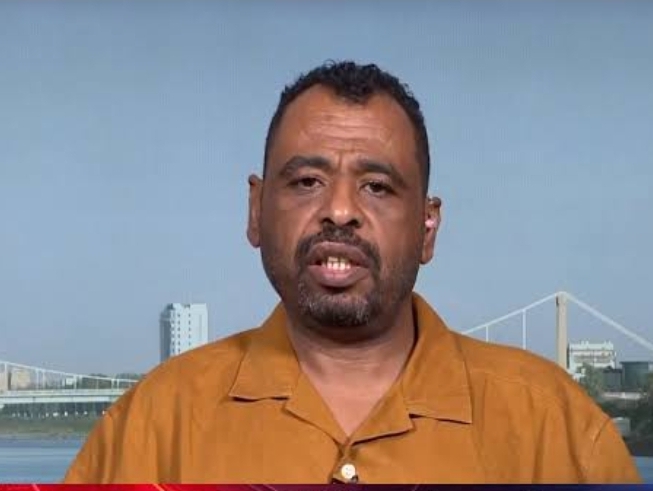
By: Ammar Awad sharif
Former Advisor to the Transitional Government of Sudan, specializing in Horn of Africa affairs
Last week, Sudan found itself at the crossroads of East and West, from the Russian veto at the United Nations in New York to the influx of international envoys in Port Sudan. The country faces a storm of challenges, navigating turbulent waters within the African Union (AU), IGAD, and broader regional ambitions across the Horn of Africa and the Red Sea.
The UN Security Council and Russia’s Veto
Britain introduced a draft resolution at the UN Security Council, attempting to address the humanitarian and political crisis in Sudan. The resolution condemned Rapid Support Forces (RSF) attacks on Al-Fashir and urged compliance with AU-led frameworks, while cautiously acknowledging Sudan’s sovereignty under the Transitional Sovereignty Council (TSC). However, the resolution was rejected by Sudanese authorities, with Sovereign Council head General Abdel Fattah al-Burhan labeling it an infringement on Sudan’s sovereignty.
Russia vetoed the resolution, framing it as an attempt by Western powers to dominate Sudan under the guise of humanitarian concerns. Russian diplomats invoked Cold War-era rhetoric, denouncing Western “colonial ambitions” while accusing them of hypocrisy regarding conflicts in Gaza and elsewhere. Britain’s representative retorted, accusing Russia of disregarding Sudan’s humanitarian disaster while exploiting its gold resources to fund its military efforts in Ukraine.
Despite Moscow’s publicized opposition to Western hegemony, its actions in Sudan align with strategic interests. Sudan serves as a key piece in Russia’s broader African strategy, connecting Moscow’s influence from Mali to the Red Sea. Reports in Western media claim that Russia finances its war efforts with Sudanese gold, further underscoring the geopolitical stakes.
Port Sudan: A Diplomatic Hub
Meanwhile, in Port Sudan, Western powers, including the U.S., Germany, and Switzerland, are pursuing a parallel strategy to counter Russian influence. U.S. envoy Tom Perriello described his meeting with al-Burhan as “productive,” signaling Washington’s recognition of the Sudanese leadership while advancing a roadmap to end the war. This plan reportedly includes measures to establish civilian governance, facilitate humanitarian aid, and enable international development projects worth $300 million in three Sudanese states.
However, these efforts come with a balancing act: engaging Sudan’s leadership while navigating the African Union’s suspension of Sudan’s membership. The U.S. and European allies continue to push for Sudan’s reintegration into the AU and IGAD frameworks, both of which are critical for regional stability and international legitimacy.
Challenges at the African Union
Sudan faces uphill battles at the African Union, including the restoration of its membership and the upcoming election for the Chair of the AU Commission. Competing interests from Ethiopia, Kenya, and Uganda threaten to overshadow Sudan’s diplomatic efforts. Ethiopia’s push to assert regional dominance, coupled with its ambitions to secure influence at the AU, could complicate Sudan’s attempts to secure concessions on critical issues such as Nile water rights and Red Sea access.
The broader geopolitical rivalry between Russia and Western powers further complicates Sudan’s position. While Moscow’s veto in New York shields Sudan from immediate Western pressure, it also aligns Sudan with a broader Russian agenda that may not always prioritize Sudanese sovereignty.
Navigating the Nile and the Red Sea
Sudan’s economic and strategic survival hinges on its ability to balance competing regional interests. On one hand, Ethiopia’s initiatives under the Nile Basin Initiative threaten Sudan’s historical water rights. On the other, Sudan’s access to the Red Sea places it at the heart of broader geopolitical struggles, with Saudi Arabia, Egypt, and the UAE closely watching developments.
To navigate these challenges, Sudan may need to embrace cross-border economic cooperation as a unifying strategy. Proposals such as offering Ethiopia access to Port Sudan in exchange for concessions on Nile water rights could provide a pathway to regional stability. Similarly, supporting Djibouti’s bid for the AU Commission Chair could prevent Ethiopia from consolidating power within the AU at Sudan’s expense.
The Road Ahead
While Sudan’s recent engagement with U.S. and European envoys marks a step toward resolving its internal crisis, significant hurdles remain. Restoring AU membership and securing international recognition will require concessions on both domestic and regional fronts. At the same time, Sudan must avoid overreliance on Russian support, which, while shielding it from Western criticism, may limit its long-term sovereignty.
The coming months will test Sudan’s ability to balance these competing pressures. As al-Burhan commits to ending the war through a roadmap involving civilian governance and humanitarian aid, the country must also address broader regional dynamics. Sudan’s future depends on its ability to engage with all stakeholders while prioritizing the interests of its people over external alliances.
One thing is clear: Sudan cannot afford to rest on the laurels of the Russian veto. The battles ahead—in the AU, the Nile Basin, and the Red Sea—will shape its trajectory for decades to come.