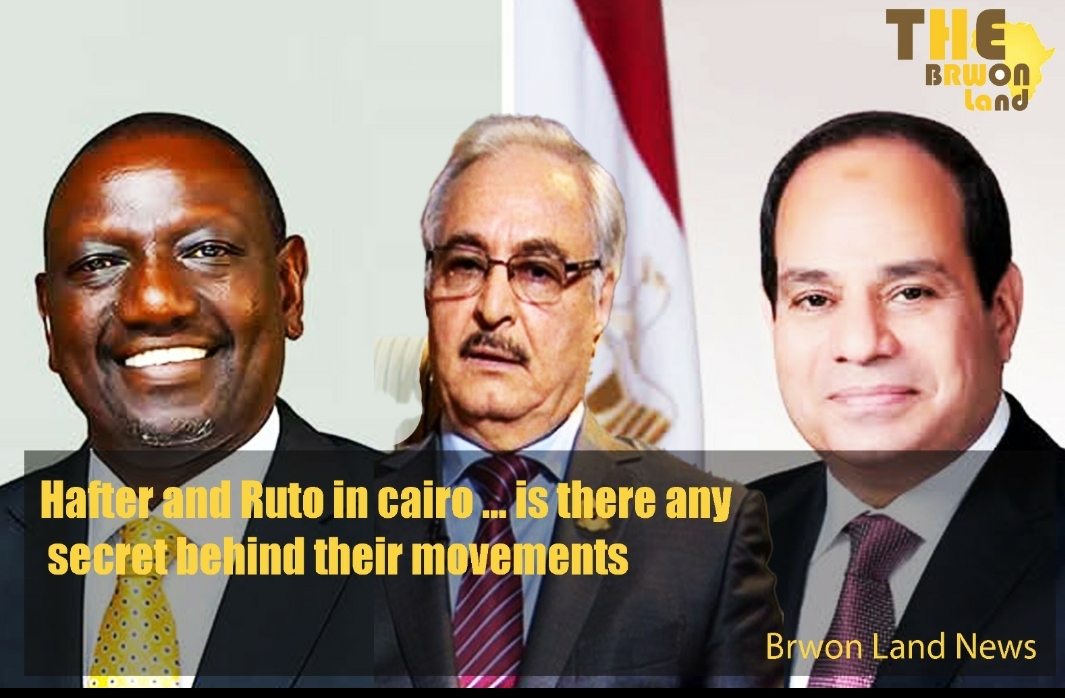
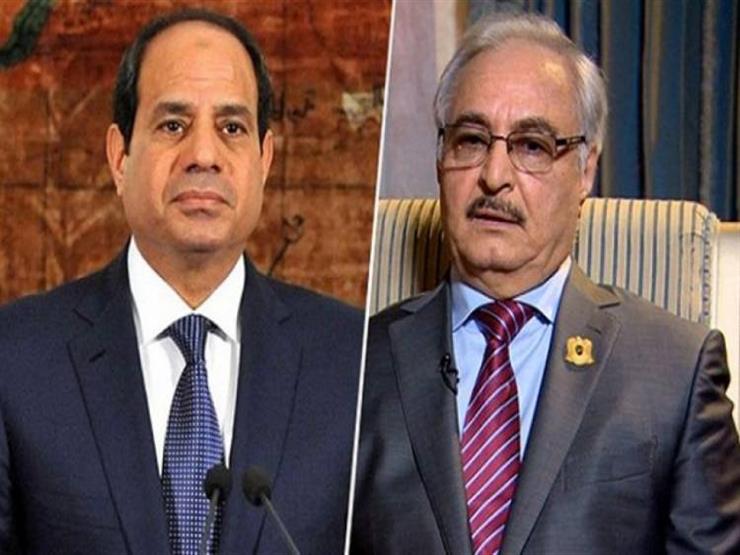
Hafter and Ruto in cairo … is there any secret behind their movements
Haftar and Ruto in Cairo: New Shifts in the Sudanese Conflict
Report by/ Mohamed Saad kamil
January 30, 2025
The Kenyan President recently visited Cairo after a long absence, aiming to revitalize relations between the two nations. Kenya’s stance towards the Rapid Support Forces (RSF) militia and its political backers is well-known. Days earlier, Khalifa Haftar also visited Egypt, representing a logistical extension for the RSF. In addition to Chad’s clear support for the militia and the tense relations with South Sudan and Ethiopia, the RSF’s sudden withdrawal from Khartoum and other cities has raised questions. Are there signs of a reconfiguration of neighboring countries’ positions towards Sudan, aligned with an international vision? Some political analysts suggest a potential plan to separate the Darfur region into a sovereign state, with guarantees for Egypt, particularly regarding border security.
Viewing the Sudanese crisis as a mere conflict between two generals oversimplifies the situation and ignores the broader international context. The crisis is part of a larger regional struggle involving the interests of the UAE, Russia, the United States, the European Union, and China. Understanding this conflict requires an appreciation of the historical regional tensions between Sudan and its neighbors, which have fluctuated over time based on global interests.
Libya
The British website Middle East Eyereported, citing Libyan sources close to retired General Khalifa Haftar, that international scrutiny forced him to alter the methods his forces use to supply the Sudanese RSF with fuel and weapons. The site noted that politicians, analysts, and intelligence sources from southern Libya confirmed Haftar’s involvement in supplying weapons and fuel to the RSF, led by Mohamed Hamdan Dagalo (Hemedti), which has been fighting the Sudanese army since mid-April last year. The report highlighted that Haftar’s forces are using specific airbases to send supplies to the RSF in Sudan, with images of weapons shipments from eastern Libya circulating since the conflict began.
Saad Ben Sharada, a member of Libya’s High Council of State, told Middle East Eye that Haftar’s Libyan Arab Armed Forces transport military supplies from Libyan territory to the Central African Republic, from where they are driven across the border into Sudan.
The evolution of events in Sudan can be better understood by comparing it to the UAE’s intervention in Libya, despite differing trajectories. Haftar’s plan began in 2013 with an attempt to control eastern Libya, then expand southward and northward, reaching Tripoli in 2019. However, he ultimately failed due to opposition from various factions. The UAE and Wagner Group believed they could replicate the Libyan scenario in Sudan, starting with the capital, given the RSF’s strength and strategic presence. However, the difficulty of achieving this goal led them to adopt an alternative plan: controlling Darfur and establishing a local authority similar to Haftar’s. Despite this, the RSF has not abandoned attempts to expand the conflict to other regions, aiming to exhaust the Sudanese army and divert it from Darfur. However, the alignment of armed movements in Al-Fashir with the army has forced the RSF into a war of attrition on another front.
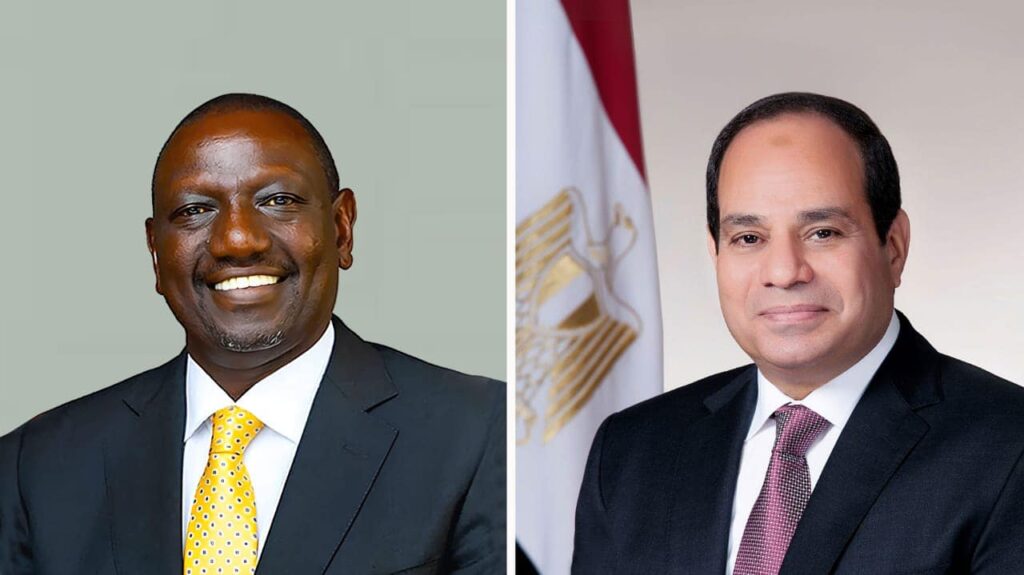
This complexity has made the situation more opaque and predictions about the conflict’s trajectory increasingly difficult. Egypt’s role adds another layer of complexity, as it clearly supports the Sudanese army, viewing its presence as a strategic interest and rejecting any RSF influence near its southern borders due to security concerns. However, some have questioned Egypt’s stance following Haftar’s visit to Cairo and the subsequent visit of Kenyan President William Ruto, both allies of the UAE. This has sparked speculation about a potential deal between Egypt and the UAE, involving turning a blind eye to the RSF’s control of Darfur in exchange for guarantees not to threaten Egyptian security. However, this scenario appears oversimplified, as Egypt’s decision is inseparable from its broader interest in ensuring the security of its southern borders and its distrust of militias that thrive on chaos and lack disciplined command.
Kenya and Sudan
The relationship between Kenya and Sudan has undergone significant changes over time, particularly during the war between North and South Sudan, with both sides accusing each other of supporting opposition groups and fueling internal conflicts. In recent history, relations between Kenya and Sudan deteriorated during the war between the Sudanese army and the RSF. Earlier, Sudan recalled its ambassador from Nairobi in protest of the Kenyan government’s official reception of RSF leader Mohamed Hamdan Dagalo (Hemedti), following his tours of Uganda, Ethiopia, Djibouti, and South Africa.
The Sudanese government’s official platform quoted Foreign Minister Ali Al-Sadiq as saying that consultations with the ambassador would cover all possibilities regarding the future of Sudan-Kenya relations, accusing Kenya of siding with the RSF and hosting its leaders and supporters. Against the backdrop of the close political and economic relationship between Kenyan President William Ruto and RSF leader Hemedti, and Kenyan positions perceived as undermining Sudanese sovereignty, Khartoum rejected Kenya’s chairmanship of the IGAD committee tasked with resolving the Sudanese crisis.
A Sudanese diplomatic source told Al Jazeera that Khartoum’s rejection of Kenya’s chairmanship of the IGAD mechanism was due to “procedural and substantive reasons,” as the issue was not discussed during the ordinary IGAD summit in Djibouti on June 12, and no agreement was reached. The source added that the emergency summit on April 17 decided to form a committee of heads of state, selecting South Sudan’s President Salva Kier Mayardit, a decision that remains valid even after expanding the committee to include Ethiopia’s Prime Minister. Khartoum believes that Salva Kier is the most suitable to chair the committee, given his role in reaching the Juba Peace Agreement in Sudan.
The Chairman of Sudan’s Sovereignty Council, General Abdel Fattah al-Burhan, formally informed the current IGAD chair of Sudan’s position, affirming support for IGAD’s initiative to find possible solutions for peace in Sudan.
What are the potential regional implications if Darfur were to secede in the future?
How would the African component in Darfur be affected if the region were to secede or if the RSF were to control Al-Fashir, considering the existing conflict between the Arab components, to which the militia belongs, and the other ethnic groups in Darfur that have long been at odds?
Political Analyst: Ibrahim Shiglawi
The recent regional movements, including the visits of the Kenyan President and Khalifa Haftar to Egypt, may reflect a reconfiguration of neighboring countries’ positions toward Sudan, driven by an international vision influenced by the Sudanese army’s advances on several key battlefronts. What is happening on the ground cannot be described as a withdrawal by the Rapid Support Forces (RSF) militia, but rather the result of a well-executed military plan by the Sudanese army, which has regained the initiative and forced the militia to retreat from Khartoum and other cities.
Given that Egypt has consistently supported the Sudanese army and government, any moves in this file are expected to be coordinated between the two countries, especially since Sudan’s stability is a priority for Egypt. However, if Darfur were to secede under any banner—though this is unlikely—it could lead to regional instability, escalate internal conflicts, and threaten the interests of neighboring countries.
Navy Maj. Gen. (Ret.) Dr. Ismail Osman Abushook
Thank you for raising this topic. It is both important and urgent, as well as complex, involving the overlapping interests and concerns of neighboring countries and major global powers.
The shift that occurred in Syria serves as a starting point for understanding how the Western world might deal with Islam in the future, as well as the U.S. Congress opening its session with verses from the Quran. The duality of interests and concerns is linked to global goals aimed at stabilizing resource-rich regions, particularly Africa, and within Africa, Sudan and its western region extending to the Atlantic.
The failure to benefit from these resources is fueled by conflicts of interest that exploit the brute force wielded by Arab diaspora groups in Africa. Eliminating this force creates equal opportunities for negotiating how to achieve mutual interests.
The Sudanese army’s victory, backed by its mobilized people defending their land and honor, along with the significant losses in numbers and equipment suffered by the Arab diaspora groups from neighboring countries, will change the equation of targeting Sudan through military means. This does not necessarily mean an end to targeting but rather a shift in methods and priorities.
The visits by Kenya and Haftar to Libya can be interpreted in the direction you suggested, but they could also indicate another trend, as evidenced by the repeated visits of Egyptian officials to Sudan in a short period, our foreign minister’s visit to Kenya, and Chadian movements on our western borders (to prevent combatants from entering Chadian territory).
This should be read alongside the potential appointment of a U.S. envoy to Sudan (if it happens), with a focus on trade for American prosperity, enhancing the stability of key nations (including Sudan), and meeting the needs of their peoples. Our people have made their stance clear, and the world has understood it.
The scenario of Darfur’s secession is a strategic goal for global Zionism, which operates through elements of international intelligence. This global Zionism is currently facing setbacks in various objectives, including the division of Sudan. This goal may be delayed but will remain on the agenda, whether in the short or long term. Therefore, arrangements must be made to link Sudan, especially the Darfur region and its resources, to global interests that benefit us and can ultimately eliminate this goal entirely.
- Osman Mirghani – Journalist and Political Analyst
It is important to recognize that the April 15, 2023, war in Sudan has a rolling agenda. It began with political shortcomings that led to military polarization, sparking an attempt to seize power. This was quickly accompanied by slogans related to democracy and structural reform of what they called the “1956 state,” before finally shifting to discussions of marginalization and other issues.
In the same context, international interest moved from mere facilitation to mediation and then attempts to pressure through escalating sanctions. Currently, the Sudanese crisis is going through its most dangerous phase: an attempt to shape Sudan’s future through external forces, amid significant weakness in internal official, political, and societal forces.
Sudan is now at a crossroads, waiting for external factors to move while declaring its permanent refusal to deal with them without a vision for internal action that matches this rejection. This has created a vacuum that may respond to external pressure.
The situation in Darfur is rapidly shifting from a military framework to an external political one. Calculations of gain and loss are closely examining scenarios of Darfur’s continued unity with or separation from Sudan. So far, no genuine external scenario has emerged to push for separation, but as the Sudanese crisis evolves, if no effective solution is found, this option will likely gain external support.
If the scenario of Darfur’s secession prevails—God forbid—its internal consequences will be significant, most notably opening the door for other regions to follow the same path.
Tribal conflicts in Darfur may not pose as great a threat as some claim. The same was said before South Sudan’s secession, and while it did happen, everyone quickly realized the importance of coexistence.
Prof. Siddig Eissa Ahmed
Expert on water resources and environmental engineering
Ex-director general of UNESCO chair in water resources, Omdurman
Islamic University
Linking Kenyan President William Ruto’s visit to Egypt with the potential secession of Darfur is not straightforward. The same applies to Khalifa Haftar’s visit to Egypt. In politics, as is well known, it is essential to ask who benefits from any specific action. Undoubtedly, any novice geopolitical analyst within the Egyptian government would see that it is more beneficial, advantageous, and cost-effective for Egypt to have a single state on its southern border, especially if that state represents a reliable, smooth, and economically efficient supply line for abundant and essential resources to Egypt’s struggling treasury amid other unfavorable regional changes.
It is highly probable that the UAE, the patron and financier of the Janjaweed, has recently scaled back its unconditional support for Hemedti, possibly under Turkish pressure that preceded or followed the Turkish president’s announcement of mediation between the UAE and Sudan. However, this does not prove the existence of a plan for Darfur’s secession. Hemedti lacks the capability and qualifications to establish a state in Darfur. If he had the ability or qualifications, he would have rushed to form his government from Khartoum during the overwhelming moments when he managed to control Khartoum, Al-Jazirah, parts of Kordofan, and Darfur.
Another aspect that should not be overlooked is the necessity of strong will from the world’s superpower, the United States, along with alignment from the United Nations system. This is precisely what happened in the cases of South Sudan’s and Eritrea’s secessions.
Kenyan Journalist Michael Rodino
Kenya has played a significant role in mediating the Sudanese crisis, particularly through the Intergovernmental Authority on Development (IGAD). However, the engagement has been controversial as you know.
The military leadership has previously accused Kenya of bias toward the RSF, pointing to Nairobi’s close ties with some Sudanese opposition figures and the diplomatic maneuvers within IGAD.
Now, it does remain to be seen whether there will be a shift of Kenya’s approach to the whole issue. Egypt has been a staunch supporter of Sudan’s military leadership under General Abdel Fattah al-Burhan, opposing international efforts that could weaken Khartoum’s position.
If Kenya does indeed shift its position, then the two Presidents meeting could mark an effort to mend relations with Sudan’s military and align more closely with Egypt’s position.
Given that Kenya as interests in the region and may want to counter the reputation as playing favorites with one side of the Sudanese factions then the right move is to readjust and realign with Egypt’s position on the matter. It also restores our credibility as a peace maker in the East African region given pressure from the West is also there following Trump’s return to the White House.
A shift is required if we are to have a stable region, our reputation as a peacemaker is restored and our interests
aren’t lost
El Hindi Izz Eldeen
Journalist and Political Analyst
Following the successive victories of the Sudanese Armed Forces in Al-Jazira State and its capital, Wad Madani, as well as in Bahri and Khartoum, and the lifting of the siege on the Army General Command, the war on the ground is nearing its end. Consequently, the heads of state and governments in the region that allied with or supported the rebel Rapid Support Forces (RSF) are now seeking a safe exit to align themselves with the leadership of the Sudanese Armed Forces and distance themselves from the rebellion they once supported logistically, diplomatically, and through media channels.
This is why the Kenyan government insisted on requesting a visit from Sudanese Foreign Minister Ali Yousif, who met with Kenya’s foreign minister and President William Ruto in Nairobi a few days ago. The next phase of the battle will shift to the Darfur region, where rebel forces have been besieging the regional capital, El Fasher, for several months. Even if El Fasher falls, the Sudanese Armed Forces will not abandon the region and will strive to liberate Darfur’s cities, just as they liberated Omdurman, Singa, Wad Madani, Bahri, and Khartoum.
In my opinion, the Sudanese Army will never accept the secession of Darfur, no matter the cost. However, it might agree to enter negotiations on power-sharing in the region among Darfur’s various components, including Arabs and Africans, while dissolving the RSF and integrating the forces of all armed movements supporting the army, as well as any remaining RSF elements, into the Sudanese Armed Forces.
Mohamed Hamed Jumaa Nawar
Sudanese Journalist and Political Analyst
Egypt’s position appears to involve high-level diplomatic and political coordination with Sudanese leadership regarding roles Egypt can play positively for Sudan, particularly in arranging certain files with neighboring and regional countries. We are now witnessing a fundamental and significant shift in Kenya’s stance, which previously seemed hostile to the Sudanese Army’s position, denying the existence of a legitimate government in Sudan and leading campaigns that appeared closer to the RSF. However, there has been a major shift in Kenya’s position, especially after Ambassador Ali Yousif assumed the role of Foreign Minister. I believe he is leading direct communication with some countries with which relations had been strained or frozen after the war in Sudan, particularly Kenya, where the Sudanese Foreign Minister recently traveled and held fruitful consultations. These discussions resulted in a significant change in Kenya’s position, which had previously supported what could be called the Sudanese opposition.
Suddenly, Kenya began restricting some elements of the Taqaddum alliance and RSF activities, considering Nairobi a key hub for managing such activities, including the public appearances of RSF leaders on Kenyan soil. Kenyan authorities have now initiated measures against these anti-Sudan activities, and President Ruto has announced that Sudan has the right to rejoin the African Union, promising to support this direction and speaking in a new, positive tone unlike before.
It is clear that Egypt manages its files according to its interests, of course, and there is a consistent chapter in these files regarding Sudan, reflecting an Egyptian vision closer to the Sudanese Armed Forces and the current Sudanese government. Both Khalifa Haftar and the Kenyan President visited Cairo and spoke positively about the situation in Sudan, aligning with the Egyptian government’s vision of preserving Sudan’s unity.
Haftar’s Libya issued an official statement declaring that it would no longer support the RSF and denied providing any supplies to the RSF. Even if this statement is not entirely truthful, it indicates that Haftar has begun to disengage from the RSF.
Egypt plays a significant and crucial role in preserving Sudan’s unity and peace, a role that was evident in the discussions between the Kenyan and Egyptian presidents.
Retired Police Major General, Dr. Idris Abdullah
Lyman
International Resolve to Reshape the Region: A Plan in Motion
The international community has firmly resolved to reshape the entire region, and what is happening now is a meticulously crafted plan being executed in the laboratories and kitchens of regional reconfiguration. The focus is solely on reshaping identities and formulas to serve interests, as history has proven that Western colonizers pursue gains regardless of ethics, principles, or values.
Modern colonial powers have begun implementing their scheme in Sudan, but it has faltered due to the resilience of the Sudanese people. However, the colonial project to dismantle Sudan will not cease. If it fails now, it will merely be postponed to a later stage, with a particular focus on targeting the Darfur region due to its abundant natural resources.
From the editor
The Sudanese crisis is heading toward one of two main scenarios. The first is the realization of secession, with the Rapid Support Forces (RSF) successfully imposing their control over Darfur, leading to a de facto partition and the declaration of an independent entity. However, this entity would be fragile due to deep-rooted tribal conflicts, the long history of strife in the region, and the widespread proliferation of weapons, transforming the area into a continuous internal battleground reminiscent of Somalia in the 1990s.
The second scenario is the failure of secession, with the RSF turning into a rebel movement that continues to fight, destabilizing Sudan for many years. In this case, the army would find itself engaged in a prolonged conflict against a rebellion spanning vast areas, hindering reconstruction efforts and perpetuating economic decline.
In both scenarios, the Sudanese crisis is likely to persist for an extended period, given the complexity of intertwined international and regional interests. A resolution will remain elusive unless an agreement is reached with relevant international stakeholders. This remains the most viable solution, even if the army maintains its military superiority. Once again, such an agreement cannot succeed without the consensus of external parties involved in the conflict.
.