America and Its Old Book!
Face of Truth | Ibrahim Shglawi
America and Its Old Book!
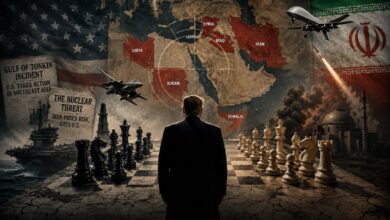
American policy toward Sudan appears to still be captive to an “old book,” from which it never truly departs—always returning whenever its bets on internal Sudanese shifts falter. Since the fall of the Bashir regime in 2019, Washington has been engaged in the process of reshaping the Sudanese political scene as part of the so-called “International Quartet.” It employed soft tools, the most prominent of which was supporting the mandate of the UN mission led by Volker Perthes, followed by the imported “Lawyers’ Constitution” that attempts were made to impose locally, and ending with the framework agreement that was stillborn after clashing with a Sudanese reality that rejects international tutelage.
After all these attempts failed, the U.S. administration shifted to more aggressive tools, most notably its covert support for the Rapid Support Forces’ attempted coup against the transitional authority on April 15, 2023. With the exposure of this project’s dimensions and the outbreak of a fierce war that did not bring the desired outcome, the American administration returned once again to the “old book”: the weapon of sanctions.
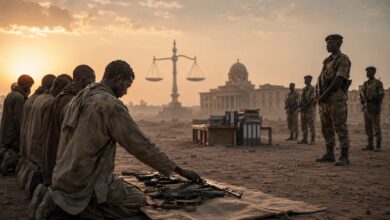
The latest sanctions came under the pretext that the Sudanese army used chemical weapons—an accusation that notably coincided with the army’s advances on the ground against the Rapid Support militia. This reflects a politically calculated timing rather than a legal or humanitarian measure. The U.S. Department of State announced it would impose restrictions on exports and government credit lines to Sudan, set to take effect in June 2025. These sanctions clearly aim to reconfigure the pressure tools on Khartoum after the militia option failed.
A strategic reading of this American behavior reveals a new attempt to subjugate Sudan and force it back to the negotiating table under terms of international tutelage. Washington knows that a victory by the Sudanese army over the Rapid Support militia would lead to a new political reality that weakens its influence in the country and opens the door to alternative alliances that may not serve the Western dominance project in the region—even if the Sudanese leadership does not wish to pursue this path in hopes of potential understandings.
It is no secret that America’s indirect support for the Rapid Support militia came within a convergence with the Emirati agenda, which—according to the Sudanese government—sees Hemedti’s forces as a tool for achieving its regional interests in the Horn of Africa. Had those forces prevailed, Washington would not have needed to impose sanctions, for the UAE is one of its allies that follows the compass of U.S. policy without much objection. (Sudan News)
American sanctions on Sudan are not new; they are an old weapon dating back to 1993, when Sudan was listed as a state sponsor of terrorism. Since then, executive and legislative orders have continued to strangle Sudan’s economy, preventing the flow of technology, investment, and development. This pushed Sudan to pivot eastward toward China and Asian countries, a shift reflected in a successful oil partnership with Beijing.
However, these sanctions failed to achieve their political goals, instead entrenching an economic isolation that exhausted the Sudanese citizen more than it weakened the political system. In reality, Washington has lacked a clear vision for Sudan over the past decades and has managed the Sudan file with a mindset of punishment and tutelage, relying on slogans like “peace and human rights” while acting on the ground according to agendas of influence and control.
Despite the tough stances, it is still possible to redirect U.S.-Sudan relations toward mutual understanding. But this requires, first, that Washington acknowledge the will of the Sudanese people and cease relying on intermediaries who have lost credibility within Sudan. We previously proposed an initiative for direct dialogue between President al-Burhan and the American President without mediators, to clearly discuss the interests of both sides at the table. Sudan is not an enemy of America—it can be a strategic partner in regional stability if Washington respects its national sovereignty.
In light of escalating U.S. pressure and sanctions on Sudan based on unproven allegations, there are growing calls for a shift toward partners who respect national sovereignty, such as China and Russia. President Abdel Fattah al-Burhan’s visit to Russia at the invitation of President Putin to attend the Russian-Arab summit is a strategic step that may pave the way for decisive agreements, most notably the agreement on a Russian base in the Red Sea.
The Sudanese government, through Minister of Information Khaled Al-Eayeser, strongly rejected Washington’s accusations of using chemical weapons, describing them as “political blackmail and fabrication of facts,” affirming that the Sudanese people will not yield to repeated intervention scenarios. The Sudanese army also confirmed that the accusation of using chemical weapons is a flimsy and misleading justification, asserting that it is waging a clean war and does not use any prohibited weapons whatsoever. On the other hand, Senator Sara Jacobs pointed to the complicity of the U.S. administration with the UAE, the main backer of the militias, stating that what is happening is misleading public opinion—not an ethical foreign policy. (Reuters, 15 May 2025)
From this perspective, and according to what we see from the #Face_of_Truth, the shift toward non-Western partners has become a strategic necessity dictated by the field and the absence of trust in Western promises. The Sudanese people, who have chosen to stand with their army and national institutions, are not seeking an enemy, but a partner who respects their national decision and treats them as equals. Sovereignty is not granted—it is seized. And anyone who wants a real relationship with Sudan must begin with respect, not imposition.
Wishing you well and good health.
Saturday, May 24, 2025
Shglawi55@gmail.com