
As UAE’s Terrorist Attacks on Sudan Continue: The International Court of Justice Faces a Defining Test with Tomorrow’s Ruling
By Dr. Mohamed Osman Awadalla
4 May 2025
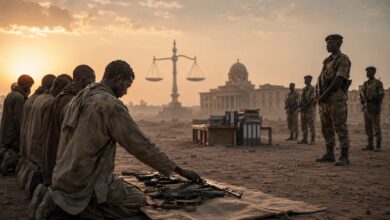
Tomorrow, the International Court of Justice (ICJ) is set to issue its decision regarding Sudan’s request for urgent provisional measures to halt the terrorist attacks reportedly orchestrated by the United Arab Emirates. This is a pivotal moment in the history of international justice—a real test of the Court’s credibility and of the principles of international law in protecting populations from systematic aggression and mass atrocities against civilians.
Despite the UAE’s reservations concerning the Court’s jurisdiction and the seriousness of Sudan’s request, Sudan’s legal position has been significantly strengthened by the support of ten prominent international legal experts. These experts have issued a public statement endorsing Sudan’s request and urging the ICJ judges not to yield to political pressure or accept the UAE’s arguments, which deny an increasingly well-documented and undeniable reality on the ground.
What makes this moment even more urgent is that the UAE has not only ignored the legal process but has escalated its military aggression. Just this morning, it launched additional terrorist attacks targeting Port Sudan Airport, Kassala Airport, and fuel storage facilities—a direct assault on vital civilian infrastructure and lifelines for the Sudanese people.
This deliberate escalation, timed just before the Court’s decision, is not merely a rejection of international law—it is a blatant message that the attacks will continue unless decisive and binding measures are taken. Every moment of delay in the Court’s response translates into lost civilian lives and deepens the suffering of a population struggling to survive amid an international silence that is both disheartening and dangerous.
As the highest judicial authority in the international legal system, the ICJ bears a historic and moral responsibility. It cannot remain neutral in the face of terrorism and aggression, and it must not waver when the truth is clear, the evidence overwhelming, and the threat ongoing. Protecting civilians in Sudan today is not a political choice—it is a legal, humanitarian, and constitutional obligation tied to the very concept of justice.
Therefore, the ICJ must urgently issue strong and immediate measures to halt the attacks, establish monitoring mechanisms for enforcement, and prevent further massacres and violations. Such a decision would also help restore faith in the idea that international law can be a shield for the vulnerable—not just a tool for the powerful.
Will the Court rise to the occasion? We will know tomorrow. But hope remains that when justice is free from fear and influence, it can stop wars and save lives.