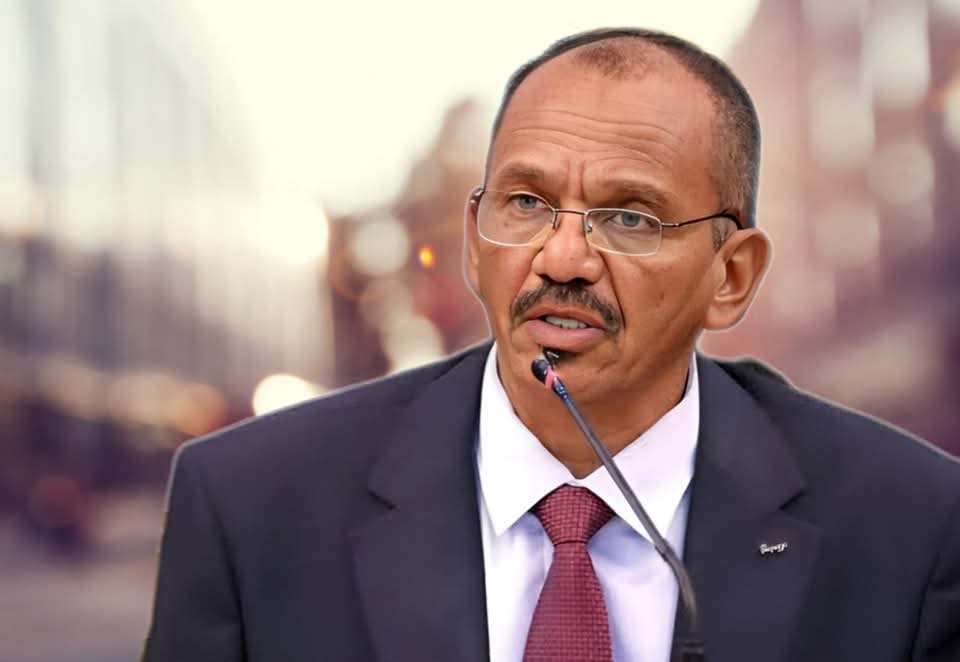
Al-Burhan in Seville: Sudan’s Participation in the International Conference on Financing for Development – A Message on Sovereignty, Legitimacy, and Economic Stakes
Areport By/Ammar Alaraky
In a move loaded with profound political and economic significance, Chairman of Sudan’s Transitional Sovereignty Council, General Abdel Fattah al-Burhan, arrived on June 29, 2025, in the Spanish city of Seville to participate in the Fourth International Conference on Financing for Development. The invitation came jointly from UN Secretary-General António Guterres and Spanish Prime Minister Pedro Sánchez.
The conference serves as a global platform to address the challenges of financing sustainable development, drawing participation from heads of state and government, representatives of regional and international organizations, and economic experts from around the world. Yet, Sudan’s participation—through its official state representative—comes amid ongoing war and regional interference, transforming its presence from merely economic to one of deep strategic and sovereign implications.
Significance and Implications of Al-Burhan’s Participation
Al-Burhan’s representation of Sudan at this global forum carries weighty political and sovereign overtones. It reaffirms that the Sudanese state, through its existing institutions, still enjoys international recognition and representative legitimacy—an affirmation particularly crucial amid attempts to construct a parallel political reality through militias and foreign proxies.
The fact that the invitation came from the UN and Spain, and that international actors continue to treat Al-Burhan as Sudan’s head of state, clearly signals that Sudan is still regarded as a sovereign nation—not merely a humanitarian crisis or an undefined zone of foreign interference.
This message bolsters Sudan’s official position and provides the leadership with diplomatic leverage—provided it is channeled through a unifying national discourse and used to assert Sudan’s sovereign will in the face of mounting pressures and fragmentation.
Symbolic Significance: Sudan Returns to the International Stage
Sudan’s official participation—despite the war—is a powerful symbolic gesture that the country has not disappeared from the international order nor surrendered to isolation and marginalization. Rather, it retains the tools of presence and influence when political will and sound governance are in place.
At a time when certain actors attempt to hijack Sudan’s external representation and legitimacy, Al-Burhan’s participation reasserts who holds the official mandate to speak for the country and negotiate its future.
Indirect Messages: Who Is Khartoum Addressing?
This participation carries a triad of messages:
- To the Sudanese public: The state remains intact, engaged, and proactive in seeking support through international institutions.
- To the international community: Any dealings with Sudan must go through its legitimate institutions. Bypassing the state only risks prolonging instability and descent into chaos.
- To regional actors: Sudan is determined to solidify its legitimacy and will not allow itself to become a playground for external agendas driven by militias.
A Test of International Intentions: Will There Be Support or Mere Concern?
Sudan’s participation tests the will of the international community: Will it stop at humanitarian concern and diplomatic regret, or will it take concrete steps to support Sudan as a legitimate state-building project rather than just a relief zone?
Development in Sudan cannot wait for the war to end—it must be part of the solution. If international financing is directed toward the state and linked to a credible political path, it could help end the war rather than merely respond to its consequences.
Post-War Financing: A Dual Approach
Development must be treated as a parallel track to peace—not a substitute for it. Launching reconstruction programs and offering economic hope could help dismantle the drivers of conflict and mitigate its effects, while preparing the ground for a political settlement.
But that assumes the existence of genuine international will to support Sudan’s official institutions rather than hand the country over to the proxies of war.
Conference Prospects for Sudan: Between the Possible and the Aspirational
Realistically, Sudan might secure symbolic pledges, general commitments, and open bilateral coordination channels with select countries or development institutions. Diplomatic efforts may focus on proposing a reconstruction fund and outlining national development priorities, while insisting that all financial aid flow exclusively through official state institutions.
Ideally, the conference would produce a comprehensive international initiative that ties political resolution to development support, contingent on a ceasefire and strengthening of state institutions.
Ultimately, the outcomes will depend on the Sudanese delegation’s ability to present a coherent political and economic vision that convinces participants that supporting Sudan is not a gamble, but an investment in regional and global stability.
The Need for Active Diplomacy: Who Will Translate Participation into Gains?
The success of Sudan’s participation hinges on its ability to convert presence into tangible results. This includes holding strategic bilateral meetings, advancing reconstruction agendas, and building alliances within the conference halls to shield Sudanese interests from marginalization or circumvention.
This demands a shift from passive to proactive diplomacy—one that reintroduces Sudan as an actor, not a bystander.
Final Word
Sudan’s participation—represented by the Chairman of the Sovereignty Council—in the Seville conference is not merely a formal appearance, but a symbolic battle over sovereignty and legitimacy. It sends a clear message that Sudan is a functioning state, not one governed by militias or foreign-backed proxies.
If the leadership can seize this international moment, it may mark the beginning of a serious shift—from the trenches of war to the groundwork of rebuilding—and reposition Sudan as a credible partner on the international stage.