Blood Wheels: Canadian Vehicles, Emirati Supply Chains, Sudan’s Genocide
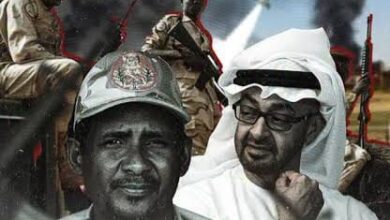
From Ottawa to Abu Dhabi to El Fasher, Canadian-made armoured vehicles are fueling Sudan’s bloodshed. A Globe and Mail investigation uncovers the weapons pipeline enabling the RSF’s campaign of siege, starvation, and ethnic cleansing, a deadly supply chain that links Gulf petro-dollars to Western complicity in genocide.
By Sabah Al-Makki

The Evidence on the Ground
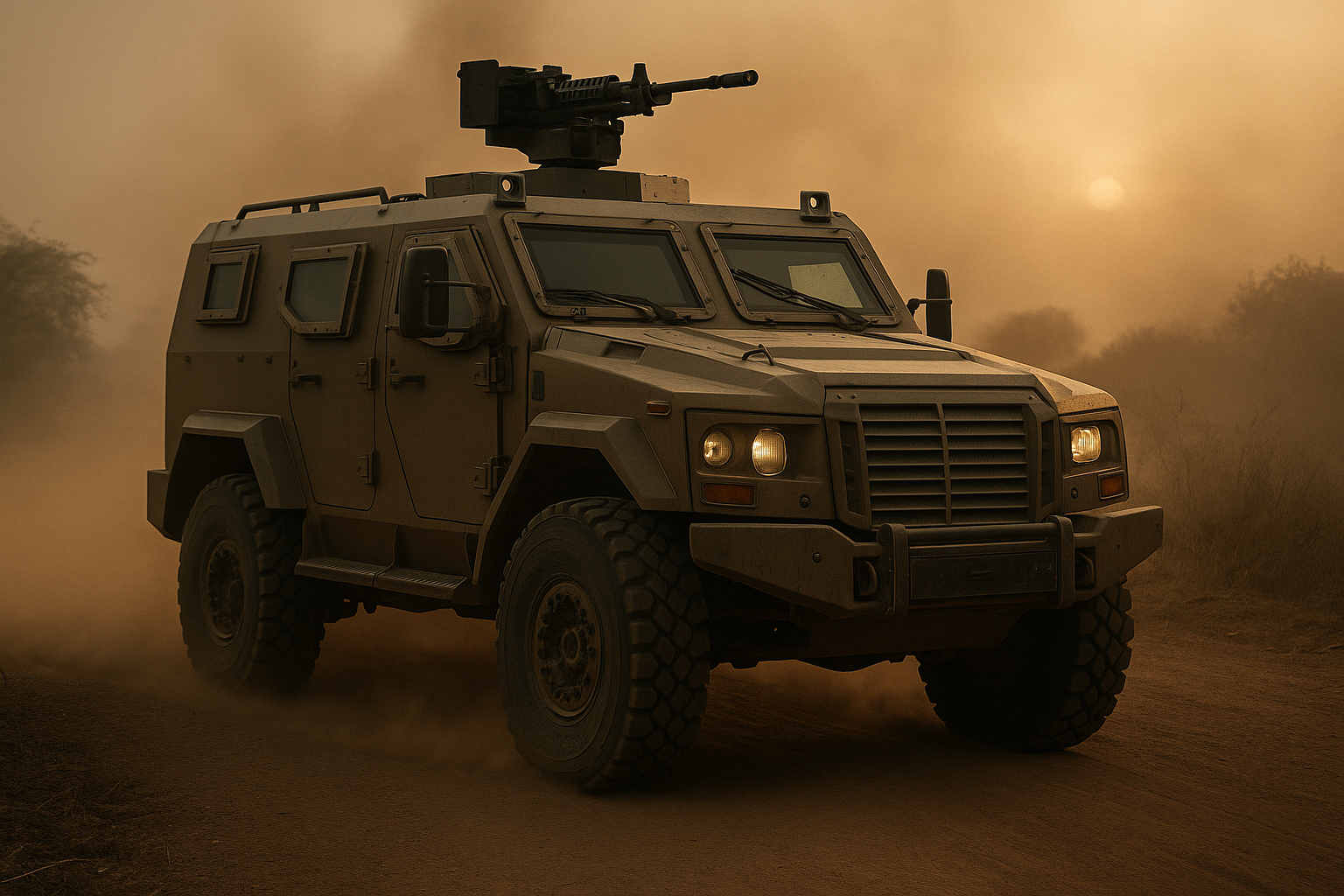
New photographic and video evidence has placed Canadian-made Spartan armoured vehicles squarely in the hands of the Rapid Support Militia (RSF), Sudan’s notorious Janjaweed fighters. The Globe and Mail’s recent investigation, published on August 26, 2025, by Geoffrey York, reveals that these vehicles, produced by Streit Group, a Canadian-owned company with its main factory in the United Arab Emirates (UAE), are operating in Darfur and Kordofan.
They were not parked in storage depots or displayed in parades. They were deployed during the RSF’s year-long siege of El Fasher, a blockade that starved civilians, flattened hospitals, and killed thousands through famine, shelling, and drone strikes. Social media videos uploaded by RSF fighters themselves revealed the Spartans in action, their distinctive windows and side profiles confirmed by independent arms experts.
This is not the first time Streit’s products have surfaced in Sudan. In June 2019, Streit-made armoured personnel carriers were deployed in Khartoum during the RSF-led assault on the sit-in at the Army General Command. Amnesty International later reported that the Sudanese Armed Forces (SAF) seized Streit-made Gladiator and Cougar vehicles from RSF fighters in Darfur, linking the same models to both urban repression and the war in Darfur. The company’s fingerprints are present across the arc of Sudan’s descent into bloodshed.
The Company Behind the Machines
Streit Group, founded in Canada in 1992, has evolved into one of the world’s largest manufacturers of armoured vehicles. In 2012, it shifted its primary operations to the UAE, positioning itself within one of the world’s most aggressive arms supply hubs. The Abu Dhabi regime is repeatedly identified as the largest supplier of weapons to the RSF.
While Streit has long marketed its vehicles as “defensive” platforms, unarmed unless weapons are mounted later, footage from Sudan leaves little room for spin. The Spartans are seen carrying mounted machine guns, integrated directly into RSF operations.
This controversy is not new. In 2010, The Globe and Mail obtained the UAE’s export permits which showed that 30 Streit Typhoon armoured trucks were shipped to Sudan despite Canada’s sanctions banning its citizens from exporting “military and paramilitary equipment” to the country (Business & Human Rights Resource Centre). The company refused to comment on that sale, while continuing to insist its vehicles were “non-military.”
The pattern repeated. In 2012, a UN Panel accused Streit of violating the arms embargo on Libya with unauthorized vehicle sales. In 2015, U.S. regulators fined Streit subsidiaries US$3.5 million, and its founder, Guerman Goutorov, personally paid US$250,000 for unlicensed exports to Venezuela, Nigeria, Iraq, and Afghanistan (U.S. BIS Press Release). In 2016, The Globe reported that Streit sold more than 170 armored vehicles to South Sudan, many of which were later deployed in its brutal civil war (Sudan Tribune).
This is a company not caught by accident but repeatedly documented as exporting to war zones under embargo. Its presence in Sudan today is the latest chapter in a long history of profiteering from conflict.
Loopholes and “Jurisdiction Shopping”
Here lies the heart of the scandal: how can a Canadian-owned company be implicated so deeply in genocide without Canada itself bearing responsibility?
The answer lies in jurisdictional loopholes. Ottawa admitted as far back as 2010 that its regulations only applied to exports originating from Canada, not from overseas factories (Pachodo/Globe & Mail coverage). By building in the UAE, Streit could evade Canadian oversight while continuing to profit from conflict. This practice, termed “jurisdiction shopping” by Canadian arms researcher Kelsey Gallagher of Project Ploughshares, enables firms to establish offshore operations specifically to evade scrutiny (Open Parliament testimony).
Yet under Canada’s 2019 accession to the Arms Trade Treaty, citizens must obtain brokering permits to arrange military exports between foreign countries. Global Affairs Canada insists no such permits have been issued for Sudan. If evidence confirms that Streit vehicles were brokered or exported to Sudan, Canadian law obliges Ottawa to prosecute Goutorov, regardless of where the vehicles were manufactured.
But silence on enforcement, combined with years of documented sales, leaves open the question: Is Canada willing to enforce its own law when the consequence is genocide abroad?
From Loopholes to Atrocity
The vehicles’ presence in Sudan cannot be dismissed as technical violations. They are instruments of atrocity. The RSF has been accused of carrying out ethnic cleansing in Darfur, deliberately killing men and boys, including infants, on an ethnic basis, while systematically raping women and girls. In January 2025, the U.S. government formally declared the killings in Sudan to be genocide (Reuters). Against this backdrop, Streit’s vehicles are not neutral. They are enablers. They provide mobility for militias, protection against counterfire, and platforms for mounted weapons. Each Spartan or Typhoon delivered into RSF hands extends the militia’s capacity to surround, terrorize, and starve communities into submission.
The Dual Responsibility: Abu Dhabi Regime and Canada
The Streit saga underlines two layers of responsibility.
- The UAE serves as the physical hub: hosting Streit’s central plant, facilitating the logistics, and acting as the primary sponsor and supplier of the RSF. It is not an innocent venue but an architect of the war.
- Canada, meanwhile, holds the moral and legal obligation as the home country of registration and the nationality of its founder. By allowing jurisdiction shopping to persist for over a decade, Canada undermines its own arms control system and tacitly permits its citizens to profit from atrocity.
This dual responsibility matters. Sudan’s genocide is not the product of internal collapse alone. It is a proxy war, fuelled and enabled by global supply chains that blend Gulf petro-dollars with Western-linked corporations.
A Warning for International Law
The Streit case exposes the inadequacy of arms control regimes in a globalized defence industry. Production hubs can be shifted across borders, but ownership, profits, and accountability remain tethered to national identities.
If Canada fails to act, it signals to every defence entrepreneur that relocating to a permissive jurisdiction is enough to wash their hands of blood. This is why legal experts argue Canada must prosecute Goutorov if brokering to Sudan is proven. Not only to enforce its treaty obligations, but to establish precedent: Canadian citizenship cannot be a shield for complicity in genocide.
A Final Reckoning
Sudan today is enduring famine, siege, and mass killings. The RSF’s campaigns in Darfur and Kordofan echo the darkest chapters of modern history. That Canadian-made vehicles, built in the UAE, are visible in this carnage is a stain that cannot be explained away as a technicality of production lines.
The evidence of the Abu Dhabi regime’s involvement in this war is overwhelming. Its role is no longer a secret. It has already been documented by the UN Panel of Experts, confirmed by independent investigations, and reported by reputable international outlets. The regime’s fingerprints are evident in the supply of weapons, logistics, and funds that sustain the RSF’s war machine. What the world is confronting now is not ignorance, but impunity.
The Abu Dhabi regime is not a bystander but an architect of destruction, using petro-dollars to extend its reach far beyond its size and influence. The question is where the world will draw the line. With a history spanning barely fifty years and a population smaller than that of many cities, it is clear that from its inception, the state was designed to be a convenient glove for a larger hand, buying survival and influence with petro-dollars while executing projects far too destructive for its fragile foundations to sustain. This is proved by its trail of executing projects of corruption and destabilization, having inserted itself into nearly every regional disaster: Syria, Yemen, Libya, Morocco, Algeria, Somalia, Sudan, and Egypt. Today, it extends that reach into Africa as well. That such a state can bankroll atrocities in Sudan, particularly Darfur, while preserving a polished international image is proof of how cheaply global accountability can be bought.
This is more than Sudan’s tragedy. It is the symptom of a world that tolerates petro-dollar impunity. The Abu Dhabi regime must be called what it is: a treasurer of militias and a sponsor of proxy wars. Canada, too, must confront its complicity and close the loopholes that allow its citizens to profit from atrocity. And the international community must decide whether it will continue to look away while a fragile desert monarchy exports destruction across continents or admit its own cowardice. Silence in the face of genocide is not neutrality; it is authorization. Empty rhetoric about justice and democracy must come to an end.
Every Streit vehicle that rolls through a Sudanese village under RSF control carries not just soldiers, but the weight of betrayal. It is a symbol of a world that has already seen the evidence, already heard the warnings, yet still chooses impunity over justice. The Abu Dhabi regime has today cemented itself as a global hub of mercenary warfare and proxy wars. Yet it is not an initiator but a follower, and history shows that when the reckoning comes, it is always the obedient followers who are crushed first. It is only a matter of time.
About the Author
Sabah Al-Makki is a Sudanese writer and Deputy Editor-in-Chief at Brown Land News. Her work examines geopolitics, political violence, international law, cultural resistance, and social awareness through the lens of Sudan’s unfolding realities.
Sabah challenges dominant narratives by centering the voices of Sudanese citizens — both inside the country and across the diaspora — whose perspectives are often excluded from global discourse. Her writing interrogates the meaning of war, peace, and justice, insisting that true change begins with dismantling colonial paradigms.
Approaching journalism as a form of cultural, cognitive, and philosophical resistance, Sabah confronts the structures that sustain conflict and silence. She writes from within the storm.
Exclusively published by Brown Land News.
Where sovereignty is not negotiable, and truth defies revision.
Our Land. Our Voice. Our News