The Emergence and Evolution of the Lakurawa in Nigeria: A Comprehensive Study of Origins, Development, and Socio-Political Context
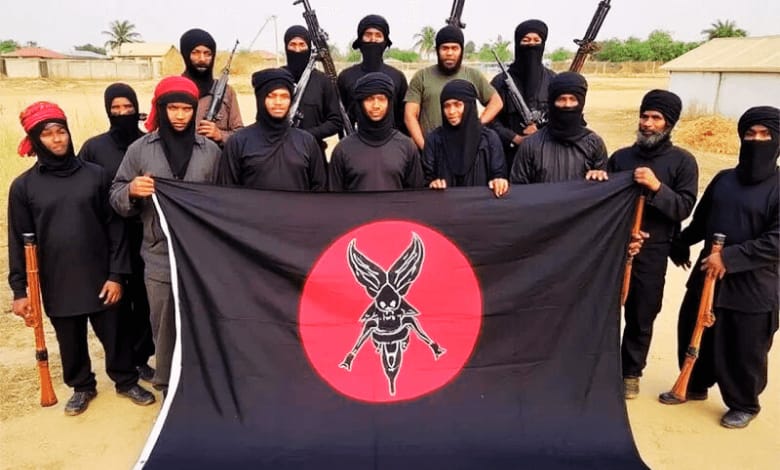
This study traces the evolution of the Lakurawa from a local self-defense militia into a transnational jihadist movement. It situates their rise within Nigeria’s broader security vacuum, showing how economic marginalization, social grievances, and institutional failures enabled their transformation. By comparing the Lakurawa with Boko Haram, the report highlights recurring insurgent patterns in the Sahel and stresses the need for strategies that move beyond military solutions to address root causes.
By Hassan Youssif Zarma
Originally written in Arabic and translated by Sabah Al-Makki, Deputy Editor-in-Chief, Brown Land News, with adaptations for clarity and context.

Executive Summary
This document provides a comprehensive analysis of the rise and transformation of the Lakurawa, an extremist armed group operating in northwestern Nigeria. The report demonstrates that the group’s emergence was not a random occurrence but the foreseeable consequence of a complex interplay of social, economic, and political factors that produced a profound vacuum of authority and security in the region.
The Lakurawa began as a local self-defense force that capitalized on governmental failure and the absence of Nigerian security agencies to secure legitimacy and community support. Over time, the group evolved from a paramilitary formation into a radical jihadist organization that embraced violent ideology, imposed its own codes of law, and blended ideological objectives with criminal activities.
The analysis sheds light on the tactics employed by the group, including financial inducements, the exploitation of communal grievances, and the deployment of advanced technologies such as uncrewed aerial vehicles to consolidate its influence. The report also identifies suspected connections with the Islamic State in the Sahel Province (ISSP). It draws a detailed comparison with the Boko Haram insurgency, revealing a recurring pattern of rebellions that exploit the same systemic weaknesses of the state.
The conclusion presents strategic recommendations designed to address the root causes of the crisis. These recommendations move beyond conventional military solutions toward a comprehensive approach that strengthens state presence, reforms security institutions, and restores community trust.
1. Introduction
1.1 The Regional Security Context of the Sahel
Nigeria, particularly its northwestern states, has become the stage for a multifaceted security crisis, aggravated by both regional and domestic dynamics. The broader Sahel faces profound challenges that include rampant banditry, the trafficking of arms, and persistent tensions among local communities. These challenges have intensified in recent years due to geopolitical shifts, including military coups that have eroded regional security cooperation within the Economic Community of West African States (ECOWAS).
In this volatile environment, new armed groups have emerged, exploiting governance vacuums across vast and ungoverned borderlands. The Lakurawa exemplifies this pattern. They operate in territories where state control is minimal, most prominently in Kebbi and Sokoto states of Nigeria, while extending their reach into Niger and Mali. The group’s presence in porous border zones underscores the transnational character of the threat. It is not confined to the boundaries of a single nation but forms part of a wider terrorist architecture that spans the region.
1.2 Scope and Purpose of the Report
This report provides a comprehensive analysis of the emergence of Lakurawa. The term “emergence” signifies more than a founding date. It entails a rigorous examination of the social, political, and economic conditions that enabled the group to appear and evolve. The report seeks to furnish a deep understanding of the mechanisms that shaped the group’s formation and its gradual transformation from a self-defense force into an extremist terrorist organization. It traces the temporal trajectory, identifies the enabling factors behind its ascent, and probes its operating methods in ideology, recruitment, and technology. The analysis is designed to serve as a reference for analysts, officials, and policymakers to understand this emerging threat and develop effective strategic responses.
2. Chronological Narrative: From Community Guard to Jihadist Organization
The developmental timeline of the Lakurawa can be divided into three principal phases. These phases reveal a gradual and methodical shift from a local paramilitary formation to a transnational terrorist organization. The trajectory does not reflect an accidental evolution. It represents a deliberate and planned process.
2.1 The Foundational Phase: Initial Formation (circa 2010–2017)
According to several sources, the origins of the Lakurawa can be traced to around 2010, when its early members were nomads and herders along the Nigeria–Niger frontier. By 2016, this loose network had evolved into a criminal enterprise. Between 2016 and 2017, the Lakurawa emerged as a self-defense force, ostensibly organized to help local communities in northern Nigeria protect themselves against the rising tide of bandit attacks. By 2017, the group had established a base of operations near the areas of Gudu and Tangaza.
For many residents who felt abandoned by the Nigerian security apparatus, the appearance of the Lakurawa was initially welcomed. During this stage, the Nigerian police described the group as “harmless,” since its weapons were directed against cattle rustlers and bandits rather than civilians or the state. This early tolerance by the authorities allowed the group to entrench itself, gain a foothold in the region, and secure legitimacy in the eyes of local communities.
2.2 The Phase of Growth and Radicalization (2018–2022)
In 2018, Lakurawa established a presence in Gongono Forest, Sokoto State. During this period, the group’s ranks expanded dramatically, growing from fewer than fifty fighters to more than two hundred young men between the ages of eighteen and thirty-five. Its membership drew not only from Nigeria but also from Burkina Faso, Mali, and Niger. Financial incentives, particularly the promise of high stipends, became a central feature of its recruitment strategy, targeting disaffected youth across the region.
As the group swelled in size, it began to drift from its original role. The Lakurawa imposed strict religious codes and engaged in coercive practices, such as beating young men for shaving their beards, styling their hair in particular ways, or listening to music. They enforced the collection of “Zakat”1 by force and confiscated livestock from those who refused to comply. The group also established camps under the banner of “Dar al-Islam”2 in border villages such as Gwangwano, Mulawa, Wansaniya, and Tunigara, signaling its intent to carve out a proto-state of its own.
Relations with the Nigerian police deteriorated sharply once the Lakurawa turned its weapons against local populations, using violence and intimidation as tools of control. By 2022, Nigerian forces expelled the group, compelling it to retreat across the border into Niger, where it established a logistical hub and an operational base.
2.3 Resurgence and Designation (2024–Present)
In September 2024, United Nations reports confirmed the re-emergence of the Lakurawa in northern Kebbi State and northwestern Sokoto, with suspected ties to the Islamic State in the Greater Sahara (ISGS). By late 2024 or early 2025, the Nigerian authorities formally designated the group a terrorist organization, thereby authorizing the use of military force against it. This designation marked a turning point in public perception. Most local communities no longer regarded the Lakurawa as a source of protection against bandit attacks, but rather as a predatory and destabilizing force.
The trajectory of the Lakurawa from community defense militia to terrorist entity was not unexpected. This metamorphosis had long been foreseeable, as the group’s tactics mirrored those of other jihadist movements in the region. The Lakurawa were never a purely spontaneous self-defense initiative. Their very name, derived from a Hausa adaptation of the French les recrues (“the recruits”), reflects their original function as strategically organized recruits. Their early phase as a local defense force was a façade designed to secure social acceptance and embed themselves within the population, which made their eventual removal far more difficult.
3. Conditions of Insurgency: The Enablers of Lakurawa’s Rise
The Lakurawa did not emerge in a vacuum. Their ascent was nurtured by a fertile environment shaped by interlocking social, political, and geographical factors that provided the conditions for their rise.
3.1 The Security and Governance Vacuum
The absence of the Nigerian state in the northwestern border regions was the single most decisive factor behind the rise of the Lakurawa. Local populations, abandoned to the escalating violence of bandit raids, came to view any armed presence that promised protection as a welcome alternative. The state’s failure to deliver even the most basic security created an opening that the group swiftly exploited to gain legitimacy and entrench its presence. By allowing non-state actors to assume the role of security providers, the authorities committed an avoidable error. This space enabled the Lakurawa to deepen their understanding of local dynamics, strengthen their claim to legitimacy, and expand their membership base. The emergence of groups such as the Lakurawa is therefore not merely a symptom of localized unrest but a stark indicator of a more profound crisis in the authority and reach of the Nigerian state.
3.2 The Geographical Advantage
The forests and ungoverned spaces stretching along the Nigeria–Niger frontier provide the Lakurawa with a strategic sanctuary. These areas serve as secure bases for the storage and transfer of light weaponry, and from them the group launches attacks against civilian populations. The porous nature of Nigeria’s borders constitutes a grave security liability that jihadist groups such as the Lakurawa have systematically exploited to their advantage.
This advantage was most clearly demonstrated when, after being expelled by Nigerian security forces, the Lakurawa withdrew across the border into Niger, where they regrouped and reestablished themselves. The episode underscores the reality that efforts to dismantle the group cannot succeed in isolation. They require coordinated cross-border strategies that address the transnational dimension of the threat.
3.3 Weaponizing Communal Grievances
The Lakurawa proved adept at exploiting longstanding grievances between ethnic and occupational groups, particularly farmers and herders. They also capitalized on the widespread poverty afflicting youth in northern Nigeria. To attract recruits, the group initially offered substantial financial incentives, with salaries as high as one million naira, later reduced to five hundred thousand due to what they described as “overwhelming demand.”
This deliberate manipulation of economic hardship became one of the principal drivers of their recruitment success. The Lakurawa are therefore not merely an ideological threat animated by extremist doctrine. They are also a direct by-product of entrenched economic marginalization, a reality that magnifies both their appeal and their resilience.
3.4 Intelligence and Security Coordination Failures
Assessments by Nigeria’s security institutions of the Lakurawa reveal a critical failure of intelligence. While the police initially described the group as “harmless,” the military perceived it as an emerging terrorist threat. This divergence of judgment, combined with poor coordination and fragmented information sharing, allowed the Lakurawa to entrench themselves and expand without facing decisive resistance from the state. The absence of a coherent and unified response allowed the public to persist in the belief that the group was a protective force, even as it quietly evolved into a hostile and predatory actor. This institutional incoherence and complacency transformed what could have been early containment into a protracted and more dangerous insurgency.
4. Modes of Operation: Ideology, Recruitment, and Technology
The Lakurawa distinguish themselves through methodical practices that fuse jihadist ideology with criminal enterprise and modern technology.
4.1 Ideological Foundations
The Lakurawa embrace a radical ideology rooted in Salafi-jihadism and Islamism. They adhere to doctrines aligned with the “Khawarij”3, similar to those espoused by Boko Haram. The group rejects state borders and the authority of the Nigerian government, seeking instead to construct a “miniature state” or localized caliphate. Within these self-styled domains, they impose governance, collect taxes, and enforce a rigid interpretation of sharia law. Their propaganda further promotes an uncompromising hostility toward Western civilization and democratic values.
4.2 Recruitment and Propaganda Machinery
The group pursues a multi-pronged recruitment strategy. In addition to financial inducements, it systematically exploits social grievances within local communities. The Lakurawa combine online propaganda with direct engagement on the ground. Through social media, they disseminate jihadist ideology and sermons designed to resonate with disillusioned youth. At the same time, they undertake selective charitable activities, presenting themselves as benefactors to local communities to cultivate acceptance and legitimacy.
4.3 A New Form of Criminality
A striking contradiction emerges between the rhetoric of the Lakurawa and their actual practices. Their leader, Amir Habib Taj, publicly admonished the notorious bandit chief Bello Turji, demanding that he abandon his criminal activities. Yet the Lakurawa themselves are deeply engaged in similar pursuits, including kidnappings for ransom and large-scale cattle rustling. This contradiction is not incidental but a deliberate strategy. The group presents itself as an ideological force combating corruption and crime, while in reality, it finances its operations through the very activities it denounces. This calculated fusion of jihadist ideology with economic predation makes the Lakurawa a highly adaptive and resilient threat, which complicates efforts to dismantle them.
4.4 Technological Sophistication
The Lakurawa display advanced technical capabilities in their operations. They have employed drones for surveillance, using them to track the movements of Nigerian security forces within their areas of influence. They also exploit social media platforms to disseminate propaganda and to project claims of affiliation with the Islamic State. This integration of modern technology into their tactics underscores the urgent need for Nigerian security institutions to strengthen their own surveillance and counterintelligence capacities with equally sophisticated tools to neutralize these emerging capabilities.
5. Broader Context: Affiliations and Comparisons
5.1 Links to the Islamic State
The Lakurawa are not an isolated movement but part of a wider regional jihadist network. Reports point to suspected ties with the Islamic State in the Greater Sahara (ISGS) and integration into the Islamic State in the Sahel Province (ISSP). Such affiliations provide the group with transnational legitimacy, access to resources, and ideological as well as logistical support, which amplifies its capacity to endure and expand.
5.2 Lessons Unlearned: Parallels with Boko Haram
The rise of the Lakurawa can be seen as a repetition of insurgent history in northern Nigeria, a pattern widely noted by observers. The group’s emergence bears striking similarities to that of Boko Haram in its formative years, which underscores that the lessons of the past have not been fully absorbed. This recurrence highlights the persistent structural weaknesses that allow insurgencies to flourish, reaffirming that the underlying drivers of extremism remain unaddressed.
5.3 Comparative Standards: Lakurawa and the Boko Haram Insurgency
5.3.1 Foundational Origins
The Lakurawa originated as a local self-defense force organized to combat banditry.
Boko Haram, by contrast, began as a socio-religious movement that rejected corruption and embraced a staunchly anti-Western ideology.
5.3.2 Initial Tactics
The Lakurawa secured early legitimacy by offering protection to communities that the state had abandoned. Systemic weaknesses, including the absence of security provisions, porous borders, endemic poverty, and deep-seated political and social grievances, enabled their rise. They adopted an extremist Khawarij doctrine that rejected state authority and pursued the creation of a localized caliphate.
Boko Haram gained support by providing rudimentary social services, including Islamic schooling, and by mobilizing against corruption. It likewise exploited governance failures and poverty, but framed its ideology around the rejection of Western education and the establishment of an Islamic state.
5.3.3 Evolution into Violence
The Lakurawa gradually transformed into a coercive force that imposed its own codes of conduct and wielded violence against civilians. Confrontations with state security escalated their militancy, culminating in their designation as a terrorist organization. Boko Haram followed a similar trajectory, evolving from a religious movement into an insurgent force marked by violence, repression, and terror.
5.3.4 State Response
In the case of the Lakurawa, divergent views between the police, who initially deemed the group “harmless,” and the military, which recognized the threat, exposed a significant intelligence failure. The state’s initial response was inadequate, followed by a later military escalation once the threat became undeniable. Boko Haram encountered a comparable pattern of slow recognition, disjointed responses, and eventual large-scale military campaigns.
Synthesis
These parallels are not coincidental. They testify to the persistence of the same enabling conditions: governmental failure, lack of coordinated security, endemic poverty, and unresolved grievances. The Lakurawa, therefore, do not represent an entirely new threat, but rather the re-emergence of a familiar insurgent model that has been flourishing in the same fragile environment. This reality underscores the need for a comprehensive reassessment of strategy, one that addresses the deeper systemic roots rather than focusing narrowly on the containment of individual groups.
6. Conclusion and Strategic Recommendations
6.1 Key Findings
The emergence of the Lakurawa is, at its core, a story of state failure to provide basic security and services to its citizens. The group’s transformation from a community defense force into a terrorist organization was not accidental. It was a foreseeable and deliberate progression. The Lakurawa entrenched themselves by exploiting the security vacuum, leveraging strategic geography, and manipulating social and economic grievances. Their fusion of jihadist ideology with criminal enterprise, combined with their adoption of advanced technology, renders them a flexible and adaptive threat. The parallels with Boko Haram indicate that the underlying causes of insurgency remain unresolved in the region.
6.2 Strategic Recommendations
In light of this analysis, it is imperative to pursue a comprehensive strategy that transcends conventional military solutions.
- Strengthen State Presence: The Nigerian government must proactively re-establish authority in ungoverned border regions. This requires delivering security and justice, initiating development projects, and creating economic opportunities that erode the appeal of extremist movements.
- Reform Intelligence and Security Institutions: A unified and effective intelligence architecture is urgently needed to prevent contradictory assessments across agencies. These reforms must include forward-looking strategies to counter technological threats such as the use of drones.
- Rebuild Community Trust: Restoring trust between the state and local populations is essential. This can be achieved by offering legitimate and effective security alternatives. The active involvement of community leaders in shaping security strategies is a critical step toward undermining support for non-state actors.
- Regional Coordination: Given the cross-border nature of the Lakurawa group, Nigeria must deepen cooperation with Niger, Mali, and neighboring states through joint operations and robust intelligence-sharing mechanisms.
- Counter-Ideology Measures: It is essential to develop and disseminate effective counter-narratives, particularly on social media platforms, to challenge extremist propaganda and undercut the recruitment of vulnerable youth.
Footnotes:
- Zakat: one of the Five Pillars of Islam, a compulsory form of almsgiving traditionally calculated at 2.5 percent of accumulated wealth after one lunar year. By Qur’anic injunction [9:60], it is intended to support the poor, the indebted, travelers in need, and other designated categories. In its authentic form, zakat is embedded in Islamic jurisprudence as a spiritual obligation to purify wealth and as a social mechanism to strengthen solidarity within the community. The Lakurawa, however, subverted this duty, transforming it into a coercive system of taxation imposed by force to consolidate authority and finance their militant operations. ↩︎
- Dar al-Islam (literally “House of Islam”) is a classical Islamic term that, in the jurisprudential tradition, denotes lands under Muslim governance where Islamic law is applied and Muslims can freely practice their faith. The Lakurawa misappropriated the concept to label proto-state enclaves under their control, where they imposed authority and enforced a rigid interpretation of sharia as a means of legitimizing their militant project. ↩︎
- Khawarij (often translated as “the Seceders” or “the Outsiders”) were an early Islamic sect that emerged in the 7th century after the Battle of Ṣiffīn. They became known for their uncompromising literalism, their practice of takfīr (excommunicating other Muslims as unbelievers), and their violent rebellion against established authority, including the assassination of Caliph ʿAlī ibn Abī Ṭālib. The Lakurawa’s adoption of Khawarij-like doctrines signals a revival of this extreme and exclusionary mindset, where rigid ideology is used to justify violence against both state institutions and fellow Muslims. ↩︎