Erasing National Memory and Turning Sudan into a Country Without a Past
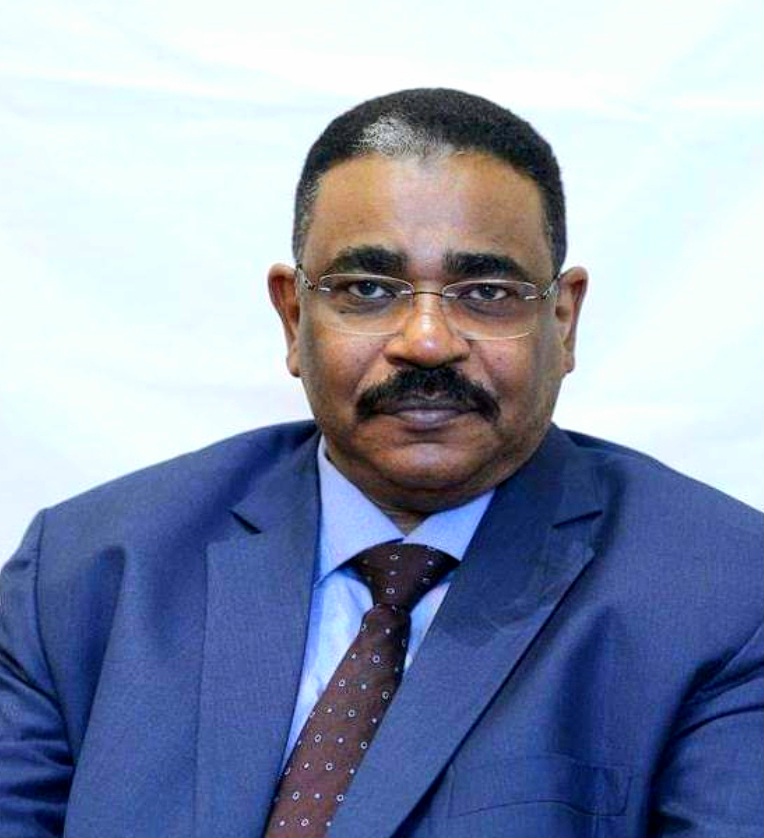
Dr. El-Sadiq Al-Imam EL-Hadi El-Mahdi
The ignorant, hostile, and slanderous campaign against the history of the Mahdist State has reached a level that makes it resemble a pathological state of national amnesia—one that treats lies as facts and confuses intrusion upon history with historical knowledge. This campaign has been unleashed by some idlers who exploited the eruption of the current war to spread their poison and pollute the social space with tales and legends so absurd that they mock themselves before they contradict history.
Those leading this campaign are a mix of amateurs and individuals who failed in studying history, yet possess an enviable boldness in presenting fabricated historical accounts as facts capable of erasing national memory. Their enthusiasm intensifies whenever the anniversary of a national liberation battle led by Imam al-Mahdi (peace be upon him) approaches. These intrusive writers have maliciously linked the Mahdist movement to the actions of the Rapid Support Forces (RSF)—a vile, foul-smelling comparison dredged from the sewage of falsehood.
In describing them, Khalid ibn Safwan’s words fit perfectly:
“Eloquence is not the quickness of the tongue nor the abundance of nonsense; it is the precision of meaning and the aim toward sound argument.”
These intruders have filled the digital space with myths and nonsensical chatter, adopting an attitude toward distorting Mahdist history that resembles Mao Zedong’s infamous slogans: “Destroy the old to build the new” and “Forget the past and imagine the future.” If these people are inspired by Mao’s vision, his regime, founded in 1949, sped forward like a meteor without a past—only to collapse into its own path. So into what abyss are these ignorant voices hurtling?
Among their so-called “evidence” linking the Mahdist State to the RSF is the presence of components from Darfur and Kordofan in both the Mahdist revolution and the RSF. From this, they conclude a supposed resemblance that makes the RSF an extension of the Mahdiyya. They do not ask themselves when a movement or revolution has ever been judged based on a single correlation. This is methodological disorder and intellectual failure.
These Sudanese communities had the honor of being the earliest supporters of Imam al-Mahdi’s call and played a pivotal role in empowering his renewalist mission—one grounded in reviving the buried book and Sunnah. If they gained honor in participating in the Mahdist Revolution, they still see the Ansari doctrine as a project, a vision, and a program worth defending, believing in, and upholding.
What program, then, does the other side offer that would make them abandon their revivalist Ansari creed?
As the old saying goes, gold is compared only to gold; and as bankers note, gold’s resistance to oxidation is what preserves its value as a medium of exchange. These shallow comparisons are as absurd as comparing dust to the Pleiades—contrasting those who fought to liberate Sudan from colonialism with those who fight for money or plunder, and contrasting those whose loyalty is to tribe or ethnicity with those whose loyalty is to an Islamic creed and idea. It is a comparison without basis.
Our beloved Ansar communities in every region touched by war maintain their historical loyalty to the revivalist Ansari creed. They should not be condemned for the geography of their birth nor shoved into the corner of being “RSF incubators” based on their dialect or features. They are incubators of authentic Islam, grounded in reviving the neglected book and Sunnah—and incubators of no one else. Many are affiliated with the Umma Party, which serves as an additional safeguard against any other allegiance. In reality, many have no political affiliation at all, content with their religious identity alone.
They are the “Be Ansar” party, just as we say “Be helpers of God.” Thus, they are not an appendage of anyone.
It is true that the RSF was originally composed largely of these ethnic and social groups, but this does not mean the public consciousness should lose its memory and compass and conclude that these tribes are by necessity incubators of the RSF to be collectively punished. Such pathological reasoning and sweeping generalizations are neither rational nor objective.
From the beginning of this war, we have made our stance clear:
“No bearer of burdens shall bear the burden of another,”
and “Every individual is accountable for their own deeds.”
The RSF was once a legally constituted security force governed by its own law before rebelling against that law and against the authority that managed its deployment—namely the Sudanese Armed Forces and the Sudanese Sovereignty Council. This breakdown must be understood in its proper context without resorting to distortion, fabrication, or the defamation of Mahdist history.
Yet instead of reason, groups of troubled individuals have deployed a toxic discourse filled with hatred, regionalism, racism, and repugnant labels such as “incubators,” “collaborators,” or “followers” of the RSF—when in reality the RSF is followed by armed groups resembling organized criminal gangs, groups that commit killings even in areas falsely and slanderously labeled as “incubators.”
The stance of the 22nd Division in Babanousa stands as clear evidence against this slander. This division has been fighting since 2023 with soldiers from the same region and the same communities, showing legendary resilience—not out of tribal loyalty but out of national duty. They refused to allow the RSF near Babanousa’s outskirts regardless of sacrifice. And Babanousa is not the only example; the same applies in Dilling, Kadugli, El Fasher, and El-Obeid. These are units of the Sudanese Army formed from local populations, yet they fight for their military creed and national identity, not their tribal ties. Allegiance to a creed overrides social and regional differences.
Therefore, the terminology being used must be cleansed, and respect must be given to those defending their homeland and fulfilling their oath.
Those with decayed memories should recall that one of the earliest confrontations with RSF misconduct emerged from Kordofan itself—from El-Obeid, in 2014, during a dispute between Governor Ahmed Haroun and the RSF command. By their distorted logic, Kordofan should have been an RSF stronghold. But anyone observing the flow of displaced people fleeing into El-Obeid—and the number of victims of RSF abuses—can clearly see that the RSF has no incubators. Everyone flees from its soldiers; everyone rejects their misconduct.
The continued falsification of historical facts and promotion of hate speech threatens Sudan’s cultural identity, tears apart social unity, destroys coexistence, and sows open hostility among communities because it is built on demonizing entire groups.
This discourse harms the Sudanese Armed Forces as well, despite its proponents claiming to defend it. It entangles the army in something that does not represent it. Thus, the real question is:
In whose interest is it to incite Sudanese society against itself and divide it from its army?
In whose interest is it to place history in the dock and declare certain communities “RSF incubators”?
The truth is that these regions are diverse in their political affiliations, and loyalty to the Umma Party is not a crime but evidence of differing political opinions on the RSF rebellion—especially since many of these communities fought fierce battles against the RSF. We recall here the confrontations in North Kordofan prior to the RSF’s advance on Bara, Jabra, Umm Sayala, and other areas that opposed—and still resist—its crimes with the blood of their sons.
We also remember the resistance of Al-Hammadi, despite being from the Hawazma—labeled, according to populist classification, as “incubators.”
The evidence is too abundant to list. It is simply untrue that the RSF has supporters and incubators in the manner fabricated by falsifiers of history. Even the RSF would not believe such claims; it knows it has clients and employees—not incubators. It has no doctrine or program capable of influencing the Ansari base in areas attributed to it. Its soldiers rely on ethnic mobilization as fuel for survival. This militia competes with the SPLM in exploiting regionalism for its agenda, and we must not assist these actors by fanning ethnic tensions or amplifying hate speech.
Sudan’s national history deserves truth-seeking, research, and documentation—not slander, incitement, and hatred. We cannot remain silent in the face of hate speech, nor will we be silent when those who liberated our land, protected our honor, safeguarded our soil, and wrote this nation’s history with blood too precious to be forgotten—are maligned or erased from our collective memory.