
Northern Sudanese Traders in Juba… The Backbone of the Market and the Spirit of Resilience After the War
By: Um Naeem Elnoor
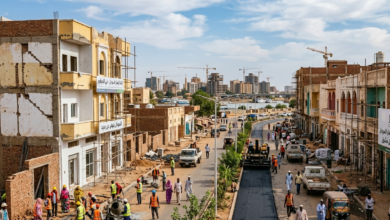
In the heart of Juba—amid its crowded markets and the vibrant pulse of life that persists despite the wounds—stands a large number of Northern Sudanese traders, not merely as merchants, but as a steadfast bridge between two peoples whose destinies were intertwined long before war tried to separate them.
For many years, Northern traders from the River Nile, the Nuba Mountains, Manasir, Shamal, and Gezira regions have been an essential part of Juba’s commercial life. Many came seeking livelihood, opening small shops that gradually became solid pillars of the city’s economy.
But the recent war changed everything—displacing families, cutting off roads, raising the cost of transportation and goods. Yet through it all, these traders stayed. They did not flee. They did not surrender. They faced the storm standing tall.
Even as the war carved new lines of fear and division across Sudan, the market remained the one place where shared humanity never disappeared.
In Juba, Northerners and Southerners worked side by side, exchanging respect, a shared livelihood, and a bond stronger than any political narrative.
Life was not easy for these traders.
Some lost their entire stores, some saw their capital sink on the road between borders, and others were forced to start again from nothing.
But—as they have always done—they rose again, because markets do not wait, and people cannot survive on aid alone.
The people of Juba testify today that Northern Sudanese traders played a major role in stabilizing prices, and their presence helped keep essential goods available when the country was on the brink of famine.
Many even supported customers on credit, giving whatever little they had so others could survive another difficult day.
And although the war brought pain and division, it also revealed a simple truth:
Livelihood does not carry an ID card, and kindness does not belong to any single geography.
Those who remained in Juba did so not because the war spared them, but because they had become part of the community—part of the market’s memory, which never fades.
Today, as every step toward peace is taken, the role of these traders remains a cornerstone in rebuilding trust between South and North Sudan.
For a true marketplace does not know hatred…
It knows people, struggle, and the value of a helping hand in times of hardship.
In the end, when the story of war and peace in Sudan is written, it will be remembered that the strongest bridges of unity were not built from concrete, but from honesty at the counter, a smile during trade, and good intentions between people.