
Um Dubikrat: A History That Refuses to Be Buried
By Dr. El-Sadiq El-Hadi El-Mahdi
In the landscape of Sudanese history, few events stand as powerfully—and as misunderstood—as the Battle of Um Dubikrat, the final stand of Caliph Abdullah in November 1899. Long framed through the lens of British colonial accounts as a humiliating defeat, the battle has often been overshadowed by the narrative crafted by the victors. But a closer reading of the historical record reveals a very different story: one of dignity, loyalty, and unwavering resistance.
A Colonial Narrative Built on Distortion
When the British crushed the Mahdist State, they sought not only military victory but psychological domination. Their officers and propagandists published demeaning images of the battlefield and wrote accounts designed to belittle the Sudanese fighters and break the spirit of the emerging nation.
For decades, these writings—by individuals such as Sultans, Örholder, and Ibrahim Fawzi—formed the basis of how Um Dubikrat was portrayed in mainstream histories.
However, a new generation of Sudanese scholars has begun to challenge these narratives. Through the works of Ali Al-Mahdi, Muhammad Saeed Al-Qaddal, Muhammad Ibrahim Abu Salim, Ismat Zulfu, Faisal Abdulrahman Ali Taha, and others, a clearer and more balanced picture has emerged—one that restores agency to Sudanese voices silenced for over a century.
After Karari: A Strategic Retreat, Not a Collapse
Following the devastating Battle of Karari (Omdurman) in 1898, Caliph Abdullah convened his remaining leaders and made the difficult decision to withdraw westward. This was not an act of desperation but of strategic calculation: the goal was to preserve what remained of the Mahdist forces, regroup, and continue resisting the occupying army.
Despite being wounded, commanders such as Ali Wad Halwo and others remained steadfast. The Caliph sent envoys to tribal leaders in Kordofan seeking safe passage and support, demonstrating a determination not to surrender Sudan’s sovereignty without a final struggle.
The Road to Um Dubikrat
The retreating caravan—composed of fighters, families, and loyalists—endured hunger, fatigue, and constant danger. Yet Caliph Abdullah’s resolve never wavered. He reassured his followers that the fall of Omdurman was not the end of their mission and that defeat did not define them.
The British, recognizing the potential for renewed resistance, mobilized a large and heavily armed force. Their intent was clear: annihilate the Mahdist movement once and for all.
The Final Dawn: 24 November 1899
At dawn, the Ansar gathered for Fajr prayer. Caliph Abdullah addressed them with a message of honesty and courage: anyone unwilling to fight was free to leave. Not a single voice withdrew. The Ansar responded with unity—choosing victory or martyrdom.
The Caliph organized his forces for a counter-encirclement strategy. But before the sun rose, the British opened fire with Maxim machine guns, inflicting devastating losses.
Despite the onslaught, the Ansar charged forward in waves, fighting hand-to-hand, displaying extraordinary bravery under impossible conditions.
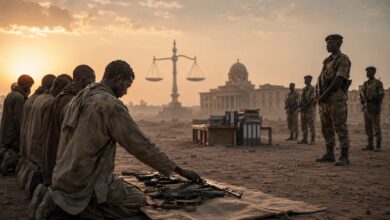
Witnesses later recounted how the Caliph fired his Henry rifle until the barrel bent from the heat. As his fighters fell around him and the end became inevitable, he spread his fur cloak on the ground, knelt in prayer, and surrendered his life with dignity—refusing to flee or abandon his cause.
A Victory of Spirit, Not a Defeat of Arms
To describe Um Dubikrat merely as a military loss is to miss its deeper meaning. The battle was a testament to loyalty, faith, and the refusal to submit to foreign domination. It exemplified a moral victory that no colonial narrative could erase.
Today, as Sudan confronts its complex challenges, Um Dubikrat offers a reminder of the values that have shaped the nation’s identity:
steadfastness in the face of overwhelming odds,
loyalty to principle over survival,
and the belief that dignity is worth fighting for.
More than 126 years later, the history of Um Dubikrat refuses to be buried—and its lessons remain as urgent as ever.