Advancing press freedom through UN’s human rights declaration
By Fortune Abang, News Agency of Nigeria (NAN)
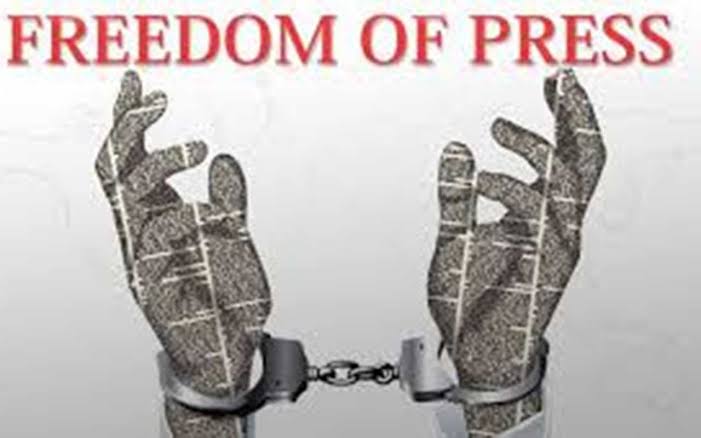
World over, a free press plays a crucial role in informing the public on positive developments; exposing societal ills, holding leaders accountable and acting as a watch dog.
In recognition of the importance of a free press, the UN General Assembly declared May 3, annually, as World Press Freedom Day.
The event is to raise awareness of the importance of freedom of the press and remind governments of their duty to respect and uphold the right to freedom of expression enshrined under Article 19 of the 1948 Universal Declaration of Human Rights.
“Everyone has the right to freedom of opinion and expression; this right includes freedom to hold opinions without interference, to seek, receive and impart information and ideas through media regardless of frontiers,’’ the declaration states.
Stakeholders say there is need for free, independent and diverse journalism to bolster democratic growth in any society.
They emphasise on the need for adherence to press freedom as it will be instrumental in not only exposing corruption, environmental issues and social injustices but also in shaping public opinion.
Some recounted risks faced by journalists and how most journalists lost their lives doing their job, while calling for sustainable measures to avoid further threats and censorship.
According to policy analysts, there is the need for intervention from media management and government at all levels in order to promote freedom of the press and bolster democratic culture across the world.
Alina Doodnath, a Caribbean Online News Agency “Loop News” Reporter based in Trinidad and Tobago, described Press Freedom as a strong foundation upon which journalist could advance their labour rights, to earn working and living wage.
Some recounted risks faced by journalists and how most journalists lost their lives doing their job, while calling for sustainable measures to avoid further threats and censorship.
According to policy analysts, there is the need for intervention from media management and government at all levels in order to promote freedom of the press and bolster democratic culture across the world.
Alina Doodnath, a Caribbean Online News Agency “Loop News” Reporter based in Trinidad and Tobago, described Press Freedom as a strong foundation upon which journalist could advance their labour rights, to earn working and living wage.
According to her, in the Caribbean, journalists go above and beyond every day to uphold commitment to the professional ethics, working without overtime pay and, sometimes, under dangerous conditions.
Their lives are at risk every day, whether it is from physical violence or from vulnerability, due to their employment’s lack of adequate labour regulations, leaving them dependent and also open to outside influences.
“Journalists have unrelenting commitment to helping people by upholding tenets of journalism through unbiased and accurate reporting; sometimes being a reporter can cost your life, whether from violence, physical and mental stress of the job.
“I hope in future media organisations will establish stronger protection policies for journalists to be able to carry out their duties with confidence, knowing their rights as workers are protected,” she said.
Marie Ngono, a journalist at the Cameroon Tribune, a bilingual national daily, stressed the need for various African media management to take proactive measures aimed at advancing press freedom and promoting credible information dissemination across the continent for public interest.
According to her, it entails capacity building centered on fundamental principles of journalism, promotion of editorial independence amidst political, economic and social pressure and the use of digital technology in countering the spread of fake news.
“Journalists should employ measures to ensure their self-protection against violence, including using digital and physical safety strategy, promote diversity and social-inclusion, as well as lend voices to marginalised persons in communities.
“Journalists should build public trust by upholding professionalism and transparency, as well as create awareness about relevant laws and policies designed to protect press freedom,” she said.
In the same vein, Talibeh Hydara, Editor of The Republic, a media-organisation-based in The Gambia, decried unprecedented violence against journalists across the world.
Governments and societies must prioritise protecting journalists from censorship, harassment, and violence, ensuring they can report without fear.
“There is also an urgent need to strengthen legal frameworks to safeguard media independence, promoting transparency in governance and combating misinformation through education.
“If these measures are in place, media organisations will thrive on their own without any financial support and truth will prevail over falsehood and corruption,” he said.